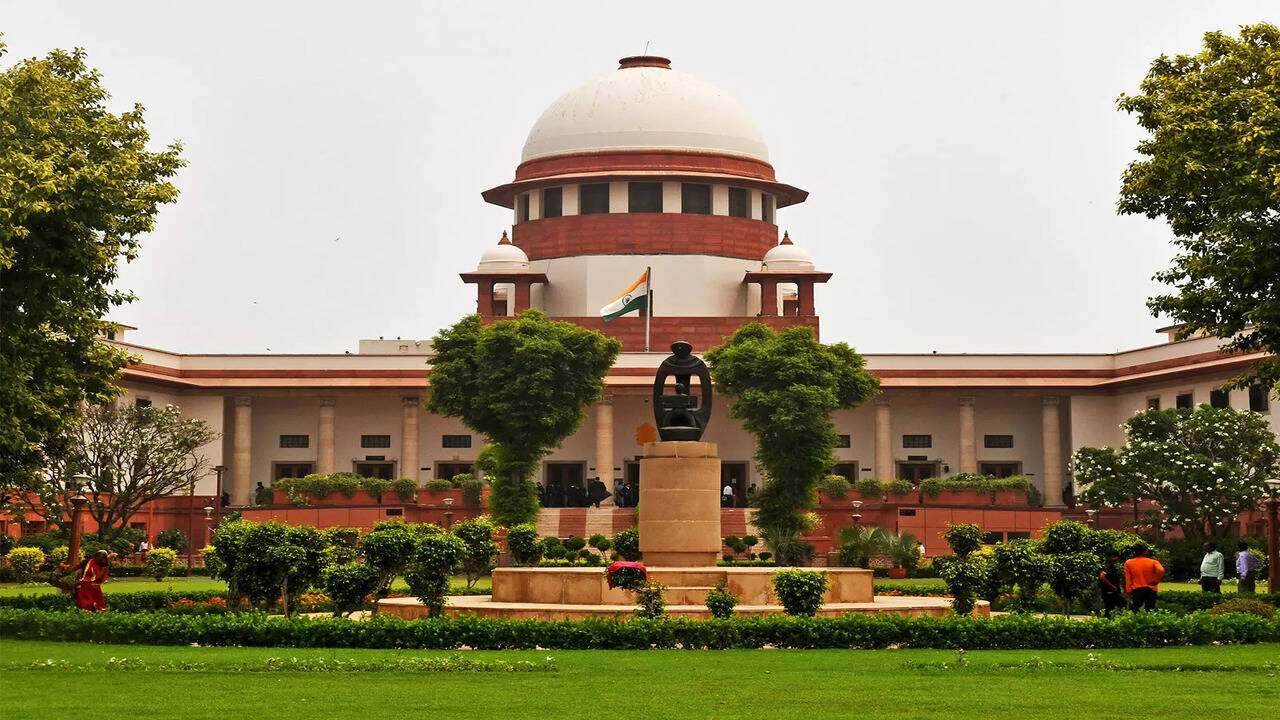
Supreme Court seeks Centre, States' response on Aadhaar as citizenship proof plea
The Supreme Court has issued a notice to the Centre and states seeking their response on a plea that argues Aadhaar should only be used as proof of identity, not for citizenship or domicile. The petition highlights concerns that Aadhaar is being misused to obtain various documents, including voter IDs, potentially by illegal immigrants. The court will hear further arguments on this matter.
Key Highlights
- SC seeks Centre, States' response on Aadhaar use plea.
- Plea argues Aadhaar should be strictly for identity verification.
- Concerns raised over Aadhaar misuse for citizenship and voter ID.
- Supreme Court issues notice, tags with similar pending matters.
- Petitioner cites Aadhaar Act Section 9 and UIDAI notifications.
- The case has significant implications for electoral processes.
The Supreme Court of India has issued notices to the Central government, State governments, and the Election Commission of India (ECI) seeking their responses on a Public Interest Litigation (PIL) that contends the Unique Identification Authority of India (UIDAI)-issued Aadhaar cards are being misused as proof of citizenship, domicile, and residential address. The plea, filed by advocate Ashwini Kumar Upadhyay, argues that Aadhaar should be restricted solely for identity verification purposes. The petition highlights that Section 9 of the Aadhaar Act, 2016, expressly states that an Aadhaar number does not confer any right of, or serve as proof of, citizenship or domicile. Furthermore, a UIDAI notification dated August 22, 2023, clarifies that Aadhaar is proof of identity and not proof of citizenship, address, or date of birth. Despite these provisions, the petitioner claims that Aadhaar is being accepted as proof of age, citizenship, and domicile for various purposes, including school admissions, property transactions, obtaining birth certificates, ration cards, and driving licenses. A significant concern raised in the petition is the use of Aadhaar as proof of date of birth and residence in Form-6, the application form for new voter registration. The petitioner argues that this practice is contrary to Section 9 of the Aadhaar Act, Section 23(4) of the Representation of the People Act, 1950, and Article 14 of the Constitution, and thus should be considered void and inoperative. The plea contends that the Aadhaar framework allows enrolment for all 'residents,' including foreign nationals who have resided in India for at least 182 days, and can be obtained with relatively simple documentation. This, the petition alleges, creates opportunities for "infiltrators and illegal immigrants" to obtain Aadhaar cards and subsequently secure other identity documents, including voter identity cards, thereby undermining electoral integrity and potentially diverting welfare resources. The Supreme Court, through a bench comprising Chief Justice Surya Kant and Justice V Mohana, has issued notices to the Union Government, all State governments, and Union Territories, and has also tagged this plea with similar pending matters for a consolidated hearing. The case has significant implications for how Aadhaar is used in various governmental and electoral processes in India. Previously, the Supreme Court had upheld the inclusion of Aadhaar as an identity proof in the Special Intensive Revision (SIR) process, noting that the Representation of the People Act endorses it as such, and suggested that concerns about fake Aadhaar cards should be addressed to the government. The Election Commission had also previously stated that furnishing Aadhaar details for voter registration would be optional, not mandatory. The current petition seeks not only a restriction on Aadhaar's use but also a declaration that its acceptance as proof of date of birth and residence in voter registration forms is unconstitutional and void. It also proposes a comprehensive overhaul of the verification framework used in electoral processes, including the establishment of a high-powered monitoring committee.
Frequently Asked Questions
What is the main issue in the Supreme Court plea regarding Aadhaar?
The main issue is a plea arguing that Aadhaar should be used solely as proof of identity and not for establishing citizenship, domicile, or date of birth, due to concerns about its misuse for obtaining various official documents, including voter IDs.
What section of the Aadhaar Act is relevant to this case?
Section 9 of the Aadhaar Act, 2016, is central to the plea, as it states that an Aadhaar number does not confer any right of, or serve as proof of, citizenship or domicile.
What specific concern is raised regarding voter registration?
The plea specifically challenges the use of Aadhaar as proof of date of birth and residence in Form-6, the application for new voter registration, arguing it is inconsistent with the Aadhaar Act and Representation of the People Act.
Who filed the petition and what is the current status?
The petition was filed by advocate Ashwini Kumar Upadhyay. The Supreme Court has issued notices to the Central and State governments, and the Election Commission of India, seeking their responses. The plea has been tagged with similar pending matters.