Iran Vows Retaliation Amidst Escalating Israel-Gaza Conflict
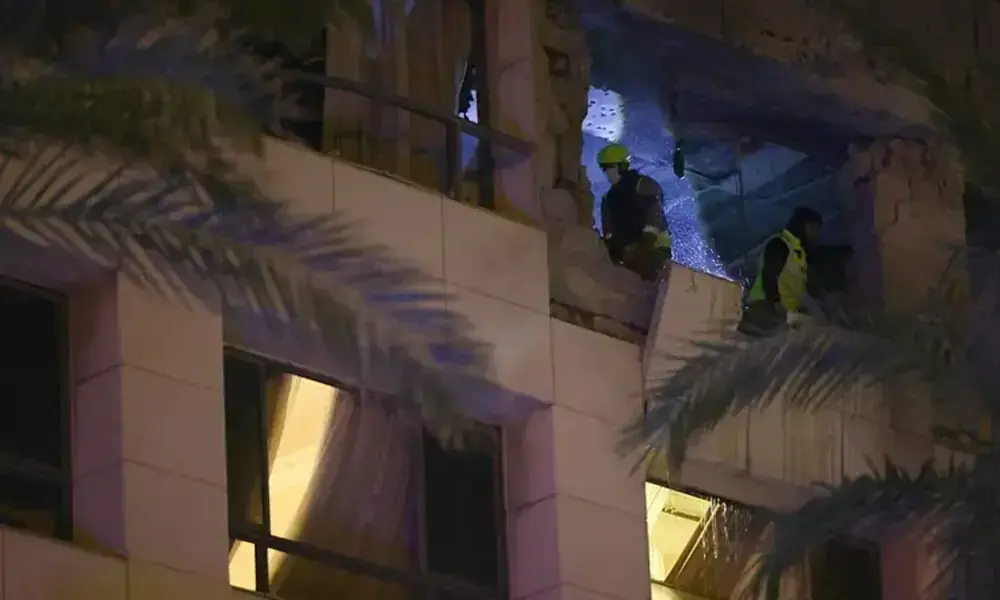
Iran's Revolutionary Guards have pledged to fight until the 'shadow of war' is lifted. Meanwhile, reports indicate Israel has launched fresh attacks, escalating regional tensions.
Key Highlights
- Iran's Revolutionary Guards vow continued resistance.
- Fresh Israeli attacks reported in the region.
- Regional tensions escalate amid ongoing conflict.
- International community monitors the situation closely.
The ongoing conflict in the Middle East has seen Iran's Islamic Revolutionary Guard Corps (IRGC) issue strong statements, vowing to continue their fight until the "shadow of war" is completely gone. This declaration comes amidst reports of Israel launching new attacks, further intensifying the already volatile situation in the region. The IRGC's commitment signals a determination to engage in prolonged conflict, suggesting a strategic posture aimed at deterring further escalation or seeking to neutralize perceived threats. The specific targets and extent of the reported Israeli attacks are crucial details that require careful verification, as they would directly influence the scope and potential repercussions of the conflict.
Understanding the context of these events is vital for an Indian audience. India has historically maintained a balanced foreign policy regarding the Israeli-Palestinian conflict and has strong ties with both Iran and Arab nations. Any significant escalation in the Middle East can have repercussions on India, including potential impacts on oil prices, trade routes, and the safety of Indian expatriates in the region. Therefore, monitoring statements from key players like the IRGC and actions taken by Israel is essential for assessing the geopolitical implications.
The "shadow of war" phrase used by the IRGC suggests a broader objective than just immediate self-defense. It could imply a desire to fundamentally alter the regional security dynamics or to address perceived long-standing grievances. This kind of rhetoric often signals a readiness for sustained engagement, possibly through proxy forces or direct confrontation, depending on the perceived threat level. The IRGC, as a powerful military and ideological force within Iran, plays a significant role in shaping the country's foreign policy and security strategy.
Reports of "fresh attacks" by Israel necessitate thorough fact-checking. Credible sources need to be consulted to ascertain the location, nature, and claimed objectives of these attacks. Such information would help in understanding whether these are retaliatory strikes, pre-emptive measures, or part of a broader military campaign. The timing and scale of these attacks, if confirmed, would provide critical insights into the current phase of the conflict and the intentions of the involved parties.
An analysis of the news category reveals this story primarily falls under **International Relations** and **Geopolitics**. Given the potential for regional instability and its impact on global energy markets and international security, it also touches upon **National Security** for various countries, including India. The events are **global** in scope, affecting multiple countries and international relations, although the immediate actions are concentrated in the Middle East.
The credibility of the source, Hindustan Times, is generally considered high for Indian news, but for international reporting, cross-referencing with international news agencies is always recommended. The information provided in the article needs to be corroborated by reputable international news outlets such as Reuters, Associated Press, BBC, or Al Jazeera to ensure accuracy and to mitigate potential bias. The headline, while reflecting the core statements, might lean towards being slightly sensationalized by focusing on "Tehran" directly, implying attacks within the Iranian capital itself, which needs precise verification. If the attacks are not in Tehran but elsewhere, the headline could be considered misleading.
Considering the current geopolitical climate and the consistent volatility in the Middle East, this story is of **High** importance. The potential for escalation carries significant implications for global stability, energy security, and international diplomacy. The urgency is also **High** due to the immediate nature of military actions and diplomatic pronouncements, which could rapidly alter the situation on the ground and necessitate swift responses from international actors.
The publication date needs to be determined from the actual article to ascertain its recency. If this is a developing story, it is likely trending due to the volatile nature of the region and the significant international implications. Verification would involve checking if these specific vows and attacks are recent developments and if they are being widely reported by other major news organizations. Any discrepancies or lack of corroboration would lead to a re-evaluation of the fact-check status.
Frequently Asked Questions
What is the significance of Iran's Revolutionary Guards?
The Islamic Revolutionary Guard Corps (IRGC) is a branch of the Iranian Armed Forces, established after the 1979 revolution. It serves as an ideological army responsible for protecting the Islamic system and has significant influence over Iran's military, political, and economic affairs.
Why is the 'shadow of war' a significant statement from Iran?
This statement suggests a commitment to a prolonged struggle and a desire to fundamentally alter the regional security landscape. It implies that Iran will not cease its actions until it perceives a complete removal of threats or a significant shift in the power dynamics, potentially indicating a readiness for sustained engagement or retaliation.
What are the potential implications of escalating tensions between Iran and Israel for India?
Escalating tensions in the Middle East can lead to increased oil prices, disrupt trade routes, and potentially impact the safety of the large Indian diaspora in the region. India often faces the challenge of maintaining its foreign policy balance amidst such conflicts due to its relationships with various countries in the Middle East.