SpaceX Launches NASA's Pandora Exoplanet Satellite | Quick Digest
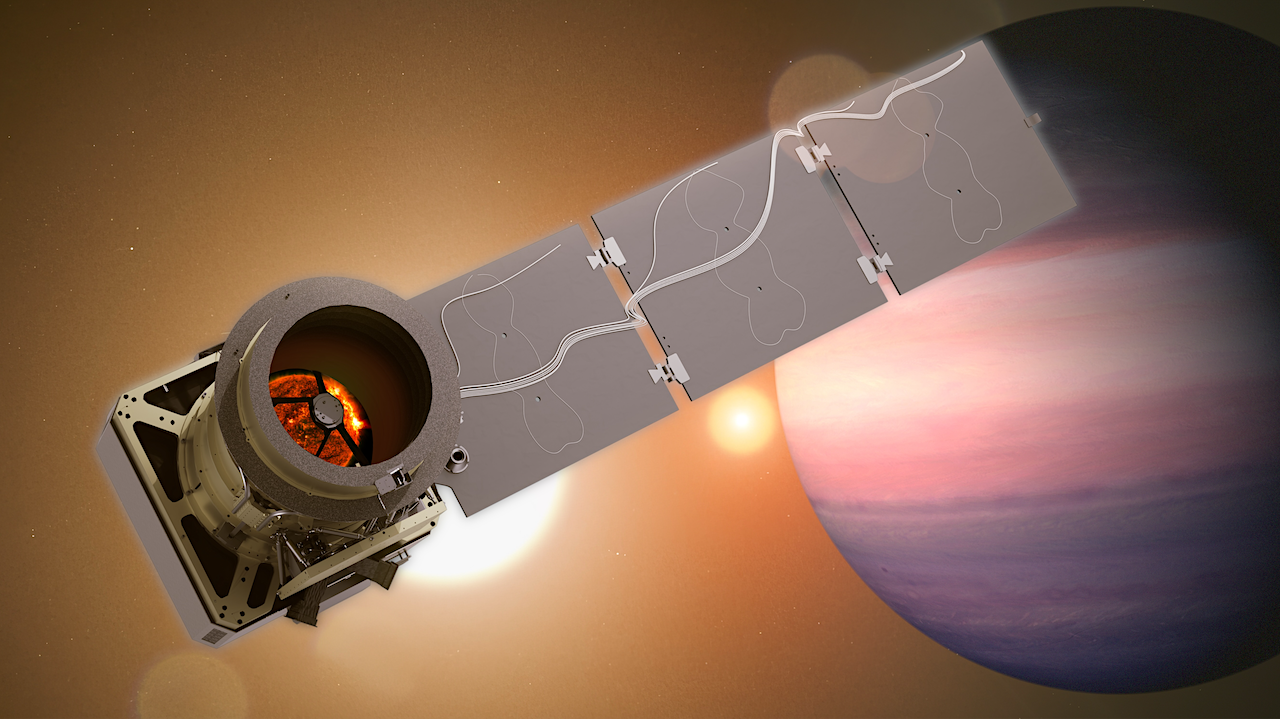
NASA's Pandora exoplanet-studying satellite successfully launched on January 11, 2026, aboard a SpaceX Falcon 9 rocket. The mission will analyze exoplanet atmospheres to aid the search for habitable worlds.
NASA's Pandora satellite launched via SpaceX Falcon 9 on January 11, 2026.
Mission aims to study atmospheres of at least 20 exoplanets.
Pandora will differentiate signals from stars and exoplanet atmospheres.
Part of NASA's Astrophysics Pioneers program for cost-effective science.
Data will enhance James Webb Space Telescope's exoplanet observations.
Launch occurred from Vandenberg Space Force Base in California.
NASA's Pandora exoplanet-studying satellite successfully launched into orbit on Sunday, January 11, 2026, aboard a SpaceX Falcon 9 rocket from Space Launch Complex 4 East at Vandenberg Space Force Base in California. The launch window opened at 8:19 a.m. EST (5:19 a.m. PST). This mission is a significant step in exoplanetary science, designed to provide in-depth analysis of the atmospheres of at least 20 known exoplanets and their host stars.
The primary goal of Pandora is to disentangle the atmospheric signals of planets from the activity of their stars using both visible and near-infrared light. This is crucial for accurately determining the chemical composition of exoplanet atmospheres, including the presence of water and other potential indicators of habitability. Scientists have noted that stellar activity can often mimic or mask signals from planetary atmospheres, making Pandora's multi-wavelength observations vital for precise analysis.
Pandora is the inaugural satellite in NASA's Astrophysics Pioneers program, which focuses on conducting compelling astrophysics research through innovative, lower-cost missions while also fostering the next generation of space science leaders. The satellite carries a 17-inch-wide (45-centimeter) all-aluminum telescope, and its near-infrared detector is a spare instrument originally developed for the James Webb Space Telescope. Its observations are expected to improve the James Webb Space Telescope's ability to differentiate planetary atmospheres from their orbiting stars, guiding future projects in the search for habitable worlds. After a month of commissioning, Pandora will embark on its one-year prime mission, with all collected data made publicly available. Two other NASA-sponsored CubeSats, BlackCAT and SPARCS, also launched as part of this rideshare mission.
Read the full story on Quick Digest