Sisodia boycotts Delhi HC hearing in excise case, citing bias concerns
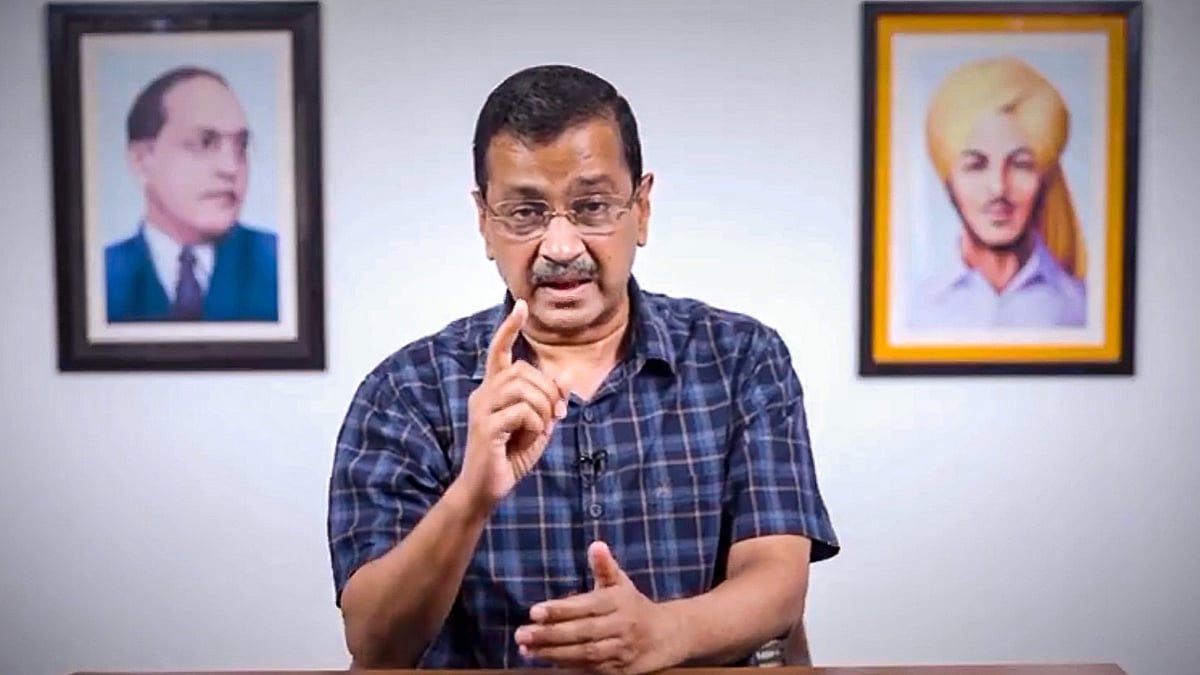
Manish Sisodia has informed the Delhi High Court that he will not appear before Justice Swarana Kanta Sharma in the excise policy case, following a similar decision by Arvind Kejriwal. Sisodia cited unresolved doubts about the judge's impartiality due to her public associations and her children's professional links with the central government. Both leaders are invoking 'Satyagraha' after their recusal pleas were rejected.
Key Highlights
- Manish Sisodia to boycott Delhi HC proceedings in excise policy case.
- Sisodia cites unresolved concerns over Justice Swarana Kanta Sharma's impartiality.
- Decision follows Arvind Kejriwal's similar boycott of the same judge.
- Both leaders claim 'Satyagraha' as their chosen path.
- Recusal pleas by Kejriwal and Sisodia were previously dismissed by the judge.
Senior Aam Aadmi Party (AAP) leader Manish Sisodia has formally communicated to the Delhi High Court that he will not be appearing before Justice Swarana Kanta Sharma in the ongoing excise policy case. This decision mirrors that of AAP chief and former Delhi Chief Minister Arvind Kejriwal, who had previously announced a similar boycott of proceedings before Justice Sharma. Sisodia's decision stems from what he describes as unresolved doubts regarding Justice Sharma's impartiality in the case. In a letter addressed to the judge, Sisodia articulated his concerns, which primarily revolve around Justice Sharma's repeated public engagements with the Akhil Bharatiya Adhivakta Parishad (ABAP), an organization with alleged links to the government. Additionally, he pointed to the professional engagement of Justice Sharma's children as government panel counsel, suggesting that this creates an appearance of proximity to government law officers who are appearing in the case against him. Sisodia emphasized that his concerns are not about the right of her children to practice law, but rather about the "appearance of impartial justice" and the duty of a judge to "preserve, protect, and publicly sustain" it, especially when circumstances might lead to a perception of conflict of interest. This stance comes after Justice Sharma had on April 20 rejected the recusal pleas filed by both Kejriwal, Sisodia, and other accused in the case. The judge had then stated that politicians should not be allowed to sow seeds of mistrust and that the application for recusal amounted to putting the judiciary on trial. In response to the judge's dismissal of the recusal pleas, Sisodia stated in his letter that his conscience left him with no other alternative but to follow the path of 'Satyagraha,' a principle advocated by Mahatma Gandhi. He clarified that his decision is specific to this excise policy case and should not be construed as a general distrust of the judicial institution or a refusal to appear before Justice Sharma in other matters. The excise policy case itself originated in 2022 when the Central Bureau of Investigation (CBI) registered an FIR alleging manipulation of the Delhi Excise Policy of 2021-22 to favor certain liquor licensees. The probe agency claimed that AAP leaders received kickbacks due to this alleged manipulation, leading to further investigation by the Enforcement Directorate (ED) under the Prevention of Money Laundering Act (PMLA). A trial court had initially discharged Kejriwal, Sisodia, and 22 other accused in February 2026. However, the CBI challenged this order, leading to the case being heard by Justice Sharma. Legal experts have indicated that the court may proceed with the hearing by appointing an amicus curiae (friend of the court) to assist in the case, even in the absence of the accused or their counsel. The article also highlights the broader political context, with the Aam Aadmi Party (AAP) and the Bharatiya Janata Party (BJP) engaging in a war of words over the issue. The BJP has accused the AAP of launching a "malicious propaganda campaign" against the judiciary, while the AAP has defended its leaders' actions as raising "reasonable apprehension" about the fairness of the proceedings. The decision by Kejriwal and Sisodia to boycott the court proceedings has raised questions about potential contempt of court, though legal experts suggest the court has mechanisms to proceed. The core of the dispute lies in the perception of bias, with Sisodia, like Kejriwal, emphasizing that justice must not only be done but also be "seen to be done." The decision to invoke Satyagraha signifies a move from legal recourse to a form of moral protest, underscoring the gravity of their concerns about judicial impartiality in this high-profile case. The news indicates a significant development in the ongoing legal battles involving AAP leaders, potentially impacting the future course of the excise policy case proceedings. The situation remains fluid, with the Delhi High Court expected to decide on the next steps, possibly involving the appointment of an amicus curiae. The public and legal fraternity are keenly watching how this standoff between the accused and the judiciary unfolds, and its implications for the broader Indian judicial system. The immediate next steps will likely be determined by the High Court in its upcoming hearing, scheduled for April 29 and 30, for hearing the CBI's appeal on merits. The court's decision on how to proceed in the absence of the accused parties will be crucial.
Frequently Asked Questions
Why is Manish Sisodia not appearing before Justice Swarana Kanta Sharma?
Manish Sisodia has informed the Delhi High Court that he will not appear before Justice Swarana Kanta Sharma in the excise policy case due to unresolved doubts about the judge's impartiality. He cited her public associations and her children's professional links with the central government as reasons for his apprehension.
What is 'Satyagraha' in this context?
In this context, 'Satyagraha' is being invoked by Manish Sisodia and Arvind Kejriwal as a Gandhian principle of non-violent resistance and truth force. It signifies their decision to withdraw from the legal proceedings as a form of protest against what they perceive as a lack of impartiality, opting for a moral stand rather than continuing with legal arguments.
Were the recusal pleas of Kejriwal and Sisodia accepted?
No, the recusal pleas filed by Arvind Kejriwal, Manish Sisodia, and other accused individuals seeking Justice Swarana Kanta Sharma's recusal from the excise policy case were rejected by the judge on April 20, 2026.
What is the excise policy case?
The Delhi excise policy case involves allegations of manipulation in the Delhi Excise Policy of 2021-22 to favor certain liquor licensees, leading to corruption charges against AAP leaders, including Manish Sisodia and Arvind Kejriwal. The CBI and ED are investigating the matter.