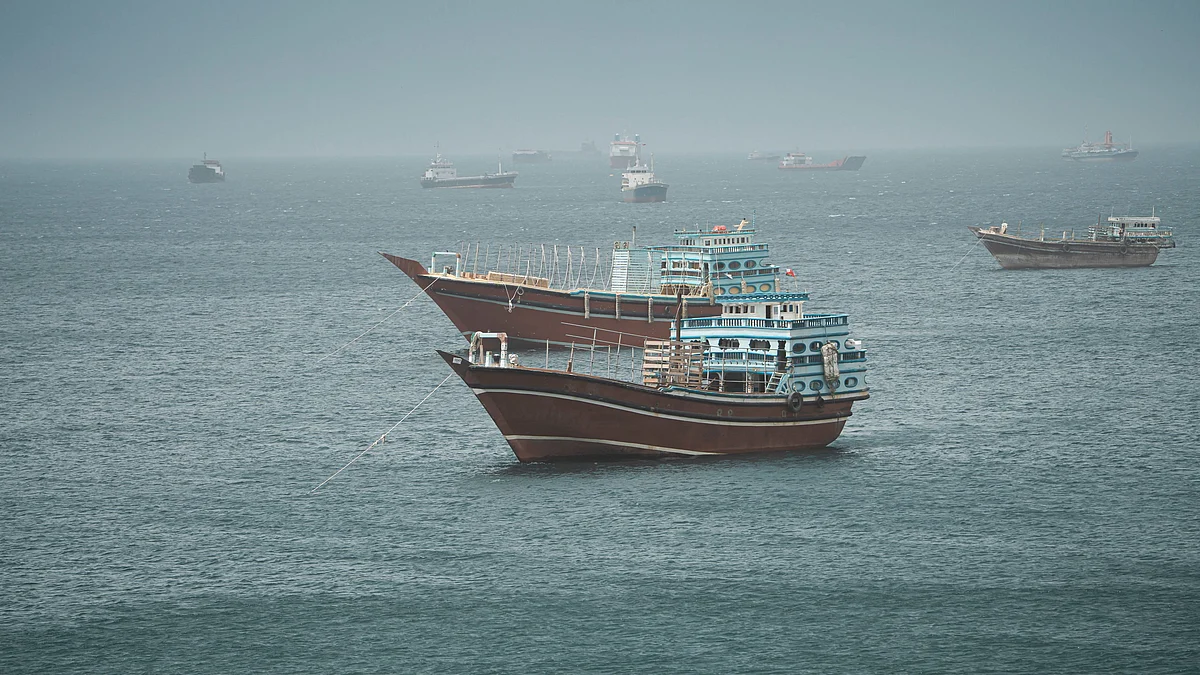
Oil prices drop amid Iran talks, Strait of Hormuz transit
Oil prices experienced a decline as reports emerged of ships transiting the Strait of Hormuz and President Trump indicated that negotiations with Iran were in their final stages. This development offers a glimmer of hope for a resolution to the ongoing conflict, which has significantly impacted global energy markets and caused a surge in oil prices.
Key Highlights
- Oil prices fell significantly on Wednesday.
- Iran reported ships transiting the Strait of Hormuz.
- President Trump stated US-Iran talks are in final stages.
- Hopes for a resolution to the Middle East conflict rose.
- Global energy markets are closely watching developments.
- India's economy remains vulnerable to oil price shocks.
Oil prices saw a notable slide on Wednesday, driven by two key developments: reports of ships successfully transiting the Strait of Hormuz and U.S. President Donald Trump's announcement that peace talks with Iran are in their "final stages." These events have injected a degree of optimism into the markets, suggesting a potential de-escalation of the conflict that has severely disrupted global energy supplies and sent prices soaring.
The news of ships navigating the Strait of Hormuz, a critical chokepoint for global oil and natural gas transit, offers a tangible sign of easing tensions. Specifically, Iran's state media reported that several vessels, including two Chinese-flagged supertankers and a South Korean-flagged carrier, passed through the strait under naval supervision [23, 27]. This transit, while potentially coordinated, signals a possible reopening of the vital waterway, which has been effectively closed since the outbreak of the U.S.-Israeli war on Iran in late February [21, 23]. The closure of the Strait of Hormuz has been described as the largest oil supply disruption in history, leading to unprecedented price spikes and inflationary shocks worldwide [6, 16, 23, 26].
Complementing the maritime news, President Trump's assertion that U.S.-Iran negotiations are in their "final stages" has further bolstered market sentiment [5, 7, 8, 10, 13, 17, 30, 34]. Trump has been engaged in a delicate diplomatic dance, oscillating between threats of renewed military action and expressions of optimism about a potential peace deal. He indicated he would wait "a few days" for Iran's response, suggesting that a deal could be reached very quickly or that the U.S. might resort to "nasty" actions if negotiations falter [7, 10, 13, 17, 30]. This diplomatic push, mediated in part by Pakistan, involves complex negotiations over issues such as Iran's nuclear program, sanctions, and the control of the Strait of Hormuz [8, 14, 35]. Iran's latest proposal, a 14-point plan, reportedly includes demands for the lifting of sanctions, release of frozen assets, and an end to the U.S. blockade on Iranian ports [15, 35].
The implications of these developments are significant for the global economy, particularly for energy-importing nations like India. A prolonged closure of the Strait of Hormuz has already led to a substantial increase in India's oil import costs, tightened global energy supplies, and raised concerns over inflation, foreign exchange reserves, and fuel pricing pressures [6, 26, 28]. India imports approximately 85% of its crude oil, with a significant portion passing through the Strait [28]. A sustained disruption to Hormuz could lead to a compounding triple pressure on India's economy: higher inflation, slower GDP growth, and a weaker rupee, potentially increasing the cost of all dollar-denominated imports [28]. Moody's forecasts that a full return to pre-conflict shipping levels through the Strait is unlikely in 2026, suggesting that higher and volatile oil prices will continue to impact economies, potentially leading India and other nations to negotiate bilateral energy supply routes [37].
Analysts, such as those at Wood Mackenzie, have outlined various scenarios, ranging from a "Quick Peace" with the Strait reopening by June to an "Extended Disruption" lasting through the end of 2026. In the most severe case, oil prices could approach $200 per barrel, and the global economy could contract by as much as 0.4% in 2026 [11, 16, 24]. The current positive developments, however, suggest a move away from the most dire predictions, with oil prices having already fallen sharply from their peaks. For instance, Brent crude futures saw a significant drop, falling 6.5% to $104.87 a barrel, and WTI crude futures dropped 6.1% to $98.13 a barrel on Wednesday [23].
This evolving situation underscores the delicate balance between diplomatic progress and the ever-present risk of renewed hostilities. The market's reaction reflects a cautious optimism, but the situation remains fluid. India, as a major oil importer, will be keenly observing these developments for their impact on its economic stability.
Frequently Asked Questions
What is the Strait of Hormuz and why is it important?
The Strait of Hormuz is a narrow waterway connecting the Persian Gulf and the Gulf of Oman. It is a critical chokepoint for global oil and natural gas transit, with approximately 20-21 million barrels of oil per day passing through it, accounting for about 20% of the world's total petroleum liquids consumption. Its strategic importance makes any disruption there have significant global economic repercussions.
Why are oil prices falling?
Oil prices are falling due to a combination of factors, primarily hopes for a de-escalation in the US-Iran conflict. Reports of ships successfully transiting the Strait of Hormuz and statements from President Trump indicating that peace talks with Iran are in their final stages have led to a decrease in market anxiety about supply disruptions.
What is the current status of US-Iran negotiations?
According to President Trump, negotiations between the US and Iran are in their "final stages." While he has expressed optimism about reaching a deal, he has also warned of potential military action if talks fail. Pakistan has been acting as a mediator, and Iran has submitted proposals that include demands for the lifting of sanctions and an end to the US blockade on its ports.
How does the conflict in the Strait of Hormuz affect India?
India, being a major oil importer, is significantly affected by disruptions in the Strait of Hormuz. These disruptions lead to higher oil import costs, increased inflation, pressure on foreign exchange reserves, and potential fuel price hikes. While a full return to pre-conflict shipping levels is unlikely in 2026, India may seek to negotiate bilateral energy supply routes.