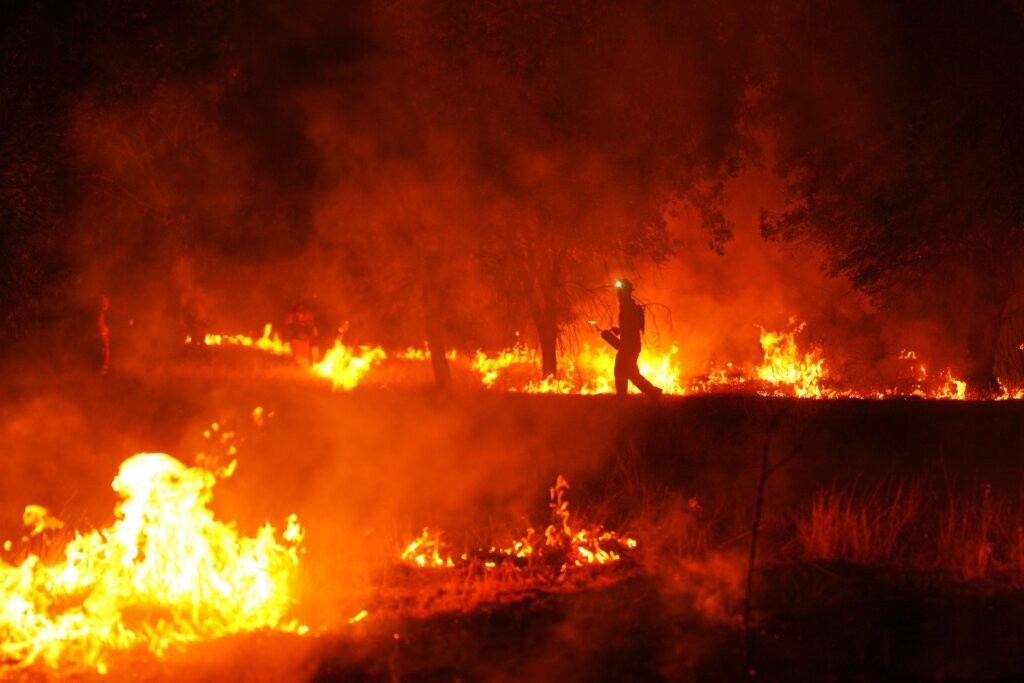
Europe's Wildfire Crisis: France & Spain Battle Blazes, Over 320K Evacuated
France and Spain are battling massive wildfires amid intense heatwaves, forcing over 320,000 people to evacuate. Firefighters race against time as soaring temperatures threaten to escalate the crisis, marking one of Europe's worst fire seasons in decades. The ongoing blazes highlight the urgent impact of climate change across the continent.
Key Highlights
- Over 320,000 people evacuated across France and Spain due to raging wildfires.
- Firefighters in both nations are racing to contain fires before a fresh heatwave.
- Europe faces one of its worst wildfire seasons, exacerbated by climate change.
- Gironde (France) and Avila (Spain) among the most severely affected regions.
- Thousands of hectares of land, homes, and infrastructure destroyed by flames.
- International aid deployed to support firefighting efforts in affected areas.
Europe is currently facing one of its most severe wildfire seasons in decades, with France and Spain at the epicenter of a crisis that has forced over 320,000 people to evacuate their homes and holiday accommodations. As of late July 2026, firefighters in both nations are engaged in a desperate race against time to control the raging infernos before a looming heatwave is expected to bring even higher temperatures and drier conditions, further complicating containment efforts.
In France, particularly the southwestern Gironde region near Bordeaux and the Cap Ferret peninsula, approximately 220,000 individuals have been evacuated. The fires in Gironde have been described as some of the nation's largest since World War II, with one significant blaze near Bordeaux generating an unprecedented 'pyrocumulonimbus' cloud capable of creating its own winds and lightning, intensifying the danger and unpredictability. The French Interior Minister Laurent Nuñez characterized the situation as 'extremely intense and unpredictable,' with flames advancing erratically towards metropolitan areas. Authorities have ordered additional evacuations from Atlantic coastal areas as a precautionary measure, highlighting the volatile nature of the blazes.
Meanwhile, Spain is also grappling with multiple major wildfires across its central and eastern regions, including the provinces of Avila, Madrid, Toledo, Castellon, and Valencia. Nearly 100,000 people have been ordered to evacuate or shelter in place across Spain, with some reports indicating figures between 60,000 and 75,000 from specific affected areas. A fire in the hilly province of Ávila has become Spain's largest on record, scorching approximately 77,000 hectares (nearly the size of New York City), with its perimeter stretching for 280 kilometers. The Spanish government declared a national emergency in affected regions, with Prime Minister Pedro Sánchez emphasizing the 'difficult hours' ahead and the need to address the 'climate emergency'.
Across both countries, the scale of destruction is immense. Spain has seen over 150,000 hectares burned since January 2026, with a significant portion (around 119,458 hectares) consumed since July 22 alone. France has lost more than 116,000 hectares of forest and vegetation since the beginning of the year. The fires have not only destroyed vast tracts of forest, farmland, and vineyards but also at least 240 homes in France and impacted numerous communities, closing motorways and disrupting rail lines.
The wildfires are exacerbated by successive heatwaves, with Europe experiencing its third or fourth such event this summer. Forecasts predict temperatures to soar up to 40°C (104°F) in parts of France and Spain from Tuesday onwards, significantly hindering firefighting efforts and increasing the risk of further blazes. Scientists and officials widely attribute the increased frequency and intensity of these extreme weather events to climate change, warning that this prolonged fire season could extend until early November.
The emergency response has been extensive, involving thousands of firefighters, military emergency brigades, and a coordinated international effort. The European Union's civil protection mechanism has been activated, deploying firefighting aircraft (including Canadair planes and Air Tractors) and helicopters from various member states like Portugal, Croatia, Czech Republic, Slovakia, Greece, Italy, and Sweden to support France and Spain. The human toll includes the deaths of several firefighters in France and Italy, and civilian fatalities in Spain, further underscoring the dangers involved. The smoke from the wildfires also poses significant health risks, particularly for vulnerable populations, worsening respiratory and heart conditions.
The overall situation remains critical, with ongoing evacuations and continuous efforts to contain the blazes, highlighting the urgent need for robust climate action and disaster preparedness in the face of a changing global climate.
Frequently Asked Questions
What is the current situation with wildfires in France and Spain?
France and Spain are battling extensive wildfires, particularly in France's Gironde region and multiple areas across central and eastern Spain, including Avila. These fires have necessitated the evacuation of over 320,000 people and have consumed vast areas of land and destroyed homes. Firefighters are working intensely to contain the blazes, especially as another heatwave approaches.
How many people have been evacuated due to the wildfires?
As of late July 2026, over 320,000 people have been evacuated across France and Spain. This includes approximately 220,000 in France, primarily from the Gironde department, and nearly 100,000 in Spain from various affected provinces.
What is exacerbating the wildfire crisis in Europe?
The wildfire crisis is being exacerbated by persistent heatwaves, with Europe experiencing its third or fourth heatwave of the summer. These high temperatures, coupled with drought conditions and strong winds, create ideal conditions for fires to ignite and spread rapidly. Climate change is widely cited by experts as intensifying these extreme weather events.
What is the impact of these wildfires?
The wildfires have resulted in widespread destruction, including tens of thousands of hectares of forests and vegetation burned, numerous homes destroyed, and significant disruption to local infrastructure and tourism. The crisis also poses severe public health risks due to smoke inhalation and places immense pressure on emergency services.
What kind of international assistance is being provided?
The European Union has activated its civil protection mechanism, deploying firefighting aircraft and helicopters from several member states, including Portugal, Croatia, Czech Republic, Slovakia, Greece, Italy, and Sweden, to assist France and Spain in combating the blazes. Thousands of firefighters and military personnel are also on the ground.