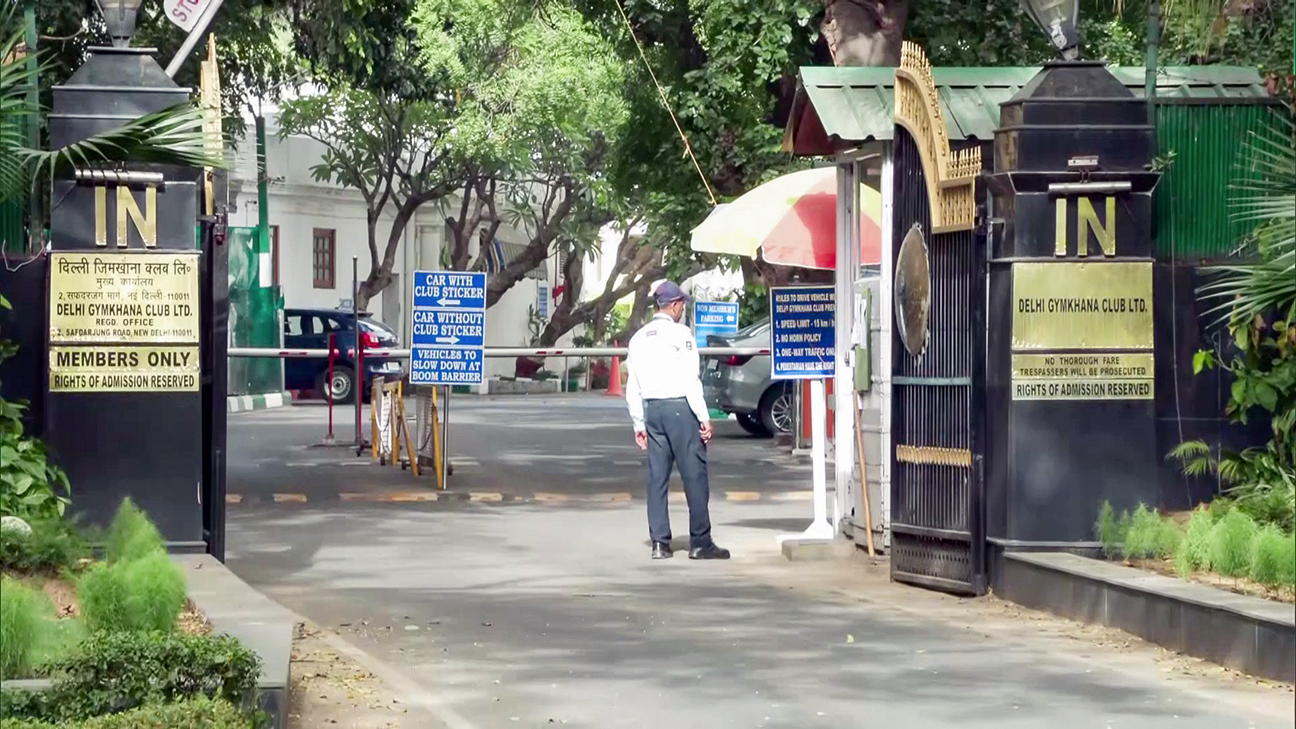
Delhi Gymkhana Club: Legal Battle Escalates Over Eviction and Government Control
The Delhi Gymkhana Club is embroiled in an intensifying legal battle with the Indian government over its 27.3-acre prime Lutyens' Delhi premises. Following a May 2026 eviction order and a June 2026 show-cause notice, club members are challenging the Centre's actions in the Delhi High Court, with the Supreme Court recently granting them liberty to pursue their concerns.
Key Highlights
- Government ordered Delhi Gymkhana Club to vacate its 27.3-acre premises by June 5, 2026.
- Eviction notice cited public purpose, including defense infrastructure and public security.
- Supreme Court allowed club members to move Delhi High Court regarding management takeover.
- Centre had assured Delhi High Court no coercive action until September 16, 2026.
- The club, managed by a government-nominated committee since 2021, faces allegations of mismanagement.
- Delhi Gymkhana boasts significant financial assets and an elite, long-standing membership.
The Delhi Gymkhana Club, an iconic institution established in 1913 and spread over 27.3 acres in Lutyens' Delhi, is currently at the center of a protracted legal and administrative dispute with the Central government. The controversy escalated significantly with an eviction order issued by the Land and Development Office (L&DO) under the Ministry of Housing and Urban Affairs on May 22, 2026. This order directed the club to vacate its premises by June 5, 2026, citing a "public purpose" clause in the original lease deed, specifically mentioning the need to strengthen defence infrastructure and for public security, given the area's strategic importance.
This eviction notice was preceded by years of government intervention, which began with allegations of mismanagement, elitism, and deviation from its original objectives as a Section 8 company (non-profit). In 2020, the Ministry of Corporate Affairs (MCA) filed a petition with the National Company Law Tribunal (NCLT) seeking to take over the club's management. The NCLT initially directed the inclusion of government nominees in the General Committee. Subsequently, on February 15, 2021, the National Company Law Appellate Tribunal (NCLAT) issued a strong interim order, suspending the club's elected General Committee and directing the Centre to appoint an administrator, a role initially filled by Manmohan Juneja. In April 2022, the NCLT further allowed the government to nominate 15 directors to the club's General Committee.
In October 2024, the NCLAT upheld the government's intervention but stipulated that the government's superintendence could not be indefinite. It directed the government-nominated committee to implement remedial measures, including restructuring the club's affairs and addressing membership and governance issues, and to hold elections for an elected general council by March 31, 2025. However, club members allege that these directions have not been implemented and that the government-nominated management has overstayed its mandate.
Following the May 2026 eviction order, the L&DO issued a show-cause notice on June 29, 2026, under the Public Premises (Eviction of Unauthorized Occupants) Act, 1971, asking the club to explain why an eviction order should not be passed against it. The government also raised a demand for Rs 47.59 crore in arrears on April 16, 2026, which has been challenged by the club.
The legal battle has since intensified. The club and its members have moved the Delhi High Court, challenging both the May 22 eviction order and the June 29 show-cause notice. On September 3, 2026, the Centre assured the Delhi High Court that it would not take any coercive action against the club until September 16, 2026. The Delhi High Court has scheduled further hearings on these pleas for September 29, 2026.
Most recently, on September 15, 2026, the Supreme Court heard a petition from 11 Delhi Gymkhana Club members who challenged the Centre's decision to take over the club's management and the subsequent eviction proceedings. The Supreme Court granted these members the liberty to approach the Delhi High Court with their concerns, noting that the current government-nominated committee managing the club cannot effectively challenge the government's actions, as both the lessor and lessee are essentially under government control. The members' plea highlighted that the government-nominated management had overstayed the NCLAT's mandated timeline for elections and restoration of elected control, suggesting a potential *mala fide* attempt by the government to fully take over the club.
The Delhi Gymkhana Club is renowned for its elite status, long waiting lists for membership (often extending to 30-40 years), and significant financial holdings. Despite operating as a non-profit organization under Section 8 of the Companies Act, its net worth is approximately Rs 129 crore, with mutual fund investments reportedly valued between Rs 200-217 crore as of May 2026. The land it occupies in Lutyens' Delhi is estimated to be worth over Rs 27,000 crore. The club also reported a substantial surplus of Rs 9.5 crore in FY24, a significant jump from the previous year. The ongoing legal battles reflect a clash between the club's powerful legacy and the government's push for control, citing public interest and addressing concerns of exclusivity and financial management.
At the time the original Hindustan Times article was published on May 24, 2026, the claim that "Members get ready for legal battle, start gathering signatures for urgent court petition" was accurate. However, as of September 2026, this phase has evolved into active and multi-tiered litigation in various courts, including the Delhi High Court and, briefly, the Supreme Court, which has now directed members back to the High Court for their specific concerns. The story is a significant development concerning an influential institution in India.
Frequently Asked Questions
Why did the government order the Delhi Gymkhana Club to be evicted?
The Land and Development Office (L&DO) ordered the eviction of the Delhi Gymkhana Club, citing a 'public purpose' clause in its lease deed. The government stated the land is required for strengthening defence infrastructure and for public security, as it is located in a highly sensitive and strategic area of Lutyens' Delhi.
What is the current status of the legal battle?
As of September 2026, the Delhi Gymkhana Club and its members are challenging the eviction order and show-cause notice in the Delhi High Court. The Supreme Court recently allowed a group of members to move the High Court to raise their concerns regarding the government's takeover and the ineffectiveness of the current government-nominated management to fight the Centre. The Delhi High Court is scheduled to hear the pleas on September 29, 2026.
When did the government first intervene in the club's management?
The government's intervention began around 2020-2021, when the Ministry of Corporate Affairs filed a petition alleging mismanagement and activities prejudicial to public interest. In February 2021, the National Company Law Appellate Tribunal (NCLAT) suspended the club's elected committee and appointed a government-nominated administrator.
How wealthy is the Delhi Gymkhana Club?
Despite being a non-profit Section 8 company, the Delhi Gymkhana Club has an approximate net worth of Rs 129 crore and holds significant investments, including mutual funds valued between Rs 200-217 crore as of May 2026. The 27.3-acre land it occupies in Lutyens' Delhi is estimated to be worth over Rs 27,000 crore.
What were the allegations against the Delhi Gymkhana Club's management?
Allegations against the club included mismanagement, financial irregularities, elitism, restrictive membership policies, nepotism ('parivarwaad'), and a deviation from its original objectives of promoting sports. The government argued that the club had become a recreational facility for a chosen few, with membership virtually closed to common people.