India's 'Cockroach' Movement Demands Education Minister's Resignation Amid Exam Irregularities
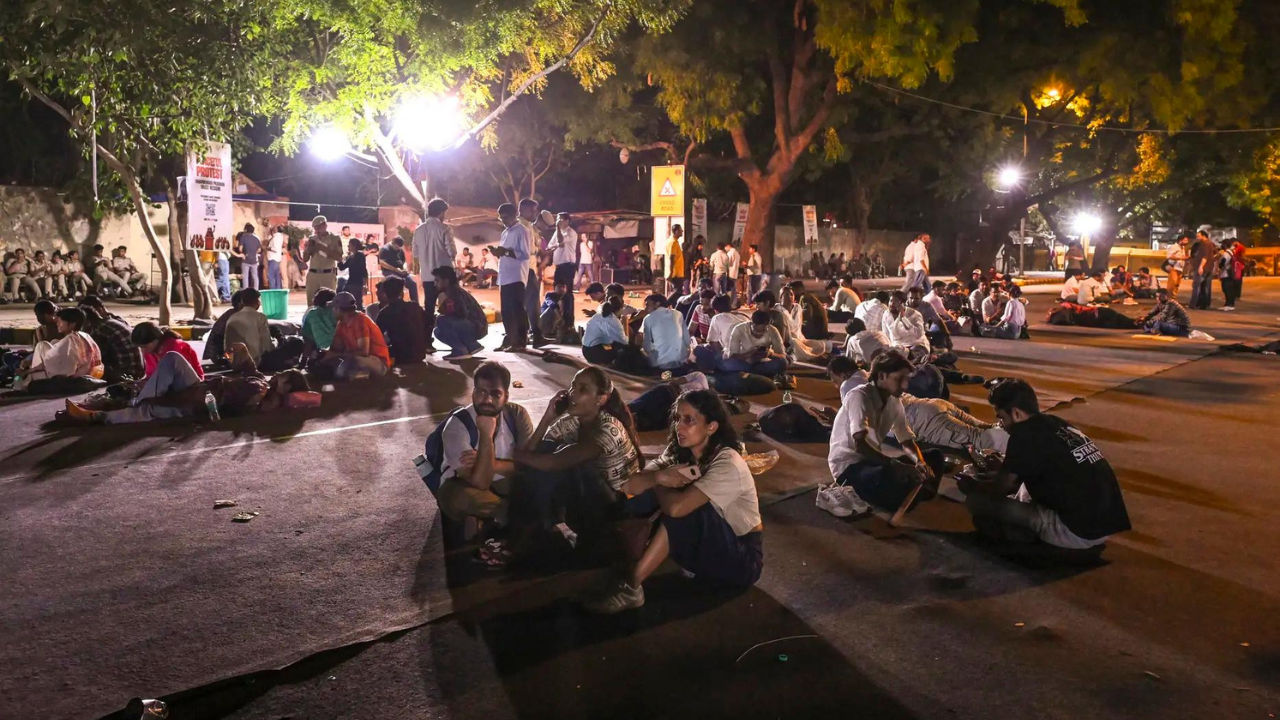
A youth-led movement in India, known as the 'Cockroach' movement or CJP, has staged protests demanding the resignation of Union Education Minister Dharmendra Pradhan. The protests cite alleged irregularities and paper leaks in national examinations as the primary reason for their demand. The movement gained traction on social media and has transitioned to physical demonstrations at Jantar Mantar, New Delhi.
Key Highlights
- Youth-led 'Cockroach' movement protests for Education Minister's resignation.
- Protesters cite alleged examination irregularities and paper leaks.
- Demonstrations held at Jantar Mantar, New Delhi.
- Movement gained significant traction on social media.
- Demand for accountability in India's education system is central.
The 'Cockroach' movement, officially known as the Cockroach Janta Party (CJP), has organized significant protests in New Delhi, demanding the resignation of Union Education Minister Dharmendra Pradhan. The core of their protest revolves around alleged irregularities and repeated paper leaks in various national examinations, including NEET, CBSE, and CUET. The movement, which began as an online initiative, has rapidly gained momentum, particularly among India's youth, and has transitioned into physical demonstrations.
The CJP, founded by Abhijeet Dipke, has been vocal about the need for accountability within India's education system. Dipke, who returned to India to lead these protests, has stated his commitment to the cause, even expressing his readiness to "sacrifice freedom" for the movement. The protests have seen thousands of students, young professionals, and supporters gather at Jantar Mantar, a prominent protest site in New Delhi. Many participants have donned symbolic 'cockroach' masks, reclaiming the term that initially gained attention after a Supreme Court Judge's remarks comparing unemployed youth to cockroaches. The movement has adopted this moniker as a symbol of resilience and defiance.
The protests have been characterized by slogans demanding Minister Pradhan's resignation and by the use of creative tactics, such as banging steel plates with spoons. This latter method is seen as a satirical commentary on Prime Minister Narendra Modi's 2020 appeal for citizens to bang utensils in solidarity with frontline health workers during the COVID-19 pandemic.
Several news outlets have reported on the CJP's activities. Al Jazeera covered the movement, highlighting their camp-out at Jantar Mantar. Other Indian news sources like The Hindu, The Quint, and The Times of India have also provided coverage of the protests, detailing the demands, the participants, and the evolving nature of the movement.
Climate activist Sonam Wangchuk has also lent his support to the CJP's cause, emphasizing that the issues in India's education system extend beyond specific examination controversies. His involvement underscores the broader concerns about educational reforms and accountability that the CJP is advocating for.
The CJP's social media presence has been substantial, with reports indicating millions of followers on platforms like Instagram. This digital foundation has been crucial in mobilizing support and raising awareness for their cause.
The protests have been ongoing, with Dipke vowing to continue the agitation until his demands are met, even as some protests have concluded temporarily, with Dipke stating that the initial actions were merely a "trailer" for what's to come. The government's response to the ultimatum for Pradhan's resignation has been largely absent, according to reports.
Sources indicate that the movement's focus has expanded beyond examination irregularities to include broader issues such as unemployment, rising living costs, and government accountability, utilizing humor, memes, and online campaigns to amplify their message.
Credibility of news sources reporting on this story:
Al Jazeera: Rated as Lean Left bias with Mixed factual reporting by Media Bias/Fact Check.
The Hindu: Rated as Left-Center bias with Mostly Factual reporting by Media Bias/Fact Check.
The Quint: Rated as Left-Center bias with High factual reporting by Media Bias/Fact Check.
The Times of India: Rated as Right-Center bias with Mixed factual reporting by Media Bias/Fact Check. Another source states The Times of India has an Average reliability score of 34% and a Fact Analysis score of 47% reliable, with a Bias Score of 2% Center. However, other sources indicate The Times of India is India's most trusted news brand.
These varying credibility scores suggest that while the core events are reported across multiple outlets, the audience should consider the potential biases of each source when consuming the information. The consistency across multiple reports from different sources, however, corroborates the central claims of the CJP's protests and demands.
Frequently Asked Questions
What is the 'Cockroach' movement in India?
The 'Cockroach' movement, also known as the Cockroach Janta Party (CJP), is a youth-led movement in India that emerged to protest alleged irregularities and paper leaks in national examinations. They have adopted the name 'cockroach' as a symbol of resilience.
Who is Abhijeet Dipke?
Abhijeet Dipke is the founder of the Cockroach Janta Party (CJP) and a prominent leader of the 'Cockroach' movement. He has been leading protests demanding the resignation of the Union Education Minister.
What are the main demands of the 'Cockroach' movement?
The primary demand of the 'Cockroach' movement is the resignation of Union Education Minister Dharmendra Pradhan, citing alleged irregularities, paper leaks, and a lack of accountability in the Indian education system, particularly concerning national examinations.
Where are the protests taking place?
The major protests organized by the 'Cockroach' movement have been taking place at Jantar Mantar in New Delhi.
What is the significance of the 'cockroach' name and the plate-banging protest tactic?
The 'cockroach' name was adopted by the movement after a Supreme Court judge's remarks, turning a derogatory term into a symbol of resilience. The plate-banging tactic is a satirical act, referencing Prime Minister Narendra Modi's 2020 call for citizens to bang utensils, used here to draw attention to the protestors' grievances.