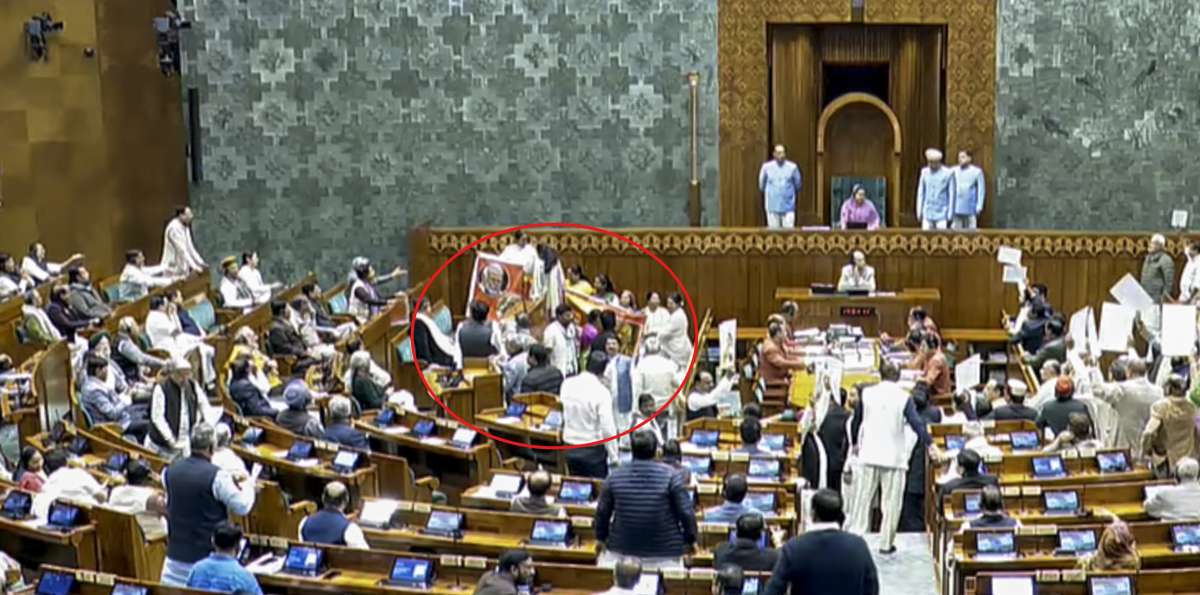
Opposition submits no-confidence motion against Lok Sabha Speaker Om Birla
Opposition parties, led by the Congress, have submitted a no-confidence motion against Lok Sabha Speaker Om Birla. The motion cites allegations of "blatantly partisan" conduct and denial of speaking opportunities to opposition leaders, including Rahul Gandhi, as grounds for removal. The notice, signed by over 100 MPs, has been submitted to the Lok Sabha Secretary-General for examination.
Key Highlights
- Opposition submits no-confidence motion against Lok Sabha Speaker Om Birla.
- Allegations of partisan conduct and denial of speaking opportunities cited.
- Motion submitted with over 100 MP signatures.
- Notice sent to Lok Sabha Secretary-General for examination.
- Speaker Om Birla will not preside over proceedings until outcome.
- Historical attempts to remove Lok Sabha Speakers have not succeeded.
In a significant political development, opposition parties in India, spearheaded by the Congress, have submitted a notice for a no-confidence motion against the current Lok Sabha Speaker, Om Birla. The motion, which has garnered the support of over 100 Members of Parliament, formally accuses Speaker Birla of conducting the House's proceedings in a "blatantly partisan manner." Key grievances highlighted in the notice include the alleged denial of opportunities for opposition leaders, most notably the Leader of the Opposition Rahul Gandhi, to speak on critical issues, including during the debate on the Motion of Thanks to the President's Address. The opposition also pointed to the "arbitrary suspension" of eight MPs, seven of whom belonged to the Congress, for the remainder of the Budget Session, viewing it as a penalization for exercising their democratic rights. Furthermore, the motion criticizes the Speaker for allegedly allowing a BJP MP to make "wholly objectionable and personalised attacks" on two former Prime Ministers without adequate reprimand, while simultaneously taking a strong stance against opposition members. The opposition also took exception to remarks made by Speaker Birla on February 5, which they claim cast "blatantly false and derogatory allegations" against Congress MPs, stemming from his statement that he had requested the Prime Minister not to attend the House to avert a possible "unpleasant incident." The notice was submitted to the Lok Sabha Secretary-General and is currently under examination as per parliamentary rules. As per convention and rules, Speaker Om Birla has decided not to preside over the Lok Sabha proceedings until a decision is reached on the no-confidence motion against him. The process for removing a Lok Sabha Speaker is outlined in Article 94(c) of the Constitution and governed by specific rules of procedure. A motion for removal requires a written notice of at least 14 days to be submitted to the Secretary-General. Once the notice is received and examined, the Speaker (or in this case, the Deputy Speaker) puts it before the House to grant leave for discussion. For the motion to proceed, at least 50 members must stand in support. If leave is granted, a day is scheduled for discussion, which cannot be more than ten days from the date of granting leave. The motion is then put to a vote, requiring an "effective majority" – a majority of the total current strength of the Lok Sabha (at least 272 votes in the current 543-member House) – to pass. Historically, while no-confidence motions against Speakers have been moved in the past (in 1954, 1966, and 1987), none have succeeded in removing a Speaker from office. The current political landscape, with the ruling NDA holding a significant majority in the Lok Sabha, makes the success of this motion unlikely, though it does serve as a significant political statement and intensifies parliamentary confrontation. The move is specific to the Lok Sabha and is a domestic political matter within India. The news falls under the 'Politics' and 'India' categories. The estimated reading time is approximately 4 minutes. The tags associated with this news include: Lok Sabha, Speaker, Om Birla, No-Confidence Motion, Indian Parliament, Politics, Congress, Opposition. The keywords for SEO are: Lok Sabha Speaker, Om Birla, No-Confidence Motion, Indian Parliament, Politics India, Opposition Parties, Congress Party, Parliamentary Procedure, Removal of Speaker. For image search, relevant keywords include: Lok Sabha Speaker Om Birla, Indian Parliament building, Opposition leaders India, No Confidence Motion India, Rajya Sabha proceedings.
Frequently Asked Questions
What is a no-confidence motion against the Lok Sabha Speaker?
A no-confidence motion against the Lok Sabha Speaker is a parliamentary procedure initiated by opposition parties to express their lack of faith in the Speaker's conduct and impartiality, seeking their removal from the office. It is different from a no-confidence motion against the government.
What are the grounds for the no-confidence motion against Om Birla?
The opposition has cited allegations of "blatantly partisan" conduct by Speaker Om Birla, including denying speaking opportunities to opposition leaders, arbitrary suspension of MPs, and making what they termed "blatantly false and derogatory allegations" against Congress MPs.
What is the procedure for removing a Lok Sabha Speaker?
A Speaker can be removed by a resolution passed by a majority of all the then members of the Lok Sabha. This requires a written notice of at least 14 days, supported by at least 50 MPs for leave to be granted, followed by a debate and voting, needing an effective majority (at least 272 votes in the current House) for passage.
Has a Lok Sabha Speaker ever been removed through a no-confidence motion in India?
No, historically, no Lok Sabha Speaker in India has ever been removed through a no-confidence motion. While such motions have been moved in the past (in 1954, 1966, and 1987), they have not succeeded in removing the Speaker.
What happens if the no-confidence motion against Speaker Om Birla is successful?
If the no-confidence motion is passed by the required majority, Speaker Om Birla would immediately cease to hold the office. The Lok Sabha would then be required to elect a new Speaker without delay to ensure the continuity of parliamentary proceedings.