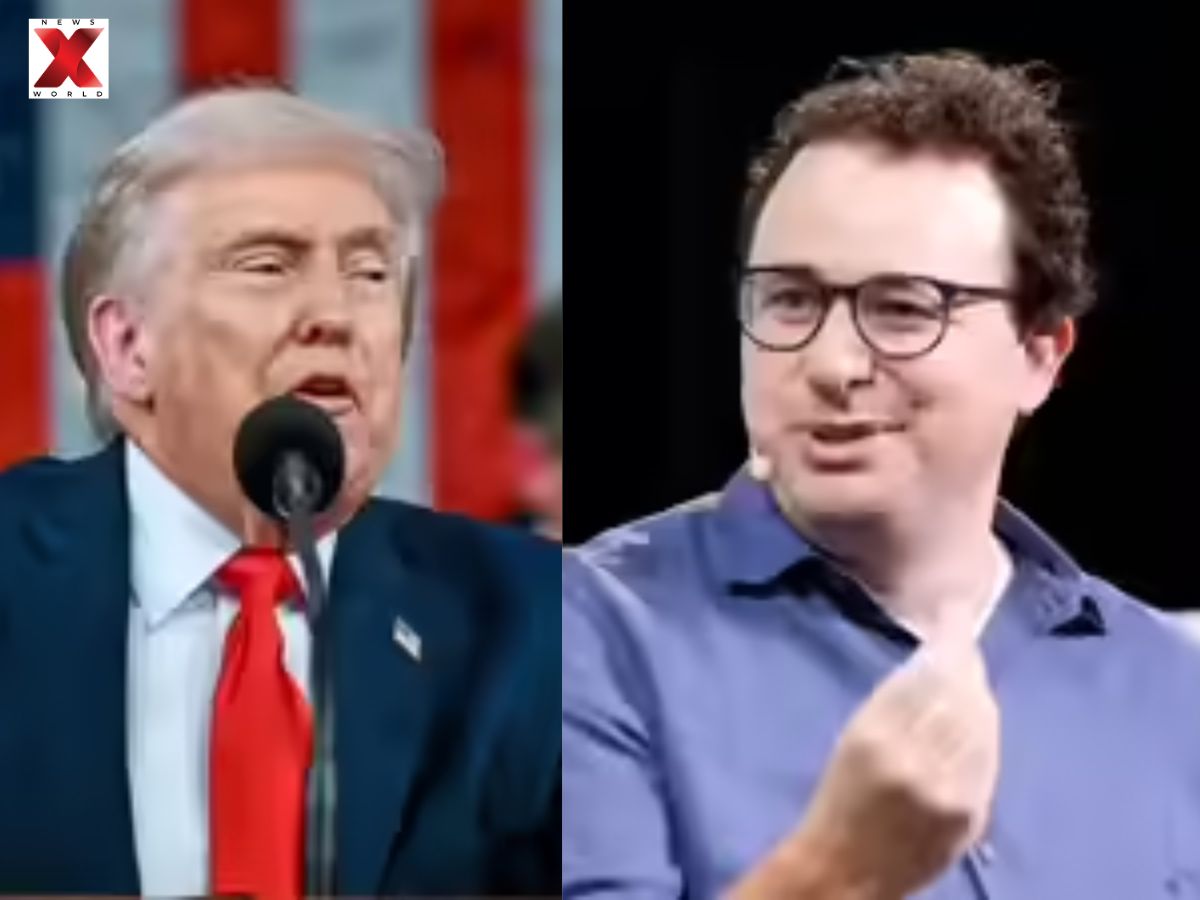
Trump praises Pakistan leaders amid Afghanistan conflict; US backs self-defense
Former US President Donald Trump has lauded Pakistan's Prime Minister Shehbaz Sharif and Army Chief Asim Munir as "great people" amid escalating Pakistan-Afghanistan border conflict. While Trump expressed confidence in his ability to resolve the dispute quickly, the US administration has stated its support for Pakistan's right to self-defense against Taliban attacks.
Key Highlights
- Trump praised Pakistan's PM and Army Chief amid border conflict.
- US backs Pakistan's right to self-defense against Afghan Taliban.
- Trump expressed confidence in resolving Pakistan-Afghanistan conflict quickly.
- The US administration criticized the Taliban's counterterrorism failures.
- Escalating tensions lead to 'open war' declarations between Pakistan and Afghanistan.
Former U.S. President Donald Trump has publicly praised Pakistan's Prime Minister Shehbaz Sharif and Army Chief General Asim Munir, referring to them as "great people" amidst a significant escalation of conflict between Pakistan and Afghanistan. Trump also expressed his belief that he could swiftly resolve the ongoing Pakistan-Afghanistan dispute, drawing parallels to his administration's efforts in ending eight wars in eight months. These comments were made on the sidelines of the ASEAN summit in Malaysia. The U.S. administration, meanwhile, has voiced support for Pakistan's "right to defend itself" against what it described as "attacks" by Afghanistan's Taliban. A U.S. State Department spokesperson criticized the Taliban's counterterrorism commitments, stating that they have consistently failed to uphold them, thereby allowing violence to destabilize the region and enabling terrorist groups to use Afghanistan as a launching pad for attacks.
The Pakistan-Afghanistan conflict has escalated dramatically, with Pakistan's defense minister declaring a state of "open war" with Afghanistan following cross-border strikes and skirmishes. Pakistan launched airstrikes targeting cities in Afghanistan, including the capital Kabul and Kandahar, in response to what it termed "unprovoked aggression" along the border. The Taliban government confirmed the Pakistani airstrikes and claimed to have killed Pakistani soldiers, while Pakistan reported inflicting significant casualties on Taliban forces and terrorists. The conflict has led to international calls for de-escalation, with countries like China urging a ceasefire and Iran offering mediation.
This escalation follows months of rising tensions and tit-for-tat skirmishes along the porous border. Pakistan has accused the Afghan Taliban of harboring Tehrik-e-Taliban Pakistan (TTP), a militant group that has intensified attacks in northwestern Pakistan since the U.S. withdrawal from Afghanistan in 2021. The Afghan Taliban have denied harboring the TTP.
Trump's positive remarks about Pakistani leadership come at a time when U.S.-Pakistan relations have seen a significant shift. During the Trump administration (2017-2021), the relationship initially experienced strain, marked by accusations of Pakistan harboring terrorists and the suspension of military aid. However, relations improved from 2019 onwards, driven by Pakistan's role in the Afghan peace process. In recent times, Trump has taken credit for brokering a ceasefire in the India-Pakistan conflict in May 2025, a claim that India has publicly disputed, while Pakistan emphasized Trump's mediation role. This perceived mediation played a role in strengthening U.S.-Pakistan relations, with Pakistan's Army Chief Asim Munir receiving an invitation to the White House in June 2025. The relationship has been further influenced by Pakistan's stance on Middle East policy and its engagement with critical minerals, areas of interest for the U.S. in its rivalry with China.
For India, this renewed U.S.-Pakistan engagement, particularly Trump's vocal support and his claims of mediating regional conflicts, presents a complex geopolitical landscape. India's public refutation of Trump's claims regarding the India-Pakistan conflict highlights its adherence to a policy of bilateral dispute resolution and its aversion to third-party mediation, especially on the Kashmir issue. The current developments indicate a fluid and dynamic regional security situation, with the pronouncements of former U.S. leaders potentially influencing perceptions and diplomatic maneuvering among South Asian nations.
Frequently Asked Questions
Who are Shehbaz Sharif and Asim Munir?
Shehbaz Sharif is the current Prime Minister of Pakistan, and Asim Munir is the Chief of Army Staff of the Pakistan Army.
What is the nature of the Pakistan-Afghanistan conflict?
The conflict involves escalating border skirmishes, airstrikes, and accusations of harboring militants, with Pakistan targeting the Tehrik-e-Taliban Pakistan (TTP) operating from Afghan territory, and Afghanistan retaliating against Pakistani actions.
What is Donald Trump's stance on the Pakistan-Afghanistan conflict?
Donald Trump has praised Pakistani leaders Shehbaz Sharif and Asim Munir, expressed his personal ability to resolve the conflict quickly, and stated he gets along very well with Pakistan, though he indicated he would not directly intervene.
What is the U.S. administration's position on the conflict?
The U.S. administration supports Pakistan's right to self-defense against Taliban attacks and has criticized the Taliban for failing to uphold counterterrorism commitments, which they argue destabilizes the region.