India-Germany Ties: Merz Visit Eyes Submarine Deal, Overcoming Challenges | Quick Digest
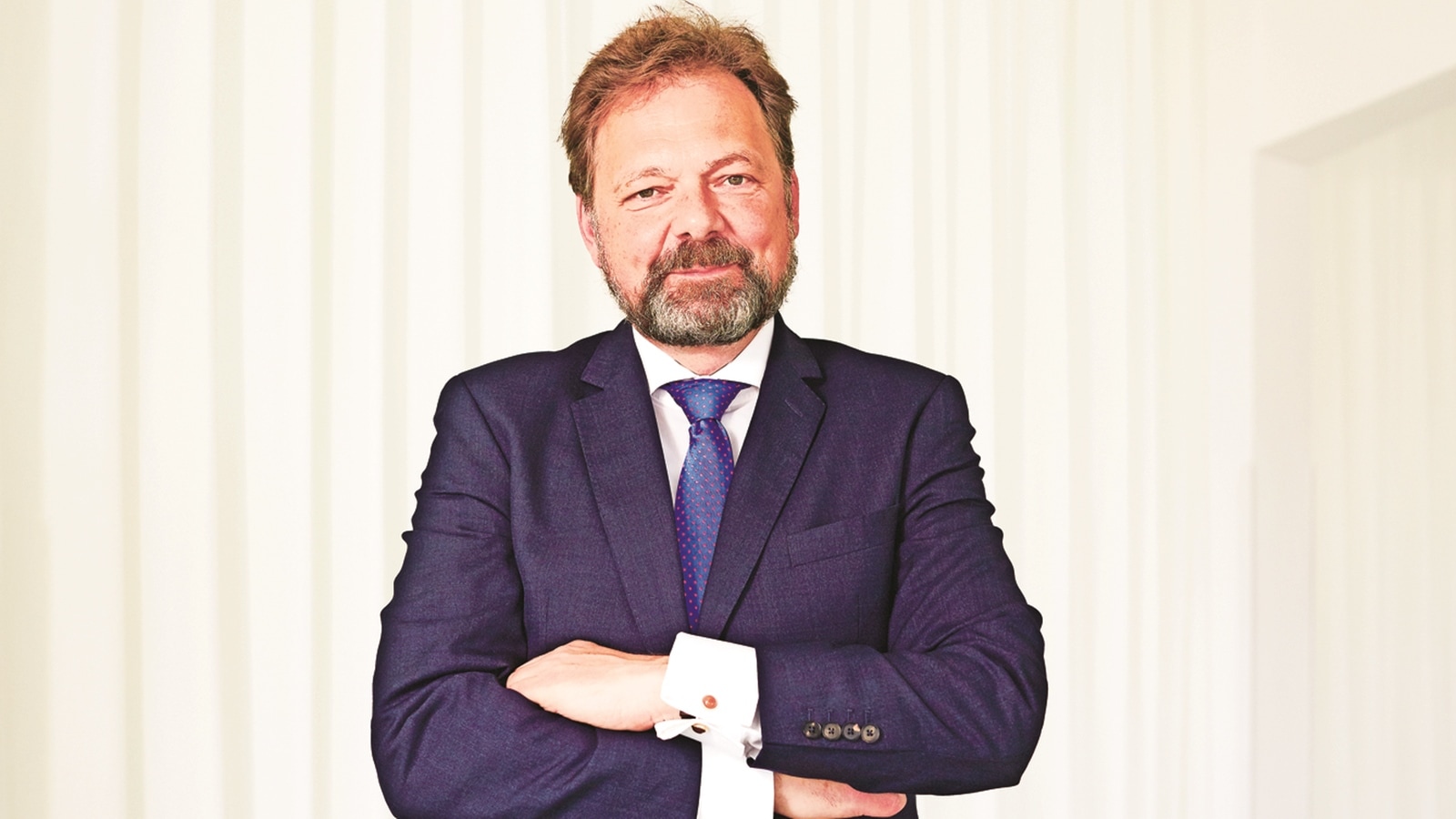
German Chancellor Friedrich Merz is in India to advance strategic ties, focusing on an $8 billion submarine deal and addressing economic and geopolitical divergences. The visit highlights India's critical role in Germany's diversification strategy amidst global shifts.
German Chancellor Friedrich Merz visits India January 12-13, 2026.
India, Germany nearing $8 billion submarine deal with technology transfer.
Deal involves local construction of six AIP submarines by MDL and TKMS.
Geopolitical and trade differences pose challenges to closer bilateral ties.
Germany seeks to diversify trade, viewing India as key alternative to China.
Visit aims to strengthen defense, trade, and technology cooperation.
German Chancellor Friedrich Merz is undertaking a significant two-day official visit to India on January 12-13, 2026, marking his first trip to Asia since assuming office. His itinerary includes stops in Ahmedabad, where he will meet Prime Minister Narendra Modi, and Bengaluru, focusing on economic and technological cooperation.
A major focus of the visit is the anticipated finalization of an approximately $8 billion defense agreement for the construction of six advanced conventional submarines for the Indian Navy. This landmark deal, part of India's Project-75(I) program, involves full technology transfer from Germany's Thyssenkrupp Marine Systems (TKMS) to India's state-owned Mazagon Dock Shipbuilders (MDL) for local manufacturing. The submarines will be equipped with Air-Independent Propulsion (AIP) systems, enhancing India's maritime capabilities.
The article from DW accurately highlights that forging closer ties between Germany and India will not be easy, a claim corroborated by various credible sources. Key challenges include geopolitical divergences, such as India's neutral stance on the Russia-Ukraine conflict contrasting with Germany's opposition, and differing approaches to China. Economic and trade barriers, including the long-pending EU-India Free Trade Agreement, India's 'Atmanirbhar Bharat' (self-reliant India) policy, and regulatory misalignments, also present hurdles. Despite these complexities, Germany views India as a crucial alternative to China for trade diversification amidst global uncertainties and seeks to strengthen strategic partnerships. The visit aims to build on existing momentum, deepening cooperation across trade, investment, defense, clean energy, and technology.
Deutsche Welle (DW) is considered a highly credible source with high factual reporting, despite a Left-Center or Center bias. Related articles from EurAsian Times and Tribune India, while covering the same developments, carry lower credibility scores due to their reported biases and inconsistent factual reporting. However, the core facts of Merz's visit and the advanced submarine deal are widely corroborated by other reputable news agencies and defense publications.
Read the full story on Quick Digest