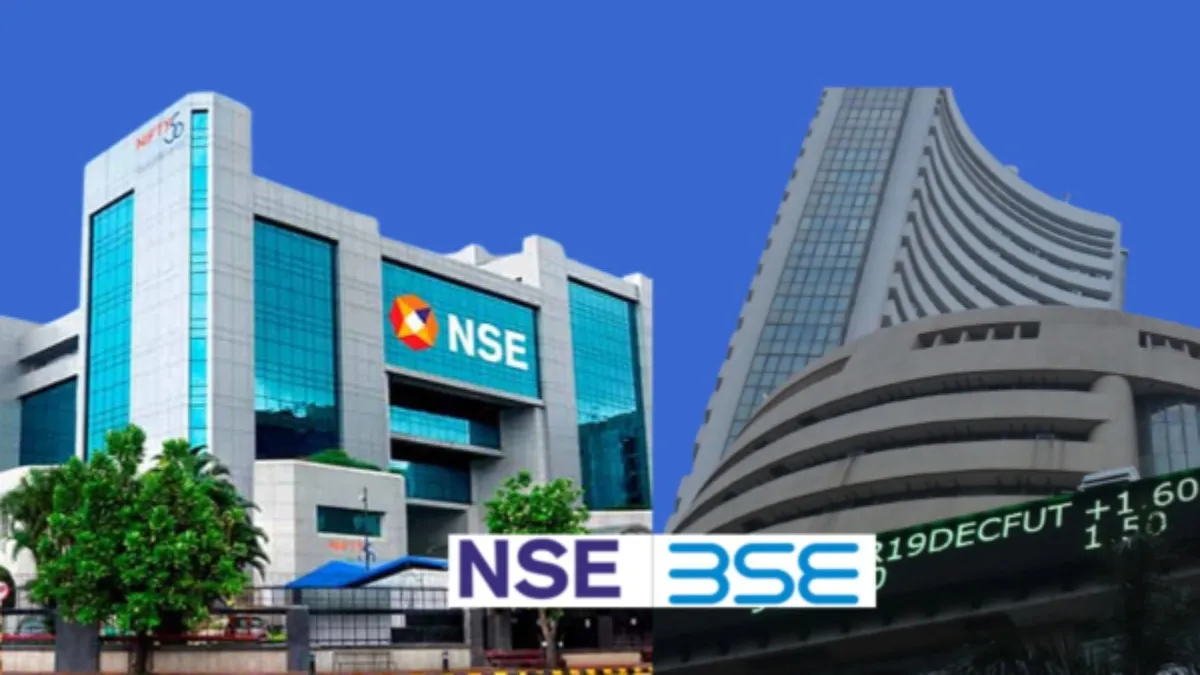
Indian Markets Face Headwinds: Wall Street, US-Iran Tensions Impact Nifty, Sensex
Indian equity markets, Nifty50 and Sensex, started lower on June 11, 2026, influenced by a sharp Wall Street sell-off in AI stocks and escalating US-Iran tensions driving up crude oil prices. Foreign Institutional Investors continued selling, though Domestic Institutional Investors provided support.
Key Highlights
- Indian markets opened lower on June 11, 2026, tracking weak global cues.
- Wall Street saw a significant sell-off in AI stocks on June 10, 2026.
- US-Iran tensions escalated, leading to oil price surges and Strait of Hormuz closure concerns.
- FIIs remained net sellers, offloading ₹2,124.98 crore, while DIIs bought shares.
- Nifty50 and Sensex showed early weakness but recovered some losses later.
- Rising crude oil prices and inflation concerns added pressure on investor sentiment.
Indian equity benchmarks, NIFTY50 and SENSEX, opened lower on Thursday, June 11, 2026, as global market sentiment turned cautious following a significant sell-off on Wall Street and escalating geopolitical tensions in the Middle East. Early indicators, such as GIFT Nifty futures, signaled a negative start for Indian equities, trading lower by 79 to 150 points.
On Wednesday, June 10, 2026, Indian markets had ended on a largely flat note, erasing intraday gains due to profit booking amid the initial flaring up of West Asian geopolitical tensions. The SENSEX had advanced marginally by 0.09% to close at 73,983, while the NIFTY50 declined slightly by 0.12% to settle at 23,215.
Wall Street provided weak cues, with major US stock indexes closing sharply lower on Wednesday, June 10, 2026. This downturn was primarily driven by another significant sell-off in artificial intelligence (AI) stocks. The S&P 500 dropped 1.6% to 7,266.99, the Dow Jones Industrial Average fell 1.9% to 49,918.78, and the Nasdaq composite, heavily weighted by tech, led the decline with a 2% slide to 25,169.50. This marked the S&P 500's first back-to-back drop in three weeks, bringing it back to early May levels. Investors expressed concerns that AI stock prices had risen too quickly and too high. Asian markets consequently traded lower on Thursday, mirroring the weak closing of US stocks.
Foreign Institutional Investors (FIIs) continued their selling spree in the Indian market, offloading shares worth ₹2,124.98 crore on Wednesday, June 10, 2026. This marked the ninth consecutive session of FII outflows, with foreign portfolio investors withdrawing a record $30.4 billion from Indian equities so far in 2026. In contrast, Domestic Institutional Investors (DIIs) remained net buyers, providing crucial support to the market by purchasing stocks worth ₹3,123.95 crore on June 10, 2026. This strong DII buying has been instrumental in cushioning the Indian market from deeper corrections amidst significant foreign selling, a trend observed throughout 2026.
A major geopolitical development influencing global and Indian markets was the escalation of tensions between the United States and Iran. On June 10, 2026, oil prices surged significantly following a new round of US attacks on Iran. WTI crude futures rose over 2% to trade above $93 per barrel, while Brent crude also approached the $93-$95 mark. The situation intensified further as Iran announced a halt to all shipping through the Strait of Hormuz, a critical chokepoint responsible for approximately one-fifth of global oil and gas shipments. This move reignited fears of major supply disruptions in global energy markets and led to increased market volatility. Additionally, US crude inventories reportedly declined sharply by 7.2 million barrels, exceeding market expectations, which further supported the rise in oil prices. The prolonged blockade of the strait has kept oil prices elevated, contributing to concerns about inflation and its impact on economic growth.
Ahead of market opening on June 11, 2026, the SENSEX was down over 400 points and the NIFTY50 was below 23,100. At 9:25 AM, the SENSEX was down 333 points at 73,649 and NIFTY50 index was down 87 points at 23,128. However, Indian markets later showed signs of recovery from their initial losses. By 11:38 AM, the Nifty50 was flat at 23,213.45, and the Sensex was up 11.80 points or 0.02% at 73,994.98, supported by gains in private bank, pharma, and media stocks. The rupee also reacted to the rising oil prices and US-Iran tensions, declining by 32-35 paise against the US dollar in early trade on June 11, 2026. Overall, while global cues pointed to weakness, domestic institutional buying and sectoral movements were playing a role in the market's intraday dynamics.
Key resistance for NIFTY50 was seen around 23,450-23,500 levels, with crucial support at the 23,000-23,100 zone. The India VIX, a measure of market fear, remained stable but slightly elevated at 15.63. Investors are closely monitoring further geopolitical developments, oil price movements, and institutional flow data for future market direction.
Frequently Asked Questions
What were the key factors influencing Indian markets on June 11, 2026?
Indian markets on June 11, 2026, were primarily influenced by weak cues from a significant Wall Street sell-off in AI stocks, escalating US-Iran tensions, and the resulting surge in crude oil prices, which collectively fostered a cautious sentiment among investors.
How did Wall Street perform on June 10, 2026, and why?
On June 10, 2026, Wall Street saw major US indexes like the S&P 500, Dow Jones Industrial Average, and Nasdaq composite close sharply lower. This downturn was largely attributed to a significant sell-off in artificial intelligence (AI) stocks, with investors concerned about their rapid price appreciation.
What was the impact of US-Iran tensions on global oil prices?
Escalating tensions between the US and Iran on June 10, 2026, following new US attacks, led to a substantial surge in global crude oil prices. WTI crude futures rose over 2% to above $93 per barrel, and Brent crude approached $93-$95, exacerbated by Iran's announcement of halting shipping through the critical Strait of Hormuz.
What was the FII and DII activity in Indian markets on June 10, 2026?
On June 10, 2026, Foreign Institutional Investors (FIIs) continued to be net sellers, offloading shares worth ₹2,124.98 crore. Conversely, Domestic Institutional Investors (DIIs) were net buyers, purchasing stocks worth ₹3,123.95 crore, which helped to mitigate the impact of foreign outflows on the Indian market.
Did Indian markets recover from the initial negative opening on June 11, 2026?
Yes, after opening in the red, Indian markets showed signs of recovery. By late morning on June 11, 2026, both the Nifty50 and Sensex had erased early losses and were trading flat or slightly positive, supported by sectors such as private banks, pharma, and media.