India Joins US-Led Pax Silica Coalition for AI, Semiconductor Supply Chains
India formally joined the U.S.-led Pax Silica initiative on February 20, 2026, at the AI Impact Summit in New Delhi. This strategic alliance aims to build secure and resilient global supply chains for critical technologies like AI and semiconductors, fostering cooperation among trusted partners and reducing reliance on concentrated production centers.
Key Highlights
- India formally joined US-led Pax Silica coalition on February 20, 2026.
- Initiative focuses on securing AI, semiconductor, and critical mineral supply chains.
- Aims to reduce 'coercive dependencies' and counter China's dominance.
- Signed at the India AI Impact Summit in New Delhi.
- Key leaders present included Ashwini Vaishnaw, Sergio Gor, and Jacob Helberg.
- US Under Secretary Helberg linked Mumbai 2020 outage to 'keystroke from across border'.
India officially joined the United States-led Pax Silica initiative on February 20, 2026, marking a significant development in global technology cooperation and economic security. The formal agreement was signed during the India AI Impact Summit in New Delhi, witnessed by Union Minister for Electronics and Information Technology Ashwini Vaishnaw, U.S. Ambassador to India Sergio Gor, and U.S. Under Secretary of State for Economic Affairs Jacob Helberg, among other dignitaries.
Pax Silica, launched by the U.S. Department of State in December 2025, is a strategic international initiative designed to build secure, resilient, and innovation-driven supply chains for critical technologies. Its scope encompasses a wide array of sectors vital to the modern economy, including critical minerals, advanced manufacturing, semiconductors, artificial intelligence (AI) infrastructure, logistics, and associated energy and data infrastructure. The coalition's primary objective is to reduce what the U.S. refers to as 'coercive dependencies' and foster a 'trusted' network of partners, thereby enhancing resilience across the entire technology stack. This is largely seen as a move to counter the dominance of certain countries, particularly China, in key technological supply chains and critical minerals.
India's entry into Pax Silica is considered both strategic and essential by U.S. officials. Ambassador Gor emphasized that India brings deep engineering talent, expanding capacity in critical mineral processing, and a strong trust factor, offering indispensable strengths to the coalition. Union Minister Vaishnaw highlighted that joining Pax Silica would greatly benefit India's electronics and semiconductor industry, aligning with India's ambitions to become a major hub for semiconductor design and manufacturing. He noted that India is already designing advanced 2-nanometer chips and building a complete semiconductor ecosystem, which Pax Silica would further support.
The timing of India's inclusion follows an invitation extended by U.S. Ambassador Gor last month, and it comes amid ongoing efforts to finalize a proposed trade deal and strengthen bilateral ties between India and the U.S.. The initiative's name, 'Pax Silica,' combines 'Pax' (Latin for peace and prosperity) with 'Silica' (the compound refined into silicon, foundational for semiconductor chips), signifying its goal of establishing a durable economic order driven by AI and underpinned by secure technology supply chains.
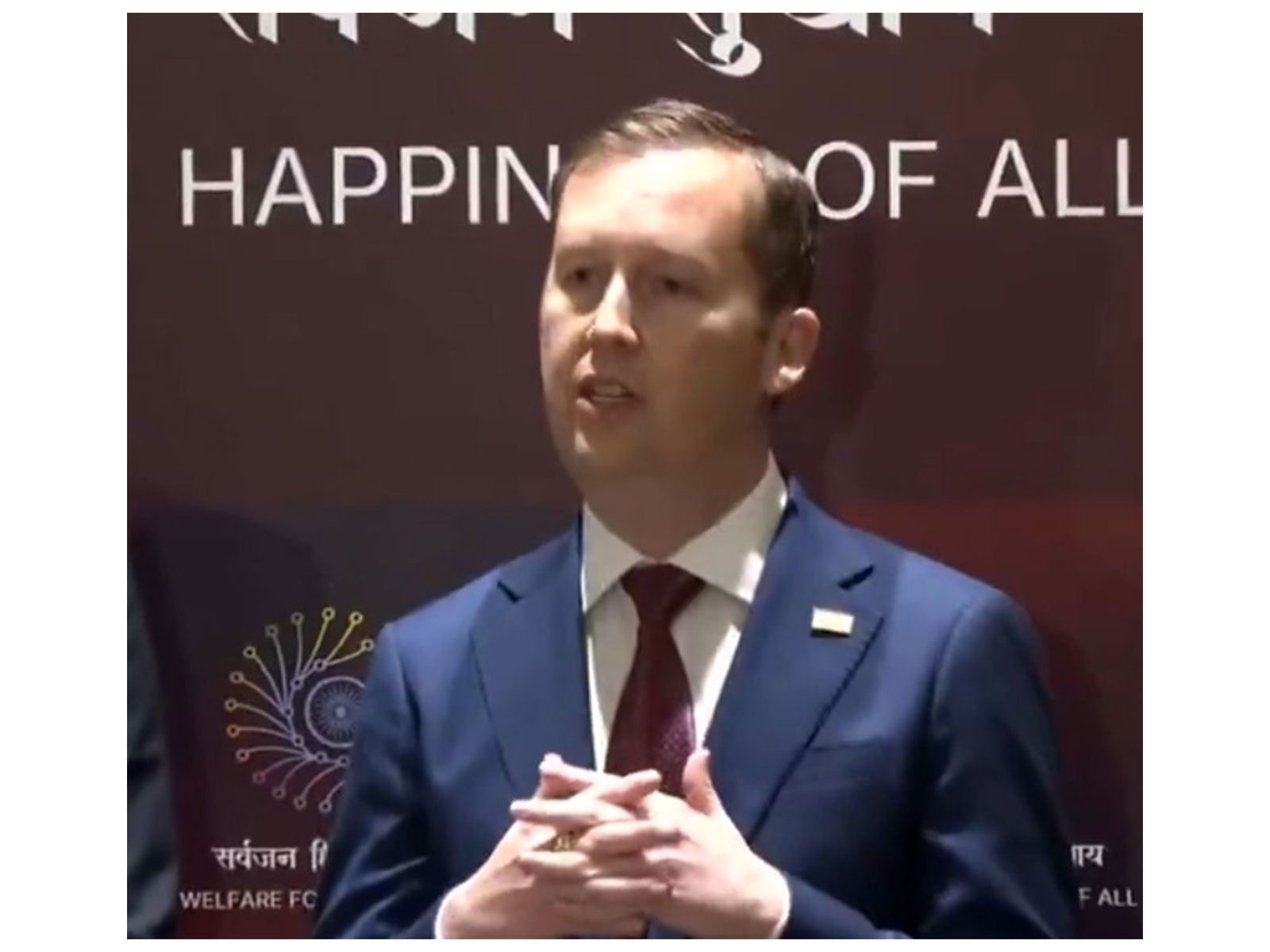
During the signing ceremony, U.S. Under Secretary of State Jacob Helberg made a notable statement, referencing "the lights of a great Indian city extinguished by a keystroke from across the border." This remark was widely interpreted as an allusion to the October 2020 Mumbai power outage, which numerous reports, including one by a U.S.-based cybersecurity firm, had previously linked to Chinese state-sponsored cyber intrusions amidst escalating border tensions. Helberg's comments underscored the initiative's aim to combat 'weaponized dependency' and 'blackmail,' asserting that economic security is national security.
The Pax Silica Declaration lays out a shared commitment to deep economic and technological cooperation, spanning from raw materials to semiconductors and AI infrastructure, and a mutual dedication to prosperity and security. Other member nations of Pax Silica include Australia, Greece, Israel, Japan, Qatar, the Republic of Korea, Singapore, the United Arab Emirates, and the United Kingdom. The alliance seeks to empower free people and free markets, establishing a trusted alternative to current concentrated supply chains. The initiative represents a crucial step in shaping the 21st-century economic and technological order, with India's participation being pivotal for global technology development and trade. Margaret Macleod, the US State Department's Hindustani Spokesperson, also highlighted the importance of India's participation for a prosperous and secure future, emphasizing collaborative efforts to prevent monopolistic control of AI resources.
Frequently Asked Questions
What is the Pax Silica initiative?
Pax Silica is a U.S.-led strategic international initiative launched in December 2025, aimed at building secure, resilient, and innovation-driven supply chains for advanced technologies. This includes critical minerals, semiconductors, artificial intelligence (AI) infrastructure, advanced manufacturing, and logistics, with a goal to reduce 'coercive dependencies' in the global tech ecosystem.
When and where did India join Pax Silica?
India formally joined the Pax Silica initiative on February 20, 2026, by signing the Pax Silica Declaration during the India AI Impact Summit held in New Delhi.
Why is India's participation in Pax Silica significant?
India's participation is considered crucial due to its deep engineering talent, growing capabilities in critical mineral processing, and its significant role in strengthening U.S.-India technology cooperation. It is expected to greatly benefit India's electronics and semiconductor industry and accelerate its AI ambitions by fostering resilient supply chains and trusted partnerships.
Which other countries are part of the Pax Silica coalition?
Besides India and the United States, other member nations of the Pax Silica coalition include Australia, Greece, Israel, Japan, Qatar, the Republic of Korea, Singapore, the United Arab Emirates, and the United Kingdom.
What was the controversial remark made by Jacob Helberg at the event?
During the signing ceremony, U.S. Under Secretary of State Jacob Helberg referred to 'the lights of a great Indian city extinguished by a keystroke from across the border.' This statement was widely interpreted as an indirect confirmation that China was behind the 2020 Mumbai power outage, an event previously suspected to be linked to Chinese cyber activity.