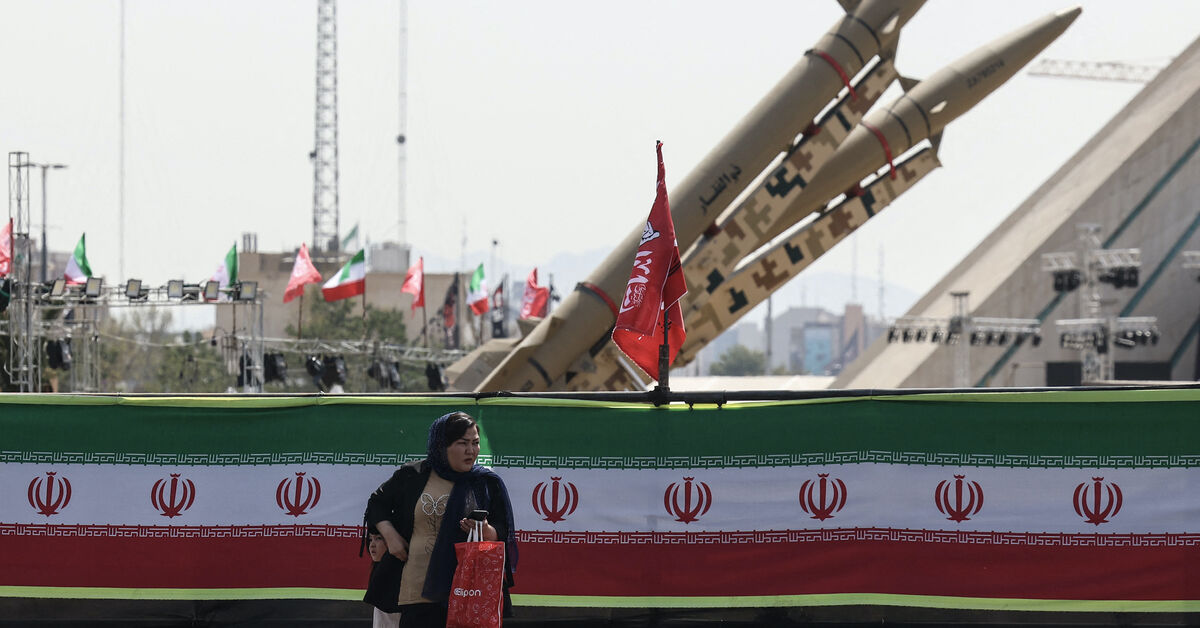
US launches retaliatory strikes on Iran after missile attack
The US launched a significant wave of strikes targeting Iran's Islamic Revolutionary Guard Corps (IRGC) facilities on Thursday, July 30, 2026. This action was a direct response to an alleged Iranian missile attack on US forces in Jordan the previous day. The conflict has expanded, drawing in multiple Middle Eastern countries and raising fears of a wider regional war.
Key Highlights
- US conducted large-scale strikes on IRGC facilities in Iran.
- Retaliation for alleged Iranian missile attack on US forces in Jordan.
- Conflict escalates with involvement of multiple regional countries.
- Fears of a wider regional war intensify.
- Diplomatic efforts to de-escalate the conflict are faltering.
- Impact on global trade and economy is a growing concern.
The United States carried out a significant wave of strikes against dozens of Islamic Revolutionary Guard Corps (IRGC) facilities across Iran early on Thursday, July 30, 2026. This military action was a direct response to what U.S. Central Command (CENTCOM) described as an "attempted Iranian attack" on American forces in the Middle East the previous day. The strikes targeted military command centers, missile and drone facilities, coastal surveillance and defense sites, and maritime capabilities. CENTCOM stated that these operations were intended to reduce threats posed by Iran and its allied groups to U.S. forces, commercial shipping, and neighboring Gulf countries. The conflict, which began in February 2026, has intensified and broadened, drawing in several Middle Eastern countries, including Saudi Arabia, Kuwait, the United Arab Emirates, Jordan, Egypt, and Iraq. This escalation has fueled fears of a wider regional war, with some strategists comparing the dynamics to those preceding World War I.
On Wednesday, July 29, 2026, Iran had reportedly launched ballistic missiles at the Muwaffaq Salti Air Base in Jordan, which hosts U.S. troops. U.S. military officials stated that these missiles were intercepted and that no American personnel were killed. Following this incident, U.S. President Donald Trump had vowed to respond "very hard" to Iran's actions. The current wave of strikes marks the first direct U.S. attacks inside Iran since President Trump had briefly paused military operations the previous week to create space for diplomacy.
The conflict has also expanded to other fronts. On Wednesday, drone strikes reportedly ignited fires on two natural gas vessels at Egypt's Damietta Port. While British maritime security firm Ambrey attributed this to a drone attack, Egypt's petroleum ministry confirmed a fire but made no mention of a drone. The source of these attacks was not immediately clear. Additionally, U.S. and Saudi Arabian forces jointly struck Iran-backed militias in Iraq, with reports indicating that at least 20 fighters and six Iranian advisers were killed in these operations. Iran, in turn, claimed to have launched retaliatory strikes on U.S. military facilities in Jordan and Kuwait, including claims of destroying three F-35 fighter jets at Jordan's Al-Azraq Air Base. However, the U.S. military rejected these claims, stating that no U.S. aircraft were damaged or destroyed.
Diplomatic efforts to de-escalate the conflict have faltered. Iran's deputy foreign minister stated that his country had not made any requests to restart diplomatic talks in over two weeks, despite U.S. assertions that Iran was seeking negotiations. The ongoing conflict has disrupted global trade and rattled the world economy, with oil prices rising significantly. The war began in February 2026, initially as a direct conflict between the U.S. and Israel against Iran, but has since evolved into a complex regional war. The involvement of countries like Saudi Arabia and China supplying missiles to Iran indicates a significant shift in the regional dynamics. The U.S. military's munitions stockpiles have also been a concern, with reports suggesting that sustained operations have tested production capacity and depleted reserves.
The timeline of events leading up to this escalation includes Iran's alleged missile attacks on U.S. forces in Jordan on July 29, 2026, and prior retaliatory actions by both sides, including U.S.-Saudi strikes on Iran-backed militias in Iraq. The situation highlights the volatile nature of the region and the difficulty in achieving a lasting diplomatic resolution.
Frequently Asked Questions
What prompted the recent US strikes in Iran?
The US launched strikes on Iran on July 30, 2026, as a response to an alleged Iranian missile attack on US forces stationed in Jordan the previous day. US Central Command (CENTCOM) stated these actions were a 'powerful response' to Iranian aggression.
Which Iranian facilities were targeted by the US strikes?
According to CENTCOM, the US strikes targeted dozens of Islamic Revolutionary Guard Corps (IRGC) facilities across Iran. This included military command centers, missile and drone sites, coastal surveillance and defense installations, and maritime capabilities.
Has the conflict between the US and Iran escalated to involve other countries?
Yes, the conflict has expanded beyond direct engagements between the US and Iran. Several Middle Eastern countries, including Saudi Arabia, Iraq, Jordan, Egypt, and Kuwait, have been drawn into the escalating hostilities, raising concerns about a wider regional war.