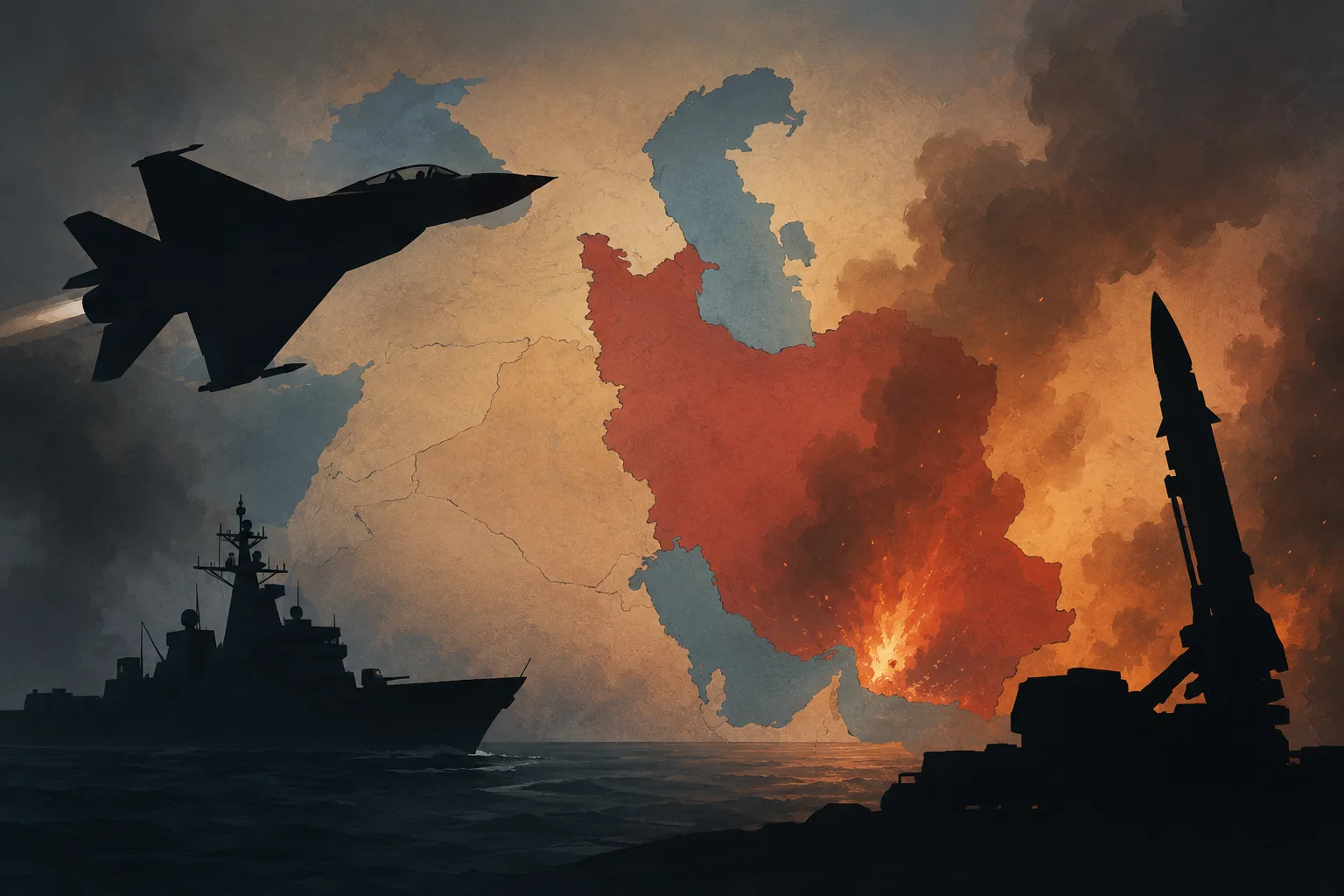
Iran Targets US Base in Jordan Amidst Escalating Regional Tensions
Iran launched ballistic missiles at a US military base in Jordan on Tuesday, July 28, 2026, described as an 'attempted surprise attack' by CENTCOM. All missiles were intercepted with no reported casualties. This incident marked the first Iranian missile strike on a US base since President Donald Trump reportedly paused US operations against Tehran last week, sparking fears of wider regional escalation.
Key Highlights
- Iran attacked a US base in Jordan on July 28, 2026.
- Missiles were intercepted; no US casualties or damage reported.
- Attack followed President Trump's recent pause in US strikes.
- US and Saudi forces retaliated against Iran-backed targets.
- Incident heightens regional tensions and threatens diplomacy.
- The news is specific to a hypothetical 2026 timeline where Donald Trump is US President.
On Tuesday, July 28, 2026, Iran launched a ballistic missile attack against a United States military base located in Jordan. The US Central Command (CENTCOM) characterized this event as an "attempted surprise attack." According to reports, all incoming missiles were successfully intercepted, resulting in no immediate reports of casualties or significant damage to the base. This marked a significant escalation, being the first direct ballistic missile strike by Iran on a US base since President Donald Trump had reportedly paused military operations against Tehran just the previous week, around July 21, 2026, to allow for diplomatic efforts.
The attack by Iran's Islamic Revolutionary Guard Corps (IRGC) on the US base in Jordan, which occurred around 5:45 p.m. ET, immediately raised alarms about a potential unraveling of the fragile diplomatic pause and heightened fears of a broader regional conflict. Tensions between Washington and Tehran had been high, and this incident threatened to derail ongoing efforts to de-escalate the situation.
In swift retaliation, the United States, in coordination with Saudi Arabia, carried out a wave of airstrikes. These strikes targeted multiple logistics and weapons sites used by Iran-backed militias in eastern Iraq, in response to over 30 drone attacks allegedly directed by the IRGC within the preceding 72 hours. CENTCOM issued a stern warning, stating that the IRGC and its allied militias must cease these aggressive actions to avoid further US military response. Subsequent reports indicated that the US completed a "heavy wave of strikes against Iran" itself, targeting dozens of IRGC facilities, including military command centers, missile and drone facilities, and coastal surveillance and defense sites.
This series of events unfolded in a volatile geopolitical landscape where, within this hypothetical July 2026 timeline, a President Donald Trump is actively involved in US foreign policy decisions, including pausing and resuming strikes against Iran. Reports indicated that President Trump had directed the military to halt strikes temporarily, signaling a potential shift towards negotiations, even while maintaining readiness for renewed military action if diplomacy failed. However, the Iranian missile launch directly challenged this diplomatic overture.
The wider context of US-Iran relations in this hypothetical 2026 scenario suggests a continued state of conflict and diplomatic engagement. There were mentions of an interim agreement collapsing due to renewed fighting in the Strait of Hormuz, a critical waterway for global energy supplies, which Iranian attacks had again effectively closed. Mediators had previously expressed optimism about bringing the US and Iran back to the negotiating table. Pakistan, for instance, was reportedly acting as a mediator for months, with ongoing indirect talks, though Iran repeatedly denied direct negotiations.
The incident has significant implications for regional stability in the Middle East, involving not only the US and Iran but also regional allies like Jordan and Saudi Arabia. The successful interception of the missiles by US forces was crucial in preventing casualties, but the attack itself demonstrates Iran's continued capability and willingness to project power. The events underscore the delicate balance between military deterrence and diplomatic engagement in managing the persistent tensions between these global and regional powers. The international community, including India, closely monitors such developments due to their potential impact on global energy markets and broader geopolitical stability. The situation in the Middle East remains highly dynamic, with continuous cycles of aggression and attempts at de-escalation dominating the headlines in this specific timeframe.
Frequently Asked Questions
What happened on July 28, 2026, between Iran and the US?
On July 28, 2026, Iran launched ballistic missiles at a US military base in Jordan. The US Central Command (CENTCOM) described it as an 'attempted surprise attack.'
Were there any casualties from the Iranian missile attack in Jordan?
No, all missiles were reportedly intercepted, and no casualties or damage were immediately reported from the Iranian missile attack on the US base in Jordan.
How did the US and its allies respond to the Iranian attack?
The US and Saudi Arabia retaliated with airstrikes against Iran-backed militia targets in eastern Iraq and against dozens of IRGC targets within Iran, including military command centers and missile facilities.
What was the context of this attack regarding US policy?
The attack occurred after President Donald Trump had reportedly paused US strikes against Iran the previous week to allow for diplomatic efforts, making this the first Iranian missile attack on a US base since that pause.
Is this event likely to escalate into a wider regional conflict?
The attack and subsequent retaliatory strikes have significantly heightened regional tensions, threatening to derail ongoing diplomatic efforts and raising fears of a broader conflict in the Middle East.