Maersk's MECL Service Resumes Trans-Suez Route Amid Red Sea Stabilization | Quick Digest
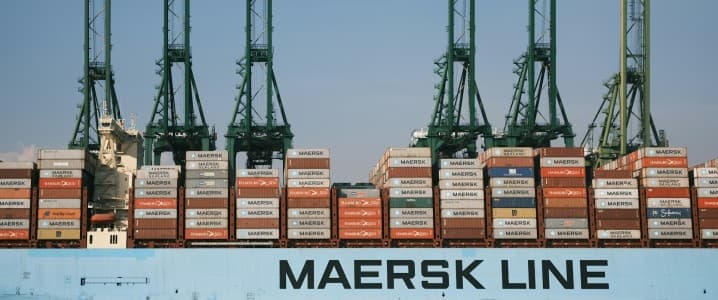
Maersk has announced the structural return of its MECL service to the trans-Suez route, citing improved stability in the Red Sea. This move follows a period of diversions around the Cape of Good Hope due to security concerns and is expected to offer more efficient transit times for cargo between the Middle East, India, and the U.S. East Coast.
Maersk's MECL service returns to shorter trans-Suez route.
Decision follows improved security and stability in Red Sea.
Route had been diverted via Cape of Good Hope due to attacks.
Expected to significantly reduce transit times by about one week.
Maersk will closely monitor security; contingency plans in place.
Impacts global trade, especially for India-Middle East-US East Coast.
A.P. Moller – Maersk, the global shipping giant, has announced the structural return of its MECL (Middle East-Europe Container Line) service to the trans-Suez route. This decision marks a significant step towards normalizing shipping routes that were disrupted due to security threats in the Red Sea and Gulf of Aden, primarily from Houthi attacks.
The company stated that the return is prompted by a "continued stabilisation of conditions in and around the Red Sea, including the Suez corridor, as well as improved stability and reliability in the region." The MECL service, which connects the Middle East and India with the U.S. East Coast, had been rerouted around the longer Cape of Good Hope, adding considerable time and cost to transit.
The first westbound sailing under the new routing is the Cornelia Maersk, which departed Jebel Ali on January 15, 2026. The Maersk Detroit initiated the eastbound trans-Suez route, departing North Charleston on January 10, 2026. This resumption is expected to offer customers more efficient transit times, reducing voyages by approximately one week, and could potentially lead to a moderation of freight rates that surged during the Red Sea crisis.
Maersk has emphasized that despite the return, it will continue to monitor the security situation in the Middle East very closely. Contingency plans are in place to revert individual MECL sailings or the entire service back to the Cape of Good Hope route if conditions deteriorate or conflicts escalate. The Suez Canal remains a vital maritime corridor for global supply chains, and its reliable operation is crucial for trade between Asia, the Middle East, India, Europe, and the US.
Read the full story on Quick Digest