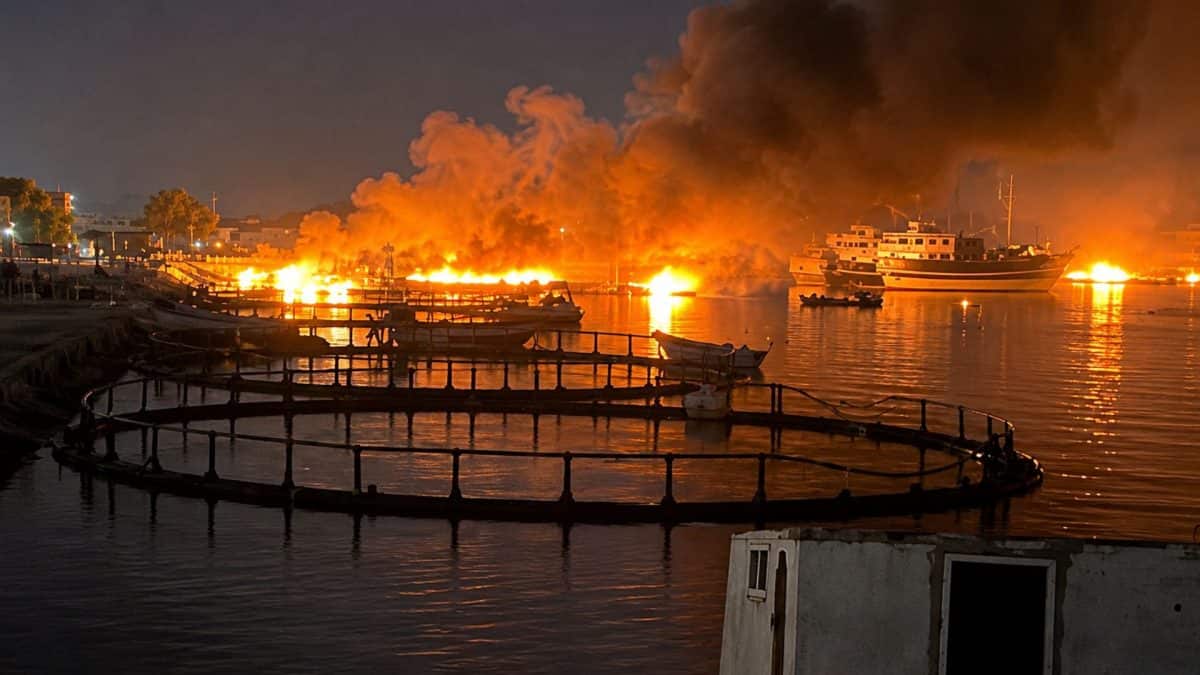
US-Iran Escalation: Strikes and Retaliation Threaten Regional Peace
Recent US airstrikes on Iran, followed by Iranian retaliation on US interests in Gulf states, have dramatically escalated tensions, placing the fragile peace process on the brink. Casualties are reported, and global concerns rise over potential wider conflict and impact on oil routes.
Key Highlights
- US launched 'second night' of strikes against Iran following Strait of Hormuz attacks.
- Iran retaliated with missile and drone attacks on US bases in Kuwait, Bahrain, and Qatar.
- Jordan also reported intercepting Iranian missiles targeting its territory.
- Iranian Health Ministry confirmed 14 deaths and 78 injuries from US strikes.
- Fragile ceasefire (MoU) appears jeopardized, with US reinstating oil sanctions.
- President Trump declared the interim ceasefire with Iran to be 'over'.
As of Thursday, July 9, 2026, tensions between the United States and Iran have dramatically escalated following a series of mutual military actions in the Middle East. The original article's headline, 'US strikes Iran for second night – is the peace process all over now? - Al Jazeera,' accurately reflects a critical and unfolding situation. The United States indeed initiated fresh strikes on Iranian targets late Wednesday, July 8th, and continued into Thursday, July 9th, marking a 'second night' of military action. These strikes were reportedly in retaliation for recent attacks on commercial shipping in the strategically vital Strait of Hormuz.
In a significant escalation, Iran swiftly responded by launching its own missile and drone attacks. The Islamic Revolutionary Guard Corps (IRGC) announced that it had targeted US military sites in several Persian Gulf countries, specifically claiming attacks on two bases used by the US on Kuwaiti soil and two others in Bahrain. Reports indicated that sirens sounded in Bahrain, Kuwait, and Qatar, with alerts issued to residents to seek shelter. Iranian sources further stated they hit a Patriot air-defense system in Kuwait, military fuel depots in Bahrain, and an antenna facility in Qatar. Additionally, Jordanian authorities confirmed intercepting ten ballistic missiles launched from Iran towards its territory, though no casualties or property damage were reported in Jordan.
These recent exchanges of fire come just weeks after a fragile Memorandum of Understanding (MoU) was signed on June 17, 2026, between the US and Iran, aiming to establish a 60-day framework for a ceasefire, sanctions relief discussions, and nuclear talks. However, President Donald Trump, who is currently the US President, explicitly declared the interim ceasefire 'over' on Wednesday, July 8th, following the Iranian attacks on commercial vessels. Concurrently, the US Treasury Department revoked a previously issued 60-day waiver that had allowed Iran to export crude oil, effectively reinstating sanctions on Iranian oil sales and shortening the wind-down period for companies to July 17th. This move is seen as a direct response to Iran's recent actions in the Strait of Hormuz.
The human cost of these escalating strikes is already evident. Iran's Health Ministry has reported that US strikes over the past two nights have resulted in 14 fatalities and 78 injuries, with over 40 individuals still hospitalized. The Ministry spokesman, Hossein Kermanpour, did not specify the civilian-to-military casualty ratio.
The question posed by the article's headline, 'is the peace process all over now?', is highly pertinent. Military analysts have described the current situation as 'extremely tense,' warning that any new attack could 'derail even the slightest chance of de-escalation.' While the MoU 'may not be dead yet, it is certainly on the verge of collapse,' according to experts. This sentiment underscores the severe blow dealt to any prospects of diplomatic resolution or de-escalation between Washington and Tehran.
For an Indian audience, the implications of this renewed conflict are significant. India, a major energy importer, is highly susceptible to disruptions in global oil supply and price volatility. The Strait of Hormuz, a critical chokepoint for global oil and gas shipments, is directly affected by these hostilities, threatening India's energy security and trade routes. Furthermore, a large Indian diaspora resides in the Gulf region, making regional stability a paramount concern for India. The ongoing conflict and the re-imposition of sanctions will likely complicate Iran's ability to maintain its oil exports, which India historically has purchased, potentially impacting India's energy procurement strategies.
The related article 'Iran war live: Tehran hits Bahrain, Kuwait, Qatar after deadly US strikes' from Al Jazeera is accurate, as corroborated by multiple reports of Iranian retaliation against US targets in these countries. The claim from 'The Times of India' about Iran 'rushing its oil exports out' needs nuance; while Iran always seeks to export oil, the immediate context of renewed US sanctions would compel it to do so through illicit means rather than a straightforward 'rush out' of legitimate exports. The NDTV article's reference to President Trump's strong rhetoric, like 'Begging For Deal,' aligns with his public statements on Iran. Finally, 'The Hindu' report on 14 killed by US strikes is directly confirmed by the Iranian Health Ministry's statements.
In conclusion, the situation represents a dangerous escalation in US-Iran relations, with immediate military actions, reported casualties, and severe implications for regional and global stability, especially concerning energy markets and international shipping.
Frequently Asked Questions
What is the current status of the conflict between the US and Iran?
As of July 9, 2026, the US and Iran are engaged in a significant military escalation. The US launched airstrikes on Iran for a 'second night' in retaliation for attacks on commercial shipping. Iran has responded with missile and drone attacks targeting US military interests in Kuwait, Bahrain, Qatar, and Jordan.
What triggered this latest round of US-Iran hostilities?
The recent US strikes were in response to attacks on commercial shipping in the Strait of Hormuz, which the US has attributed to Iran. This, in turn, led to Iran's retaliatory strikes on US bases and interests in the Gulf region.
How has this escalation affected the 'peace process' or diplomatic efforts?
The escalation has severely jeopardized any ongoing diplomatic efforts. A recently signed Memorandum of Understanding (MoU) aimed at a ceasefire and talks appears to be on the verge of collapse. US President Donald Trump has declared the interim ceasefire 'over,' and the US has reimposed sanctions on Iranian oil exports.
What are the casualties reported from these strikes?
Iran's Health Ministry has reported that the US strikes over the past two nights have resulted in 14 fatalities and 78 injuries. No casualties from Iran's retaliatory strikes on US personnel have been officially confirmed by the US, though damage to facilities has occurred.
What are the global implications of this conflict, especially for India?
This escalation carries critical global implications, particularly for energy markets and international shipping, given the involvement of the Strait of Hormuz. For India, a major energy importer, this poses significant risks to its energy security, potential trade disruptions, and concerns for the large Indian diaspora in the Gulf region.