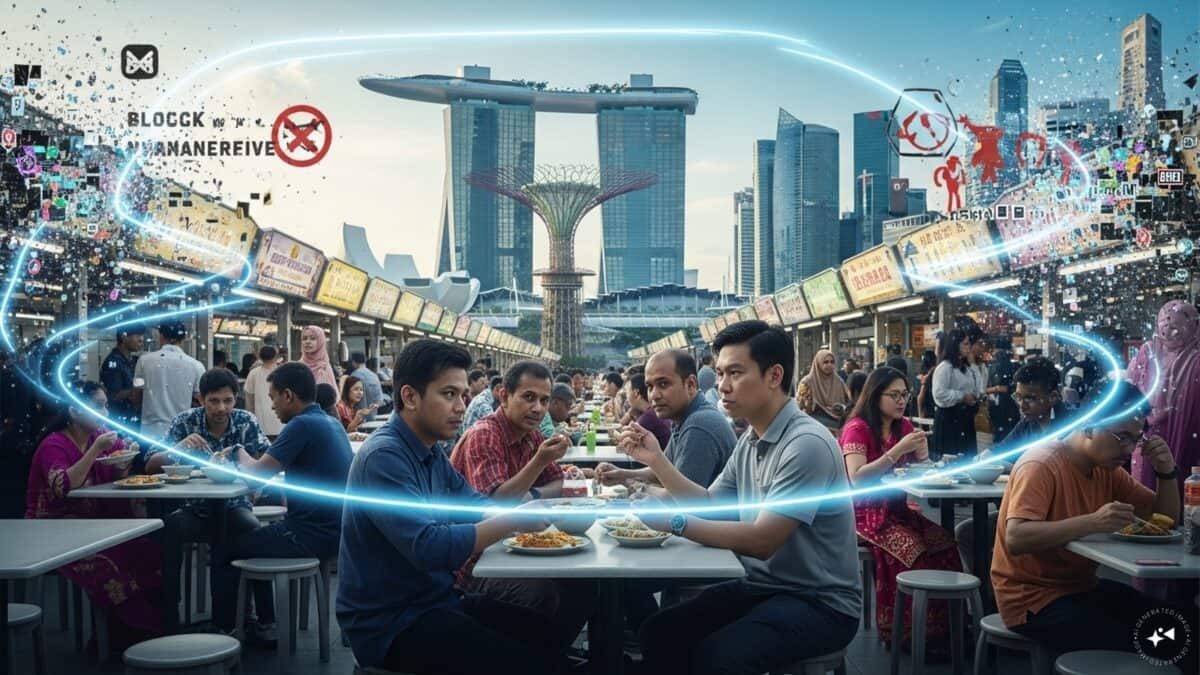
Singapore Blocks Anti-Indian Posts, Citing China-Based Origin
Singapore has ordered social media platforms to block 14 anti-Indian posts, likely originating from China, for undermining multiculturalism and promoting xenophobia. The content used derogatory language, including 'concentration of curry,' to target the Indian community.
Key Highlights
- Singapore ordered 14 anti-Indian posts blocked on YouTube, Facebook, X.
- Content originated from China-based platforms, circulated in Chinese information space.
- Posts used derogatory term 'concentration of curry' against Indian community.
- Action taken under Online Criminal Harms Act to safeguard racial harmony.
- Singapore's MHA condemns xenophobia and foreign-sourced attacks.
- No evidence of state-sponsored campaign; content likely by foreign netizens.
Singaporean authorities have taken decisive action against a series of social media posts targeting the Indian community, ordering three major platforms – YouTube, Facebook, and X (formerly Twitter) – to block access to 14 specific pieces of content. The Ministry of Home Affairs (MHA) announced on Saturday, June 6, 2026, that these posts were deemed to undermine Singapore's cherished model of multiculturalism and incite ill-will against the Indian community.
Investigations by the MHA revealed that the inflammatory narratives began circulating in the Chinese information space in May 2026. Subsequently, online content emerged containing highly inflammatory claims about Singapore's cultural diversity, suggesting that the nation was being 'overrun by Indians'. The problematic content, which included videos, selectively utilized images and footage of crowded streets in Singapore's Little India district – often taken during weekends when migrant workers were off – and scenes of Indian devotees at religious festivals. These images were then used to falsely back claims of an 'overcrowding' of Indians in Singapore.
A particularly egregious aspect of the content was the use of derogatory and demeaning language to refer to the Indian community, exemplified by the phrase 'concentration of curry' when discussing the perceived increase in their numbers. The MHA explicitly stated that these were 'malicious efforts to sow discord' by inciting animosity against the Indian community, including Indian migrant workers who significantly contribute to Singapore's growth and development.
The disabling directions were issued under Singapore's Online Criminal Harms Act (OCHA). This legislation empowers authorities to mandate online service providers to disable access to content deemed to be criminal in nature. Second Minister for Home Affairs Edwin Tong emphasized that the government takes a serious view of threats to social cohesion and racial harmony, especially when they originate from external actors. He highlighted that such videos 'attack our multiracial society and they try to divide people based on race,' which is 'unacceptable' in Singapore.
The MHA firmly opposes 'nativism and xenophobia' and reiterated that any attempt to pit one community against another must be firmly rejected. The ministry underscored that 'these attacks coming from a foreign source are doubly unacceptable'. While the content is strongly suspected to have originated from China-based platforms, Law Minister Edwin Tong clarified that there is currently no evidence to suggest that this is a coordinated campaign by any government. Instead, investigations indicate that the content was 'likely generated organically by various foreign netizens'.
These online posts also made several other false claims, including that Singapore's multiracial policy is merely a 'facade' designed to appeal to 'Western values,' and that the nation's stability is attributable to its majority Chinese demographic rather than its multiracial policy. Furthermore, some content suggested that a growing number of ethnic Indian politicians would act in favor of Indian immigrants, and that Singapore's 'decoupling' from China while 'neglecting the threat of a growing Indian community' would lead to negative consequences.
The MHA, in conjunction with the Singapore Police Force, assessed that the posts likely constitute an offence under Section 298A of the Penal Code. This section addresses knowingly promoting feelings of enmity, hatred, or ill-will between different racial groups, or committing acts prejudicial to maintaining racial harmony in Singapore. Such an offense carries a punishment of up to three years' jail and a fine. The government has stated its commitment to continuously monitor online platforms and take further measures if deemed necessary to protect Singapore's interests and social fabric. Singaporeans are also urged to be discerning and critical of online content, questioning its source and intent.
Frequently Asked Questions
What content did Singapore block and why?
Singapore blocked 14 social media posts that targeted the Indian community with inflammatory and derogatory content, including the phrase 'concentration of curry.' The content was blocked for undermining Singapore's multiculturalism and inciting ill-will, particularly against Indian migrant workers.
Where did the anti-Indian content originate from?
Investigations by Singapore's Ministry of Home Affairs indicated that the narratives originated in the 'Chinese information space' and the content itself likely came from a China-based platform before spreading to other online spaces.
What law did Singapore use to block these posts?
The Singaporean authorities issued 'disabling directions' under the Online Criminal Harms Act (OCHA) to platforms like YouTube, Facebook, and X, requiring them to block access to the problematic posts for users in Singapore.
Does Singapore believe the content was part of a government-led campaign?
No, Law Minister Edwin Tong stated that while the content originated from overseas and in the Chinese information space, there is currently no evidence to suggest it was a coordinated campaign by any government. It was 'likely generated organically by various foreign netizens.'
What is Singapore's stance on such foreign-sourced content?
Singapore's MHA firmly opposes 'nativism and xenophobia' and views such 'attacks coming from a foreign source' as 'doubly unacceptable,' emphasizing that any attempt to divide communities on racial lines will be firmly rejected.