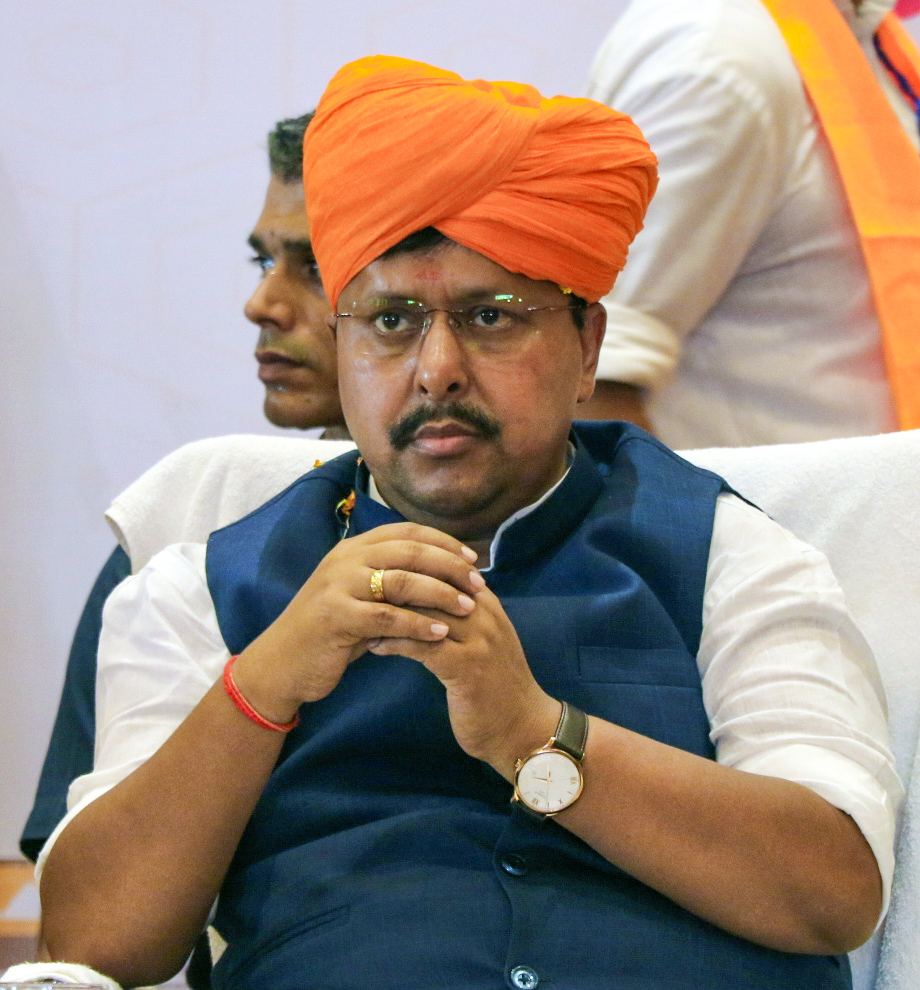
BJP Chief Nitin Nabin calls Congress 'New Muslim League' over Vande Mataram stance
Bharatiya Janata Party (BJP) President Nitin Nabin has criticized the Congress party's decision to sing only the first two stanzas of 'Vande Mataram' at their events, labeling them the 'new Muslim League.' The Congress Working Committee reaffirmed its 1937 resolution on the matter, which limited the singing to two stanzas, citing historical precedent. This stance has ignited a political row, with the BJP accusing the Congress of appeasement and disrespecting national sentiments.
Key Highlights
- BJP President Nitin Nabin labels Congress the 'new Muslim League.'
- Congress reaffirms 1937 resolution to sing only two stanzas of Vande Mataram.
- BJP criticizes Congress's stance as appeasement and disrespectful.
- Vande Mataram controversy involves historical context and political debate.
- The issue highlights divisions over national symbols and patriotism in India.
Bharatiya Janata Party (BJP) President Nitin Nabin has sharply criticized the Congress party's recent decision to continue singing only the first two stanzas of 'Vande Mataram' at party events. Nabin, in a statement on X (formerly Twitter), equated the Congress with the 'new Muslim League,' accusing the party of appeasing a particular vote bank at the cost of national self-respect. The controversy erupted after the Congress Working Committee (CWC) reaffirmed its 1937 resolution, which recommended singing only the initial two stanzas of the national song at public gatherings.
Nabin asserted that the Congress has now formalized its 'insult' to Vande Mataram into a resolution, thereby demonstrating contempt for the sacrifices of national martyrs. He also alluded to an incident on August 15, where BJP leaders accused Congress President Mallikarjun Kharge and Parliamentary Party Chairperson Sonia Gandhi of talking during the rendition of Vande Mataram at the party headquarters, an incident the Congress dismissed as a coincidence.
The Congress's stance is rooted in a 1937 CWC resolution, which was adopted during the freedom movement. Party leaders, including Congress General Secretary K.C. Venugopal, have defended this decision by citing the support of prominent freedom fighters like Mahatma Gandhi, Jawaharlal Nehru, Rabindranath Tagore, Subhas Chandra Bose, and Sardar Patel for singing only the first two stanzas. According to the party, these initial stanzas celebrate the motherland's natural beauty and are considered free of objectionable imagery, unlike some later verses that have been interpreted by some as having religious undertones.
The Union government, however, has a protocol requiring all six stanzas of Vande Mataram to be sung at official functions. This has led to a direct political confrontation, with the BJP accusing the Congress of converting appeasement into official policy. The BJP's criticism goes beyond the mere rendition of the song, framing it as a debate over patriotism, history, and political identity.
The historical context of Vande Mataram is complex. Composed by Bankim Chandra Chattopadhyay in the late 19th century and incorporated into his novel 'Anandamath,' the song became a potent nationalist slogan during the Swadeshi Movement. However, concerns about its religious imagery emerged early on, particularly among some Muslim leaders, who viewed references to 'Mother India' as a goddess as conflicting with Islamic monotheism. Mahatma Gandhi himself acknowledged the song's powerful impact while also advocating against its imposition, emphasizing that its singing should be voluntary.
In 1950, the first two stanzas of Vande Mataram were formally adopted as India's National Song, with the Constituent Assembly according it equal honor with the National Anthem. However, no mandatory recital protocol was prescribed at that time. The recent directive from the Union government mandating all six stanzas at official functions marks a shift towards formalizing performance requirements, thereby reigniting the ongoing debate.
Nalin Kohli, a senior BJP leader and spokesperson, has consistently been critical of the Congress on various national issues, often questioning the party's stance and intentions. In this instance, his strong reaction reflects the BJP's broader strategy of highlighting perceived ideological differences with the Congress, particularly on matters of national symbols and cultural identity, aiming to mobilize its support base and frame the political narrative.
Frequently Asked Questions
What is the significance of 'Vande Mataram'?
'Vande Mataram' is India's national song, composed by Bankim Chandra Chattopadhyay. It played a significant role in the Indian independence movement and is deeply ingrained in nationalistic sentiment.
Why is the Congress singing only two stanzas of 'Vande Mataram'?
The Congress party adheres to a 1937 resolution by its Working Committee, which recommended singing only the first two stanzas of 'Vande Mataram' at national gatherings. They cite historical precedent and the support of freedom movement leaders for this stance.
What is the BJP's objection to the Congress's stance on 'Vande Mataram'?
The BJP criticizes the Congress's decision as disrespectful to the national song and martyrs, and as an appeasement tactic for electoral gain. BJP President Nitin Nabin called the Congress the 'new Muslim League' over this issue.
What is the history behind the controversy surrounding 'Vande Mataram'?
Concerns about the later stanzas of 'Vande Mataram,' which contain religious imagery, have existed since the early 20th century, leading to its partial acceptance by some communities. The Congress's 1937 resolution was an attempt to resolve this, but the debate over its full rendition versus partial rendition continues.