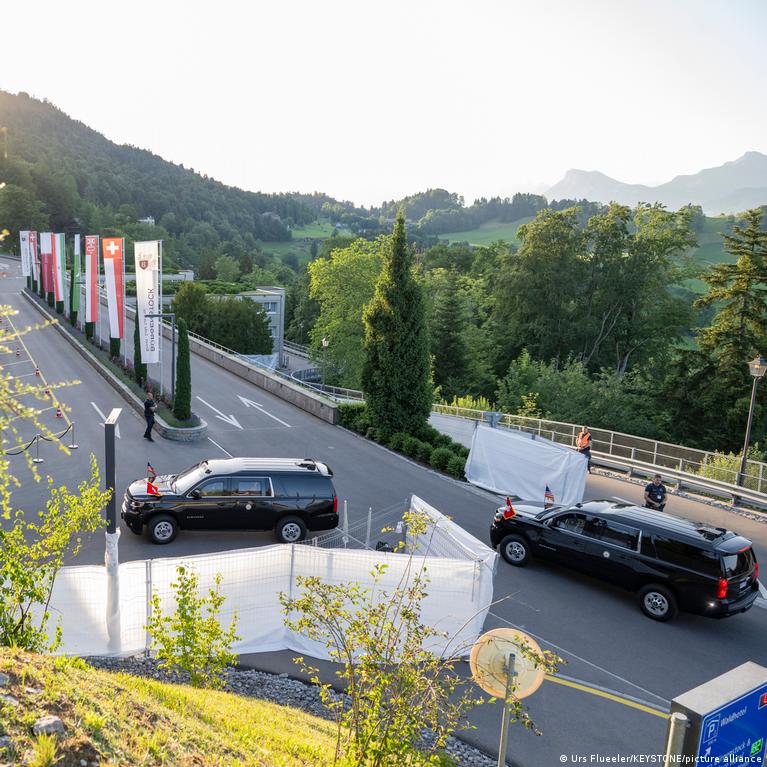
US, Iran, Pakistan, Qatar Hold Critical Peace Talks in Switzerland Amid Regional Tensions
High-level delegations from the US, Iran, Pakistan, and Qatar have convened in Switzerland for crucial talks aimed at implementing a fragile peace deal and addressing escalating tensions in the Middle East, including the Strait of Hormuz closure and the Israel-Lebanon conflict.
Key Highlights
- US Vice President JD Vance leads American delegation in Switzerland.
- Iran's Parliament Speaker Mohammad Bagher Ghalibaf spearheads Iranian team.
- Pakistan and Qatar mediate quadrilateral talks at Bürgenstock Resort.
- Strait of Hormuz closure by Iran is a key contentious issue.
- Lebanon ceasefire and regional stability central to discussions.
- Talks are follow-up to earlier US-Iran Memorandum of Understanding.
High-stakes diplomatic talks involving top officials from the United States, Iran, Pakistan, and Qatar commenced in Switzerland on Sunday, June 21, 2026, aiming to solidify a fragile interim peace agreement and de-escalate severe tensions across the Middle East. The pivotal meeting is taking place at the luxurious Bürgenstock mountaintop resort, serving as a critical platform for direct negotiations between the US and Iran, facilitated by Pakistan and Qatar.
The US delegation is prominently led by Vice President JD Vance, who arrived in Switzerland on Sunday morning. He is joined by other key US negotiators, including envoy Steve Witkoff and adviser Jared Kushner. Representing Iran are high-ranking officials such as Parliament Speaker Mohammad Bagher Ghalibaf and Foreign Minister Abbas Araghchi, alongside deputy oil minister and the governor of Iran's central bank, underscoring the broad scope of issues to be discussed. Pakistan's delegation includes Prime Minister Shehbaz Sharif and Army Chief Asim Munir, highlighting the country's significant role as a mediator. Qatar is also a crucial intermediary in these quadrilateral discussions.
These talks are a direct follow-up to a Memorandum of Understanding (MoU) signed between the United States and Iran earlier in June, which aimed to bring an end to the months-long conflict in the Middle East that began on February 28, 2026. The initial signing of the MoU was seen as an important step towards de-escalation, but its implementation has faced immediate challenges.
A major point of contention casting a shadow over the talks is Iran's recent declaration that it has closed the Strait of Hormuz. Tehran justified this action by citing Israeli strikes in Lebanon, which it considers a violation of the fragile ceasefire agreement. This move by Iran threatens to derail the peace process, as the reopening of the strategic waterway, which normally handles a significant portion of global oil and liquefied natural gas supplies, was a core component of the preliminary agreement. The US, however, has publicly disputed Iran's claim of closure, with US Central Command reporting that maritime traffic continues to flow through the strait. This conflicting information underscores the precarious nature of the current geopolitical climate.
Another critical issue dominating the agenda is the escalating conflict in Lebanon between Israel and the Iranian-backed militant group Hezbollah. Iran's foreign ministry spokesperson, Esmaeil Baqaei, explicitly stated that the US's failure to ensure a ceasefire in Lebanon would be a central issue during the negotiations. An emergency session dedicated to addressing this conflict has been added to the talks schedule, highlighting its immediate and pressing nature. Reports indicate that Israel and Hezbollah had previously agreed to a ceasefire, facilitated by the US and Qatar, but renewed hostilities led to the postponement of these very talks.
The initial plan was for these technical-level discussions to begin on Friday, June 19, 2026, following the electronic signing of the MoU between US President Donald Trump and Iranian President Masoud Pezeshkian. However, the resumption of heavy fighting in southern Lebanon prompted the White House to initially cancel Vice President Vance's trip and postpone the talks, citing that logistical arrangements had not been finalized. Despite these setbacks and internal disagreements within Iran regarding the utility of negotiating with the US, the delegations ultimately converged in Switzerland on Sunday, June 21, 2026, indicating a strong commitment from all parties to salvage the peace process. Switzerland, in its long-standing role as a protecting power for US interests in Iran, provides a neutral and discreet setting for these sensitive discussions.
The talks aim to delve into the technical aspects of the interim agreement, including curbing Iran's nuclear program, ensuring the unfreezing of Iranian assets held overseas, and lifting US sanctions on Iranian oil exports. The outcome of these discussions holds significant implications not only for the stability of the Middle East but also for global energy security and the broader international political landscape.
For an Indian audience, this news is of paramount importance. India has significant energy interests in the Middle East and relies heavily on oil imports that transit through the Strait of Hormuz. Any disruption in this vital waterway or escalation of conflict in the region could directly impact India's energy security and economy. Furthermore, regional stability is crucial for the safety and well-being of the large Indian diaspora in the Gulf countries. Pakistan's role as a mediator also adds a regional dimension, given India's geopolitical ties and interests in its neighborhood.
Frequently Asked Questions
What is the primary purpose of the US-Iran talks in Switzerland?
The talks in Switzerland aim to implement a Memorandum of Understanding (MoU) signed earlier in June between the US and Iran, seeking to formally end the ongoing Middle East conflict, advance a fragile interim peace deal, curb Iran's nuclear program, lift US sanctions, and unfreeze Iranian assets.
Which countries are participating in the quadrilateral meeting?
The quadrilateral meeting includes delegations from the United States and Iran, with Pakistan and Qatar serving as key mediators.
What role does the Strait of Hormuz play in these discussions?
The Strait of Hormuz is a critical point of contention. Iran recently announced its closure due to Israeli actions in Lebanon, while its reopening was a key component of the initial US-Iran peace MoU. The US disputes the closure, emphasizing its global energy importance.
Why were the talks initially postponed?
The talks, originally scheduled for June 19, 2026, were postponed primarily due to a fresh round of hostilities between Israel and Hezbollah in Lebanon, which complicated the implementation of the ceasefire agreement.
Who are the 'top leaders' attending from each country?
The US delegation is led by Vice President JD Vance. Iran's delegation is headed by Parliament Speaker Mohammad Bagher Ghalibaf and Foreign Minister Abbas Araghchi. Pakistan's Prime Minister Shehbaz Sharif and Army Chief Asim Munir are also in attendance.