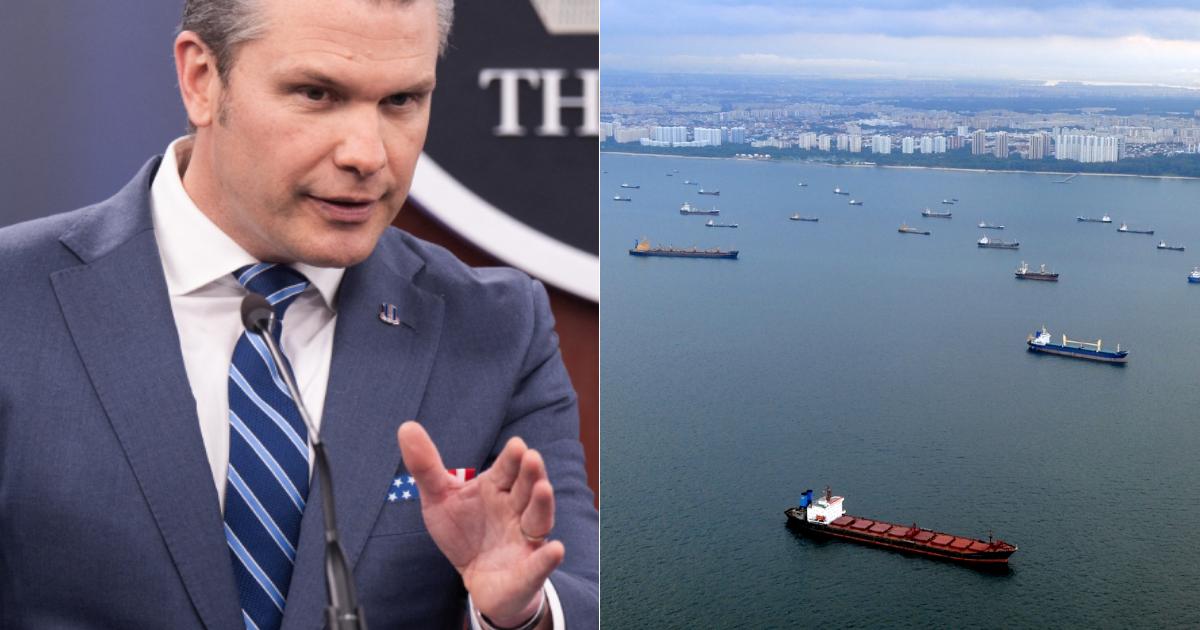
Iran Reopens Hormuz Strait; US Blockade Continues Amidst Deal Talks
Iran has declared the Strait of Hormuz open to commercial vessels during a Lebanon ceasefire, a move welcomed by US President Trump. However, Trump has stated the US naval blockade on Iranian ships and ports will persist until a comprehensive deal with Iran is finalized, citing ongoing negotiations.
Key Highlights
- Iran reopened the Strait of Hormuz to commercial vessels amid a Lebanon ceasefire.
- US President Trump acknowledged Iran's announcement but maintained the US naval blockade.
- The blockade will remain in effect until a complete 'transaction' with Iran is finalized.
- Oil prices saw a significant drop following Iran's declaration.
- India has expressed concern over disruptions to the Strait of Hormuz, emphasizing safe navigation.
In a significant development impacting global maritime trade and energy markets, Iran announced on Friday, April 17, 2026, that it has fully reopened the Strait of Hormuz to all commercial vessels. This declaration coincided with a 10-day ceasefire between Israel and the Iran-backed Hezbollah militant group in Lebanon. The Iranian Foreign Minister, Seyed Abbas Araghchi, stated via X (formerly Twitter) that passage through the vital waterway, through which approximately 20% of the world's oil is shipped, would be open for the remaining period of the ceasefire. He specified that vessels must adhere to a "coordinated route" previously designated by Iran's Ports and Maritime Organization.
US President Donald Trump welcomed Iran's announcement, posting on his Truth Social platform that the Strait of Hormuz was "fully open and ready for full passage.". However, he immediately clarified that the US naval blockade on Iranian ships and ports would remain "in full force and effect as it pertains to Iran, only, until such time as our transaction with Iran is 100% complete". Trump suggested that these negotiations were progressing rapidly, with most points already settled. He also claimed that Iran had agreed "never to close the Strait of Hormuz again" and was actively removing sea mines, presenting this as a major breakthrough. The US blockade, which involves a significant military presence including over 10,000 troops, more than a dozen Navy ships, and numerous aircraft, was initially imposed to pressure Iran after it restricted traffic through the strait.
The reopening of the Strait of Hormuz led to a significant drop in oil prices. Brent crude fell by approximately 8.94%, and West Texas Intermediate (WTI) dropped by about 10.91% on Friday. Analysts, however, cautioned that a widespread resumption of passage might not be immediate, given the lingering uncertainties and the continued US blockade. The Strait of Hormuz is critically important to global energy security, with approximately 20-25% of the world's seaborne oil and liquefied natural gas (LNG) trade passing through it annually. The United States and Israel had launched an air war against Iran on February 28, 2026, following which Iran had largely blocked shipping traffic through the strait.
For India, the developments in the Strait of Hormuz carry significant implications. India's Ambassador to the UN, Harish P, raised concerns about threats to commercial shipping and urged for the restoration of safe navigation, emphasizing that maritime security is critical for India's energy and economic interests. He noted that Indian nationals have been among the victims of attacks in the region. Prime Minister Narendra Modi had previously stated that disruptions in the Strait of Hormuz are "unacceptable" and have a "severe adverse impact on the global economy and on people's lives". A disruption to Iran's oil exports, especially through a US blockade, could lead to increased petrol and diesel prices in India, as the country imports over 85% of its crude oil. While India does not currently import much oil directly from Iran, nearly 60% of its oil imports pass through the Strait of Hormuz, making it vulnerable to delays, higher insurance costs, and supply uncertainty. The PHD Chamber of Commerce and Industry (PHDCCI) warned that a complete blockade would be a "most disruptive geopolitical shock" to the global economy, leading to surging energy prices, rising inflation, and supply chain disruptions in India. The Reserve Bank of India (RBI) has been monitoring the situation, maintaining its policy rate while increasing liquidity monitoring to manage potential financial volatility.
The news article itself is dated April 17, 2026, and originates from NDTV. The claims regarding Iran's declaration of the Strait of Hormuz being open and President Trump's response about the continued US blockade are corroborated across multiple credible news sources, including Associated Press (AP), Fox News, and The War Zone, among others. The underlying context of the 'Iran war' and subsequent negotiations and ceasefires also aligns with reports from March and April 2026. The specific timing of the news aligns with the events described, making the headline's core claims accurate, though the phrase "Full Force" in the original headline accurately reflects Trump's stance on the blockade.
Frequently Asked Questions
What is the Strait of Hormuz and why is it important?
The Strait of Hormuz is a narrow sea passage between Iran and Oman, connecting the Persian Gulf to the Gulf of Oman and the open sea. It is one of the world's most critical energy choke points, through which approximately 20-25% of the world's seaborne oil and liquefied natural gas (LNG) trade passes annually. Its strategic importance makes any disruption a major concern for global energy security and the world economy.
What did Iran announce regarding the Strait of Hormuz?
On April 17, 2026, Iran's Foreign Minister announced that the Strait of Hormuz was declared "completely open" to all commercial vessels for the duration of a ceasefire in Lebanon. This reopening was specified to occur via a coordinated route previously designated by Iranian authorities.
What was the US response to Iran's announcement?
US President Donald Trump acknowledged Iran's announcement that the Strait of Hormuz was open. However, he also stated that the US naval blockade on Iranian ships and ports would remain "in full force" until a comprehensive "transaction" with Iran is 100% complete. He also claimed that Iran had agreed never to close the strait again.
How did the reopening of the Strait of Hormuz affect oil prices?
Following Iran's announcement that the Strait of Hormuz was open, oil prices experienced a significant drop. Brent crude futures fell by nearly 9%, and WTI futures dropped by over 10% on April 17, 2026, reflecting market relief over potential supply disruptions easing.
What is India's stance on the situation in the Strait of Hormuz?
India has expressed serious concerns over threats to commercial shipping in the Strait of Hormuz and has urged for the restoration of safe navigation. India's Ambassador to the UN highlighted that maritime security is critical for India's energy and economic interests, noting that disruptions could lead to increased fuel costs, inflation, and supply chain issues for the country.