India-US Trade Talks Conclude: Interim Deal Nears Amid Tariff Deadline
India and the United States recently concluded high-level ministerial trade talks, reporting substantial progress towards an interim bilateral trade agreement. While no final deal was announced, both nations aim to finalize the pact before July 24, when temporary US tariffs are set to expire, amidst complex tariff architecture negotiations.
Key Highlights
- India, US conclude recent high-level ministerial trade discussions.
- Substantial progress made towards an interim bilateral trade agreement (BTA).
- No final deal announced, but agreement targeted by July 24 deadline.
- Talks focused on new tariff architecture after US Supreme Court ruling.
- Indian Commerce Minister and US Trade Representative led negotiations.
- Broader strategic partnership encompasses defense, technology, and critical minerals.
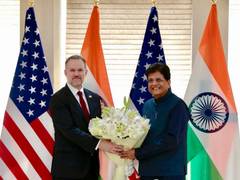
India and the United States recently concluded multiple rounds of high-level ministerial trade talks, including a two-day session in New Delhi that wrapped up on June 24, 2026, demonstrating significant momentum in their economic engagement. The discussions, led by India's Commerce and Industry Minister Piyush Goyal and US Trade Representative Jamieson Greer, aimed to finalize an interim bilateral trade agreement (BTA), a precursor to a more comprehensive pact. While no definitive deal was announced at the conclusion of these specific talks, both sides acknowledged "substantial progress" and expressed confidence in reaching an agreement soon, with a critical deadline of July 24, 2026, looming.
The urgency stems from the impending expiration of temporary 10% tariffs imposed by the US on imports from all its trading partners, which are set to lapse on July 24, 2026. This deadline has been a key driver in the renewed push for a bilateral agreement. The primary sticking point in the recent negotiations has been the establishment of a new, legally sound tariff architecture. This became necessary after a US Supreme Court ruling on February 20, 2026, invalidated the legal basis for an earlier proposed 18% reciprocal duty on a large portion of Indian goods, which had been part of a framework reached by the two countries on February 7, 2026. India is keen to secure preferential treatment and a competitive advantage over rival nations like China and ASEAN countries through this new tariff structure.
Indian Commerce Minister Piyush Goyal emphasized India's commitment to the deal but also asserted that India does not negotiate with deadlines, preferring a well-crafted agreement over a rushed one, though he would be "happiest" if it was concluded before July 24 to give Indian exporters an advantage. US Deputy Assistant Secretary of State Bethany Poulos Morrison reiterated that the two nations are "very, very close" to a historic trade deal, aiming to significantly boost bilateral trade to $500 billion by 2030, a goal dubbed "Mission 500".
Beyond trade, the India-US relationship is characterized by a deepening comprehensive global strategic partnership encompassing various critical areas. These include defense cooperation, with a renewed 10-year framework signed in late 2025 focusing on interoperability, joint exercises, and advanced defense technologies. The two nations are also collaborating extensively on critical minerals, with a bilateral framework signed on May 26, 2026, to secure supply chains for advanced technology and energy. Furthermore, cooperation extends to technology, clean energy, resilient supply chains, artificial intelligence, semiconductors, and even civil nuclear energy, with a focus on small modular reactors.
The recent high-level engagements underscore the strategic importance both countries place on their bilateral ties. US Ambassador to India Sergio Gor welcomed USTR Greer's visit, stating that the negotiations were progressing "decisively toward finalising a strong bilateral trade agreement" that would unlock new economic opportunities and deepen the partnership. The discussions also saw India proposing to lower or eliminate tariffs on various American industrial and agricultural products, including tree nuts, red sorghum, fruits, soybean oil, and spirits, to stimulate trade. Conversely, the US had earlier agreed to reciprocal tariff rates on Indian goods, with the potential to remove them on items like generic pharmaceuticals, gems, and aircraft parts upon the successful conclusion of an interim agreement.
Overall, the news reflects a dynamic and evolving economic and strategic partnership between India and the United States. While the immediate focus is on concluding the interim trade pact before the July 24 tariff deadline, the broader context is one of sustained collaboration across a multitude of sectors, aiming for a "result-oriented" relationship that will profoundly shape the Indo-Pacific and global landscape.
Frequently Asked Questions
What is the primary focus of the recent India-US trade talks?
The recent India-US trade talks primarily focused on finalizing an interim bilateral trade agreement (BTA) and establishing a new, legally valid tariff architecture. This became crucial after a US Supreme Court ruling invalidated an earlier proposed reciprocal duty, and both sides are working towards a deal before temporary US tariffs expire on July 24, 2026.
Why is July 24, 2026, an important date for the India-US trade deal?
July 24, 2026, is an important deadline because it marks the expiration of temporary 10% tariffs imposed by the US on imports from all its trading partners. Both India and the US are keen to finalize an interim trade agreement before this date to avoid potential disruptions and to give India a competitive advantage through preferential tariffs.
Who led the recent high-level trade discussions between India and the US?
The recent high-level trade discussions between India and the US were led by India's Commerce and Industry Minister Piyush Goyal and US Trade Representative Jamieson Greer. US Ambassador to India Sergio Gor also participated in these meetings.
What is 'Mission 500' in the context of India-US trade relations?
'Mission 500' is a shared goal between the United States and India to more than double total bilateral trade to $500 billion by 2030. This ambitious target underscores the significant economic potential both nations see in strengthening their trade ties.
Are there other areas of cooperation between India and the US besides trade?
Yes, beyond trade, India and the US have a comprehensive global strategic partnership that includes extensive cooperation in defense, with a renewed 10-year framework agreement. They are also collaborating on critical minerals, technology, clean energy, resilient supply chains, artificial intelligence, and civil nuclear energy.