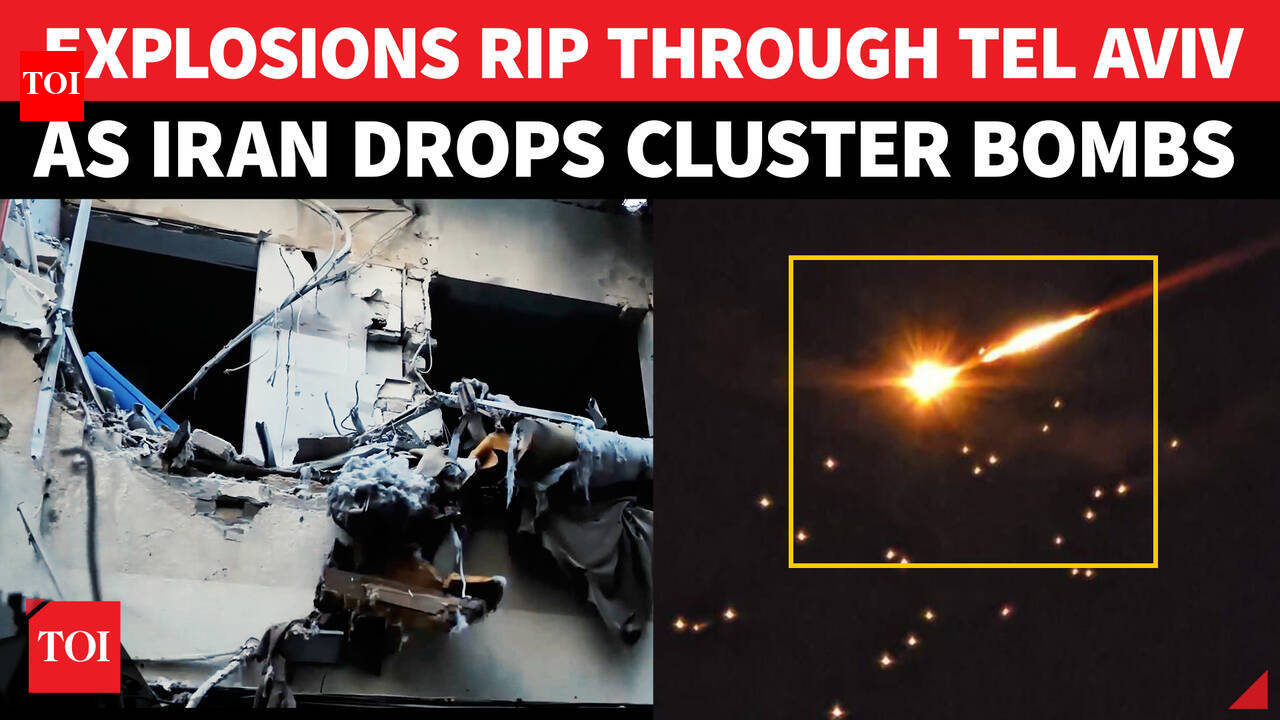
Iran's Asymmetric Warfare Strategy in Middle East Conflict
Al Jazeera analyzes Iran's reliance on asymmetric warfare tactics to counter superior adversaries, a strategy exemplified by its use of drones and proxies. This approach aims to inflict maximum costs with minimal assets, challenging conventional military dominance in the Middle East. The article delves into the historical roots and evolving nature of Iran's asymmetric doctrine, its implications for regional stability, and its potential impact on global security.
Key Highlights
- Iran leverages asymmetric warfare against stronger foes.
- Drones and proxy groups are key Iranian tactics.
- This strategy aims to maximize costs for adversaries.
- Historical context shapes Iran's asymmetric doctrine.
- Regional stability is impacted by Iran's approach.
- Global security concerns arise from Iran's tactics.
Al Jazeera's article "What asymmetric warfare may tell us about Iran's fighting chances" examines Iran's strategic reliance on asymmetric warfare, a doctrine that has evolved significantly since the 1980s. Shaped by the Iran-Iraq War, this strategy emphasizes leveraging proxy militias, ballistic missiles, and increasingly, drones, to counter militarily superior adversaries like the United States and Israel. The core tenet of this approach is to impose maximum costs and pressure on opponents through the calculated use of relatively inexpensive, yet highly effective, military assets. [4, 7, 27]
The article highlights how Iran has used its network of proxies, such as the Houthis in Yemen and Hezbollah in Lebanon, to project influence and keep adversaries off balance in the Middle East. These groups have employed tactics like missile and drone strikes targeting critical infrastructure, as seen in attacks on Saudi Arabia. [7] The use of Shahed-136 kamikaze drones is specifically mentioned as a cheap but effective weapon in Iran's arsenal, employed against US military bases and allies in the Gulf region. [7, 12]
Historically, Iran's military doctrine was shaped by a need to confront militarily superior foes and export the ideology of the Islamic Revolution. [4] Asymmetric warfare, including proxy warfare and ballistic missiles, proved a cost-effective way to project influence and challenge regional rivals like Israel and deter US influence. This has allowed Iran to establish itself as a significant regional military power despite lower overall military expenditure compared to its adversaries. [4]
However, the article also notes the evolving nature of warfare and the challenges Iran faces. While its asymmetric doctrine has been effective, it is being challenged by rivals developing counter-strategies. Examples include Israeli missile defense systems that have reportedly intercepted a high percentage of Iranian ballistic missiles. [4] In response, Iran has been working to modernize its conventional forces alongside its asymmetric capabilities, aiming for a more technologically oriented and robust army. [4]
The current conflict, described as a "regional war" involving the United States and Israel against Iran, is presented as a prime example of asymmetric warfare. [6, 8] The article points out that while Iran's conventional military is outmatched, its ability to retaliate with missiles and drones, coupled with its support for regional proxies, has made a swift victory difficult for its adversaries. [12, 18, 23] This has led to a situation where the conflict could become a protracted war of attrition, focusing on who runs out of precision-guided weapons first. [23]
The implications of Iran's asymmetric warfare extend beyond direct military confrontation. The article suggests that Iran aims to raise the economic and security costs for any attempt to overthrow its regime, disrupting global energy markets and supply chains, as evidenced by threats to close the Strait of Hormuz. [26, 27, 31] This strategy seeks to achieve strategic goals through endurance, decentralized operations, and cost asymmetry, rather than direct, force-on-force engagement. [27]
The article also touches upon the international reaction and the lessons being drawn. India, for instance, is closely observing the conflict for insights into its own air defense needs, particularly concerning the cost asymmetry between low-cost drones and advanced interceptor systems. [15] Al Jazeera's reporting on the conflict is generally seen as providing a valuable perspective, especially for the Palestinian viewpoint, though it has also faced accusations of bias and one-sided reporting in other contexts. [3]
In conclusion, Iran's asymmetric warfare strategy is a dynamic approach rooted in historical necessity and adapted to modern conflict. It allows Iran to project power and resist superior forces by leveraging proxies, drones, and missiles to inflict costs and deter escalation, posing complex challenges to its adversaries and impacting regional and global security. [4, 7, 27, 28]
Frequently Asked Questions
What is asymmetric warfare, and how does Iran employ it?
Asymmetric warfare involves a weaker combatant using unconventional tactics to exploit the vulnerabilities of a stronger adversary. Iran uses this strategy by employing tactics like drone attacks, ballistic missiles, and supporting regional proxy groups, aiming to inflict maximum costs with minimal military assets.
What are the primary tools Iran uses in its asymmetric warfare strategy?
Iran's primary tools include a large and diverse arsenal of ballistic missiles and drones (such as the Shahed-136 kamikaze drone), as well as the extensive network of regional proxy groups like Hezbollah and the Houthis.
How does Iran's asymmetric warfare strategy affect regional and global security?
Iran's strategy aims to deter and counter superior forces, but it also leads to regional instability by involving proxy groups in conflicts. Disruptions to vital shipping routes like the Strait of Hormuz and threats to energy infrastructure can have significant global economic repercussions.