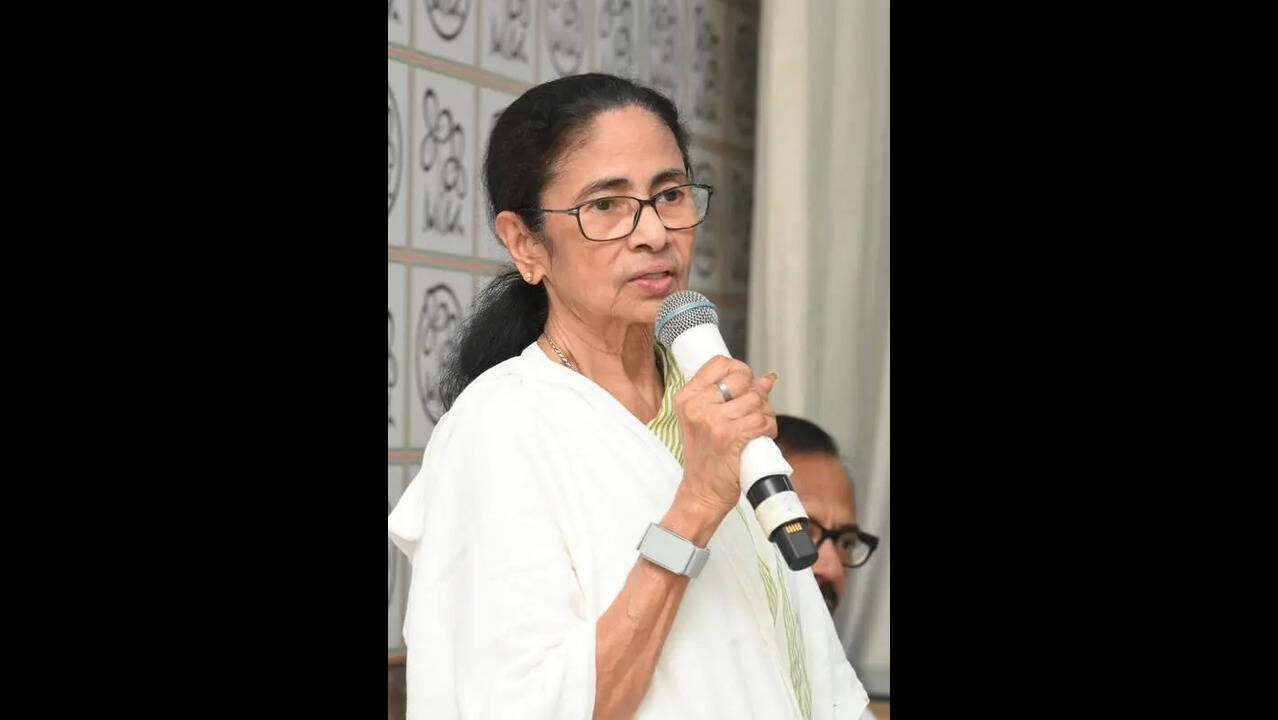
Mamata Banerjee's Stern Message to TMC Leaders Post 2026 Poll Defeat
Following a significant defeat in the 2026 West Bengal Assembly elections, Mamata Banerjee addressed TMC leaders, stating those unwilling to stay could leave. She vowed to rebuild the party with loyalists and initiated plans for organizational revival and addressing post-poll violence.
Key Highlights
- Mamata Banerjee convened review meeting after 2026 Assembly poll debacle.
- Issued clear message: 'Those unwilling to stay can quit now'.
- Pledged to rebuild Trinamool Congress with dedicated members.
- Instructed leaders to report on post-poll violence victims.
- Ordered revival of grassroots public outreach programs.
- Reaffirmed her final authority in party organizational matters.
In the wake of a significant electoral setback in the 2026 West Bengal Assembly elections, Trinamool Congress (TMC) supremo and former Chief Minister Mamata Banerjee convened a crucial review meeting with party leaders and candidates. The meeting, held at her Kalighat residence, addressed the reasons for the party's crushing defeat and outlined a strategy for future revival.
During the meeting, Banerjee delivered a firm message to party members exhibiting dissent or wavering loyalty. She stated unequivocally that 'those unwilling to stay can quit now' and that she would not make any effort to stop them. She emphasized that individuals who remained committed to the party during this challenging period would prove to be invaluable assets, with whom she intended to rebuild the Trinamool Congress.
The 2026 Assembly elections marked a dramatic reversal for the TMC, which had governed West Bengal for 15 consecutive years since 2011. The Bharatiya Janata Party (BJP) secured a landslide victory, bagging 207 seats, while the Mamata Banerjee-led TMC was restricted to a mere 80 seats out of the 294 in the assembly. Adding to the party's woes, Mamata Banerjee herself lost from Bhabanipur, a constituency long considered her stronghold.
Amidst reports of internal discontent and potential defections, Banerjee's strong stance was seen as an effort to quell speculation and reassert her leadership. She also made it clear that she continues to be the ultimate authority in organizational matters within the Trinamool Congress. Furthermore, she advised party leaders to address any grievances internally rather than making public statements or speaking to the media.
Beyond addressing internal discipline, Banerjee laid out concrete steps for organizational restructuring and public engagement. She directed district leaders to compile and submit a list of individuals allegedly displaced from their homes due to post-poll violence. Former West Bengal Minister of State for Finance (Independent Charge) and legal practitioner, Chandrima Bhattacharya, was tasked with overseeing the process of providing legal assistance to these alleged victims of post-election violence.
In a bid to reconnect with the electorate and revitalize the party's grassroots presence, the TMC chief instructed the leadership to submit a detailed report within seven days on restarting area-based public outreach programs. She also urged party leaders to initiate block-level, town-level, and area-level meetings wherever feasible, recognizing the altered political landscape in the state.
The issue of post-poll violence was a prominent theme in the aftermath of the elections. Both Mamata Banerjee and TMC National General Secretary Abhishek Banerjee publicly highlighted allegations of attacks on TMC workers, offices, and homes. Abhishek Banerjee, in a strongly worded message, criticized the electoral process, alleging mass disenfranchisement of voters, partisan conduct by constitutional authorities, and targeted violence against TMC workers. Mamata Banerjee even personally appeared before a division bench of the Calcutta High Court, seeking judicial intervention over alleged incidents of post-poll violence, claiming women, children, and minorities were being targeted.
Banerjee's directive to rebuild damaged party offices, paint them, and reopen them was a symbolic call to action for loyalists, signaling a determined effort to restore the party's physical and spiritual infrastructure. She conveyed a message of resilience, stating that the Trinamool Congress would never bow down and implicitly suggesting that the people's mandate had been unfairly treated. The comprehensive review meeting underscored the TMC's resolve to regroup and strengthen its position despite the significant electoral setback in West Bengal.
Frequently Asked Questions
What was the context of Mamata Banerjee's message to TMC leaders?
Mamata Banerjee's message came after the Trinamool Congress suffered a significant defeat in the 2026 West Bengal Assembly elections, losing power after 15 years and being reduced to 80 seats.
What was Mamata Banerjee's main message to disgruntled TMC leaders?
Her primary message was that those unwilling to stay with the party during the crisis were free to leave immediately, and she would focus on rebuilding the party with loyal and committed members.
What instructions did Mamata Banerjee give for rebuilding the party?
She instructed district leaders to report on individuals displaced by post-poll violence, tasked a legal practitioner with providing assistance, and ordered the restart of area-based public outreach programs and grassroots meetings.
What was the outcome of the 2026 West Bengal Assembly elections for TMC?
In the 2026 West Bengal Assembly elections, the TMC faced a major defeat, winning only 80 seats while the BJP secured 207 seats, ending TMC's 15-year rule. Mamata Banerjee herself lost her constituency of Bhabanipur.
Were there allegations of post-poll violence in West Bengal?
Yes, both Mamata Banerjee and Abhishek Banerjee alleged widespread post-poll violence, with claims of attacks on TMC workers, offices, and even targeted violence against women, children, and minorities, leading Banerjee to seek judicial intervention.