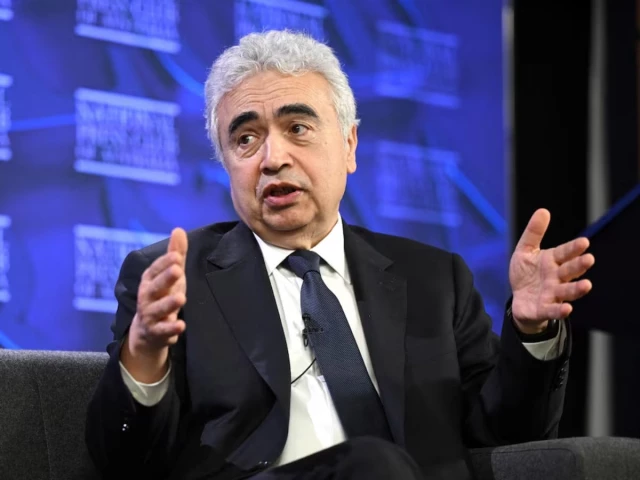
IEA Chief: Iran War Poses Major Global Economic Threat
The head of the International Energy Agency (IEA), Fatih Birol, has warned that the ongoing war in Iran presents a "major, major threat" to the global economy. Birol stated that the current energy crisis is worse than the combined impact of the 1970s oil shocks and the Russia-Ukraine war, with significant disruptions to oil and gas supplies and damage to over 40 energy assets in the Middle East.
Key Highlights
- Iran war creates the largest energy supply disruption in history.
- Economic fallout worse than 1970s oil shocks and Ukraine war combined.
- Over 40 Middle East energy assets severely damaged.
- Reopening Strait of Hormuz is the most critical solution.
- Global economy faces a severe and widespread threat.
The global economy is facing a "major, major threat" due to the ongoing war in Iran, according to Fatih Birol, the Executive Director of the International Energy Agency (IEA). Birol stated in a speech at Australia's National Press Club that the current energy crisis is more severe than the combined impact of the two oil shocks in the 1970s and the gas market disruptions stemming from the Russia-Ukraine war. The conflict has led to the largest supply disruption in the history of the global oil market, with the effective closure of the Strait of Hormuz, a vital chokepoint for oil and gas transit. This disruption has resulted in the loss of approximately 11 million barrels of oil per day and about 140 billion cubic meters of gas, exceeding the losses seen in the 1970s oil crises (10 million barrels per day combined) and the Russia-Ukraine war.
Birol emphasized that "no country will be immune to the effects of this crisis if it continues to go in this direction." The damage extends beyond oil and gas, with vital economic arteries such as petrochemicals, fertilizers, sulfur, and helium also experiencing trade interruptions, which could have serious consequences for the global economy. The situation is exacerbated by the fact that at least 40 energy assets across nine countries in the Middle East have been "severely or very severely" damaged. Even if the conflict ends, restoring these damaged facilities could take considerable time, potentially prolonging supply chain disruptions.
Asia is particularly vulnerable due to its heavy reliance on energy supplies from the Middle East, with countries in the region already implementing demand-side measures. The IEA has taken actions to mitigate the crisis, including the historic release of 400 million barrels of oil from emergency reserves, the largest such intervention in its history. However, Birol stressed that supply-side measures alone cannot fully offset the scale of the disruption, and reopening the Strait of Hormuz is the "single most important solution" to the crisis.
In response to the escalating tensions, US President Donald Trump issued a 48-hour ultimatum for Iran to reopen the Strait of Hormuz, threatening to "obliterate" Iran's power plants if the demand was not met. Iran, in turn, has warned of retaliation against energy and water infrastructure in the region if its own energy infrastructure is targeted. The conflict, which began with US-Israeli strikes on Iran on February 28, 2026, has now entered its fourth week, with no immediate signs of de-escalation. The implications for the global economy are profound, with fears of prolonged high energy prices, inflation, and potential recessions. The US stock market, while historically resilient, could be significantly impacted if oil prices remain elevated for an extended period.
Source: AP News reporting on statements made by IEA head Fatih Birol.
Frequently Asked Questions
What is the primary threat to the global economy according to the IEA head?
The primary threat is the ongoing war in Iran, which has triggered a severe energy crisis by disrupting oil and gas supplies and damaging critical infrastructure.
How does the current energy crisis compare to past events?
The IEA head states that the current crisis is worse than the combined impact of the two oil shocks of the 1970s and the energy disruptions caused by the Russia-Ukraine war.
What specific infrastructure has been damaged?
At least 40 energy assets across nine countries in the Middle East have been severely or very severely damaged, including oil fields, refineries, and pipelines.
What is the most critical solution to the energy crisis?
The most critical solution identified by the IEA is the reopening of the Strait of Hormuz, which is essential for global energy transit.
What actions are being taken to address the crisis?
The IEA has released 400 million barrels of oil from emergency reserves, and governments are being urged to implement demand-side measures. Reopening the Strait of Hormuz is also considered crucial.