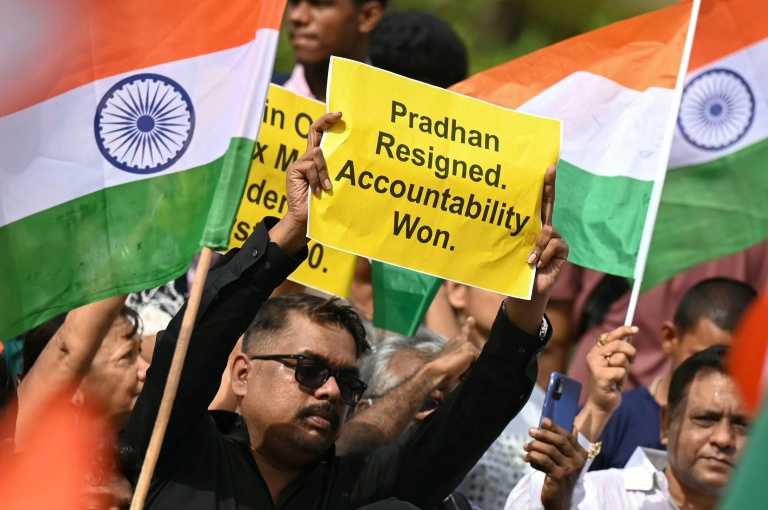
Supreme Court hears plea against pellet gun use after Delhi protest injuries
A former IPS officer and two injured protesters have filed a petition in the Supreme Court seeking a ban on pellet guns for crowd control, following alleged use of these weapons during a protest in Delhi. The Central Reserve Police Force (CRPF) has launched an internal inquiry into the incident, with reports indicating pellet guns were fired by its Rapid Action Force (RAF).
Key Highlights
- Petition filed in Supreme Court to ban pellet guns.
- Protesters allege pellet injuries during July 20 Delhi demonstration.
- CRPF confirms internal inquiry into pellet gun use by RAF.
- Two injured individuals and a former IPS officer are petitioners.
- Supreme Court to hear related petitions on police excessive force.
Following allegations of pellet gun injuries sustained by protesters during a demonstration in Delhi on July 20, a significant legal action has been initiated in the Supreme Court. A petition has been filed by former IPS officer Yashovardhan Azad, alongside two individuals who claim to have suffered pellet injuries, seeking a complete ban on the use of pellet guns by law enforcement agencies for civilian crowd dispersal. The plea argues that such weapons are inherently disproportionate, unnecessary, and unreasonable for crowd control, thus violating fundamental rights. The petitioners are also demanding compensation and comprehensive medical care for all those injured by pellet firing during the protest.
The incident in question occurred during a protest march organized by the Cockroach Janata Party (CJP) on July 20, which aimed to demand the resignation of the Union education minister over alleged irregularities in competitive exams. Reports indicate that during the crackdown on the march, personnel from the Rapid Action Force (RAF), a specialized anti-riot unit of the Central Reserve Police Force (CRPF), allegedly used pellet guns. While Delhi Police initially denied the use of pellet guns, a general diary entry accessed by The Hindu suggests that the RAF fired rounds from an anti-riot gun on the directions of a Deputy Commissioner of Police (DCP) rank officer. The CRPF has since confirmed that an internal inquiry is underway to verify the use of pellet guns and whether Standard Operating Procedures (SOPs) were followed.
Eyewitness accounts and hospital reports suggest that at least three individuals sustained pellet injuries, with one 19-year-old protester, Sahil Lochab, facing the possibility of permanent vision loss in his right eye due to a pellet striking his pupil. Another injured protester, Sheikh Irshad Mansoori, underwent surgery to remove pellets lodged in his body. These injuries have reignited a long-standing debate about the use of pellet guns in India, a weapon that has previously drawn severe criticism and has been associated with significant injuries, including blindness, particularly in the context of past unrest in Jammu and Kashmir. Human rights organizations and international guidelines, such as those from the UN Human Rights Office, have also raised concerns about the inherent inaccuracy and potential for indiscriminate harm caused by pellet guns.
The Supreme Court is expected to hear the petition alongside other related pleas concerning allegations of excessive police force during the Delhi protests. The court has previously underscored the constitutional right to peaceful protest. The ongoing legal and internal scrutiny highlights the critical need for clear protocols and accountability in the use of less-lethal weapons by law enforcement agencies, especially when dealing with civilian assemblies. The matter is of significant public interest in India, given the recurring use of such crowd-control measures and the potential for severe human rights implications.
Frequently Asked Questions
What is the main demand of the petition filed in the Supreme Court?
The petition seeks a ban or decommissioning of pellet guns used by law enforcement agencies for dispersing civilian crowds, arguing they are unconstitutional and cause disproportionate harm. It also requests compensation and medical care for victims.
Which protest led to these allegations of pellet gun use?
The allegations stem from the 'Sansad Chalo' (March to Parliament) protest organized by the Cockroach Janata Party (CJP) on July 20, in Delhi, concerning alleged irregularities in competitive exams.
What is the status of the investigation into the pellet gun use?
The Central Reserve Police Force (CRPF), under which the Rapid Action Force (RAF) operates, has launched an internal inquiry to verify the allegations and examine whether Standard Operating Procedures were followed.
What are the potential consequences of pellet gun injuries?
Pellet gun injuries can be severe, with reported cases of serious harm including permanent vision loss, as seen in one of the injured protesters who may lose sight in his right eye.