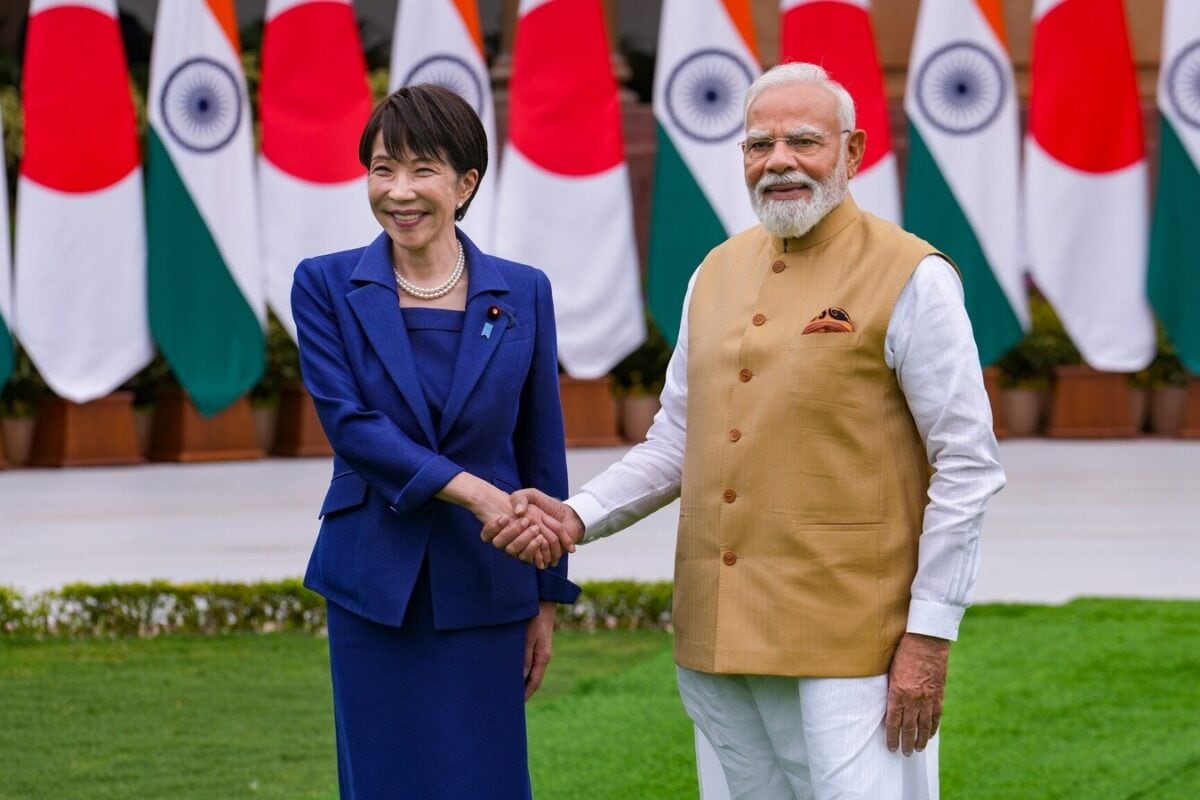
India-Japan Summit: Deepening Ties Amid China's Indo-Pacific Warning
India and Japan deepened strategic ties in a recent summit between PM Modi and PM Takaichi, focusing on defense, economic security, and the Indo-Pacific. China reacted by warning against partnerships targeting third parties, highlighting regional geopolitical shifts and growing competition.
Key Highlights
- PM Modi and Japanese PM Takaichi held a summit in New Delhi.
- Agreements covered defense, AI, critical minerals, and supply chains.
- Leaders expressed concern over East and South China Seas militarization.
- China cautioned against bilateral cooperation targeting third parties.
- Summit reinforced 'Free and Open Indo-Pacific' vision.
- New Delhi and Tokyo aim to reduce reliance on Beijing.
A recent summit between Indian Prime Minister Narendra Modi and Japanese Prime Minister Sanae Takaichi in New Delhi on July 2, 2026, has significantly strengthened bilateral ties, prompting a stern warning from China. The discussions, held during Takaichi's first official visit to India as Prime Minister, focused on deepening cooperation across various strategic sectors, reflecting a concerted effort by both nations to enhance their economic and security resilience in the Indo-Pacific region.
Key outcomes of the summit included landmark initiatives to bolster defense cooperation, foster advancements in artificial intelligence (AI) and critical minerals, and establish more resilient supply chains. Both leaders emphasized the importance of a 'Free and Open Indo-Pacific' (FOIP), a vision consistently promoted by Japan and increasingly embraced by India as a counterbalance to rising geopolitical complexities in the region.
In a significant move, India and Japan agreed to co-develop advanced naval sensors, marking a new chapter in their defense collaboration. This initiative underscores a shared commitment to maritime security and stability in the Indo-Pacific, a region experiencing heightened tensions due to China's growing military presence and assertive territorial claims.
Economically, the summit set an ambitious target for Japanese investment in India, aiming for ¥10 trillion (approximately US$62 billion) over the next decade. This commitment was highlighted by the virtual inauguration of Maruti Suzuki's fourth manufacturing plant in Kharkhoda, Haryana, symbolizing deeper industrial integration and job creation. Discussions also included establishing a dialogue on strengthening oil stockpiles to enhance energy resilience, particularly in the wake of global supply disruptions.
The joint statement issued after the summit prominently featured shared concerns over the situation in the East and South China Seas. Both Prime Ministers expressed strong opposition to any unilateral actions that endanger freedom of navigation and overflight, as well as attempts to alter the status quo by force or coercion. They also raised serious concerns about the growing militarization of disputed features in these vital maritime corridors, reaffirming the principle that disputes must be resolved peacefully and in accordance with international law, as reflected in the UNCLOS (United Nations Convention on the Law of the Sea).
China's reaction to the India-Japan summit was swift and critical. Beijing issued a warning through its Foreign Ministry spokesman, Guo Jiakun, stating that bilateral cooperation between countries "should not target any third party or undermine the interests of another nation." Guo Jiakun criticized rhetoric that promotes openness while simultaneously encouraging geopolitical confrontation, asserting that such frameworks do not reflect the shared priorities of the region. China reiterated its call for Asia-Pacific unity, cautioning against division and bloc confrontation, advocating for strengthened trust through dialogue and shared development instead.
This Chinese warning is largely seen as a direct response to the deepening strategic alignment between India and Japan, particularly as it pertains to countering China's influence. Both India and Japan have voiced intentions to diversify supply chains and reduce their economic and strategic dependence on China. The renewed focus on the Quad (Quadrilateral Security Dialogue), though not explicitly detailed in these summit readouts, provides a broader context to these bilateral engagements, reinforcing a regional architecture aimed at balancing Beijing's assertiveness.
The timing of this summit also follows remarks made by Prime Minister Takaichi in November 2025, where she indicated Japan's potential response if China were to attack Taiwan, which had already contributed to strained Japan-China relations. Therefore, the recent agreements in New Delhi further underscore a growing strategic convergence between India and Japan, driven by shared democratic values, economic imperatives, and common concerns regarding regional security and stability.
For India, the partnership with Japan is a cornerstone of its Act East policy and its broader Indo-Pacific strategy. For Japan, India is a crucial partner in realizing its FOIP vision, aiming to ensure a rules-based order in a region increasingly vital for global trade and security. The robust nature of the discussions, encompassing advanced technology, defense, energy, and maritime security, highlights a comprehensive approach to partnership designed to navigate the complexities of contemporary geopolitics and safeguard their national interests in a rapidly evolving global landscape. The emphasis on economic security and diversified supply chains directly challenges China's economic and strategic leverage, signaling a more assertive posture by India and Japan in shaping the future of the Indo-Pacific.
Frequently Asked Questions
What were the main outcomes of the Modi-Takaichi summit?
The summit between Indian PM Modi and Japanese PM Takaichi resulted in agreements to deepen cooperation in defense (including co-development of naval sensors), critical minerals, AI, economic security, and building resilient supply chains. Both leaders also expressed concerns over the East and South China Seas.
What was China's reaction to the India-Japan summit?
China warned that bilateral cooperation between countries should not target any third party or undermine the interests of another nation. Beijing criticized rhetoric that promotes confrontation under the guise of openness and urged for regional unity rather than division.
What is the 'Free and Open Indo-Pacific' (FOIP) concept, and how does it relate to the summit?
The 'Free and Open Indo-Pacific' (FOIP) is a strategic vision promoted by Japan and supported by India, aiming to ensure a rules-based order, freedom of navigation, and economic connectivity in the Indo-Pacific region. The summit reinforced both nations' commitment to cooperating on realizing this vision, which is often seen as a counter-balance to China's growing influence.
Why is this summit significant for India and Japan?
This summit is significant as it solidifies the strategic partnership between two major Asian democracies. It aims to enhance their collective economic security, diversify critical supply chains away from over-reliance on single nations, and strengthen their defense capabilities to ensure regional stability in the face of geopolitical challenges, particularly China's assertiveness.