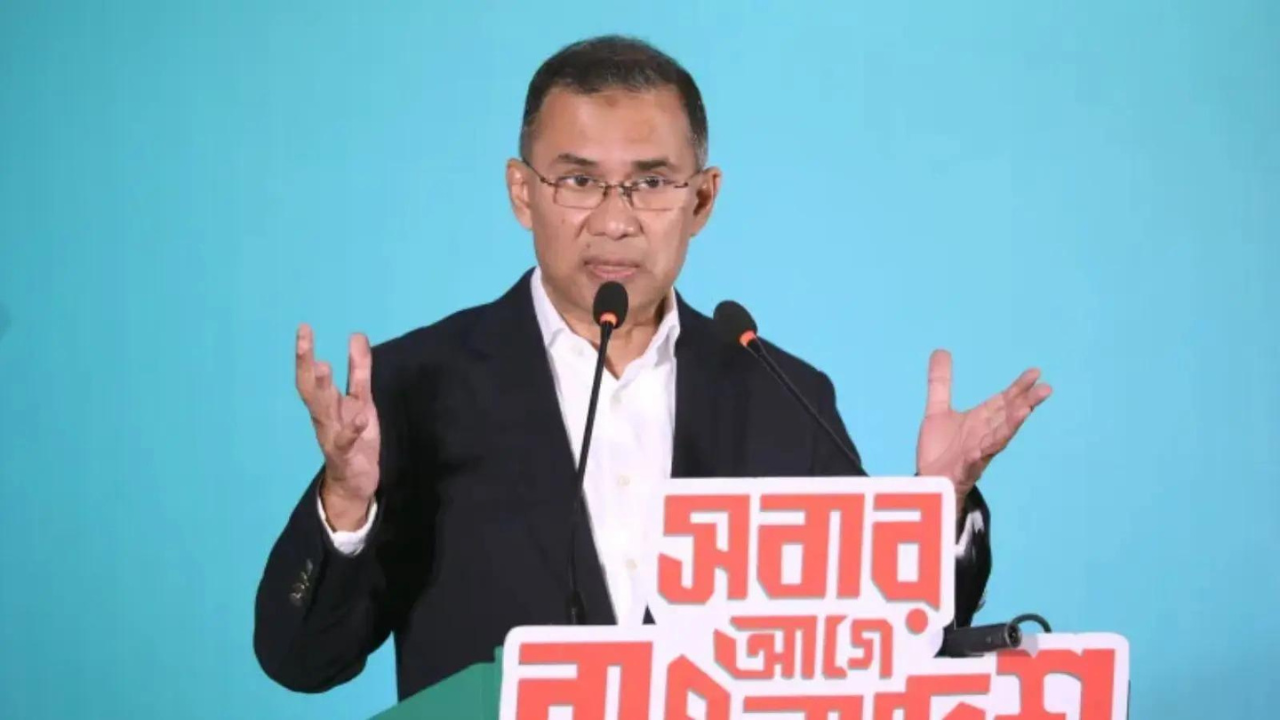
Bangladesh PM's Advisor Stopped at Delhi Airport, Sparks Diplomatic Row
Bangladesh Prime Minister Tarique Rahman's adviser, Dr. Zahed Ur Rahman, was stopped at Delhi's IGI Airport for hours by immigration authorities before being cleared. He chose to return to Dhaka, prompting Bangladesh to summon India's Deputy High Commissioner to express 'deep disappointment' over the incident. The episode has led to a diplomatic row between the two nations.
Key Highlights
- Bangladesh PM Tarique Rahman's adviser, Dr. Zahed Ur Rahman, was held at Delhi's IGI Airport.
- Immigration authorities stopped him due to a security-related watchlist.
- Zahed Ur Rahman chose to return to Dhaka despite being cleared for entry.
- Bangladesh summoned India's Deputy High Commissioner to protest the incident.
- The incident occurred as India and Bangladesh aim to reset bilateral ties.
- Dr. Rahman was travelling on a regular passport for an IORA meeting.
A significant diplomatic incident has unfolded between India and Bangladesh after Dr. Zahed Ur Rahman, a senior adviser to Bangladesh Prime Minister Tarique Rahman, was stopped and held for over two hours by Indian immigration authorities at Delhi's Indira Gandhi International (IGI) Airport on Sunday evening, June 14, 2026. This event has triggered strong reactions from Dhaka, which subsequently summoned India's Deputy High Commissioner to formally convey its 'deep disappointment' over the treatment of its dignitary.
Dr. Zahed Ur Rahman, who holds the rank of a State Minister and advises Prime Minister Tarique Rahman on Policy and Strategy Affairs, as well as Information and Broadcasting, had arrived in New Delhi to attend the 28th Meeting of the Committee of Senior Officials of the Indian Ocean Rim Association (IORA), a crucial regional gathering hosted by India's Ministry of External Affairs on June 15 and 16. Bangladesh's High Commission in New Delhi had reportedly informed India's Ministry of External Affairs through a diplomatic note about his visit, and High Commissioner M. Riaz Hamidullah had also communicated with Indian officials in advance.
Despite these advance communications, Dr. Rahman was reportedly stopped during immigration checks because his name appeared on a 'security-related watchlist'. Sources indicate that he has a history of making critical or 'combative comments on India-related issues' on his YouTube channel, 'Zahed's Take,' which had been blocked in India, leading to his inclusion on a watchlist. Although Indian authorities eventually cleared him for entry after the discrepancy was identified and resolved, Dr. Rahman chose not to proceed with his visit, reportedly feeling 'humiliated' by the 'discourteous treatment' and the prolonged delay. He subsequently returned to Dhaka via Colombo.
This incident has elicited strong diplomatic reactions from Bangladesh. Foreign Minister Dr. Khalilur Rahman described the episode as 'unexpected' and 'unfortunate,' stating that the government was taking appropriate measures. Dhaka summoned India's Deputy High Commissioner, Pawan Badhe, to the Ministry of Foreign Affairs on Monday, June 15, 2026, to formally lodge a protest and convey its 'deep disappointment'.
It was also reported that Dr. Zahed Ur Rahman was traveling on a regular Bangladeshi passport with a SAARC visa sticker, rather than a diplomatic passport. Some reports suggest that if the Indian side had been formally notified of his travel with a regular passport and his status, steps could have been taken to address the watchlist issue beforehand. The rest of the Bangladeshi delegation reportedly cleared immigration without issues and attended the IORA meeting as planned.
This incident comes at a critical juncture as India and Bangladesh are attempting to re-stabilize and enhance their bilateral relationship, especially following the recent election of a new government in Bangladesh led by Prime Minister Tarique Rahman. Tarique Rahman assumed office on February 17, 2026, after the Bangladesh Nationalist Party (BNP) secured a landslide victory in the 2026 general election, marking a significant political shift in the country. The diplomatic repercussions of this incident are still unfolding, and both nations are likely to engage in further discussions to mitigate tensions and ensure such occurrences do not jeopardize their strategic ties.
Frequently Asked Questions
What happened to Bangladesh PM's adviser at Delhi's IGI Airport?
Dr. Zahed Ur Rahman, an adviser to Bangladesh Prime Minister Tarique Rahman, was stopped and held for approximately two to two-and-a-half hours by Indian immigration authorities at Delhi's IGI Airport on June 14, 2026. He was eventually cleared but chose to return to Dhaka due to what he described as 'discourteous treatment'.
Who is Dr. Zahed Ur Rahman?
Dr. Zahed Ur Rahman is an Adviser to the Prime Minister of Bangladesh, Tarique Rahman, on Policy and Strategy Affairs, and Information and Broadcasting, holding the rank of a State Minister. He is also known as a physician, media personality, columnist, and political analyst, with a YouTube channel called 'Zahed's Take'.
Why was the Bangladeshi adviser stopped by Indian immigration?
Indian immigration authorities stopped Dr. Zahed Ur Rahman because his name appeared on a 'security-related watchlist'. Reports suggest this was due to his past 'combative comments on India-related issues' made on his YouTube channel, which had been blocked in India.
How did Bangladesh react to the incident?
Bangladesh reacted strongly by summoning India's Deputy High Commissioner, Pawan Badhe, to Dhaka on June 15, 2026, to convey its 'deep disappointment' over the incident. Bangladesh Foreign Minister Dr. Khalilur Rahman also described the event as 'unexpected' and 'unfortunate'.
What are the implications of this incident for India-Bangladesh relations?
This incident has created a diplomatic row, potentially straining the efforts by both India and the newly elected BNP government in Bangladesh, led by Prime Minister Tarique Rahman, to reset and stabilize their bilateral relationship. It highlights underlying sensitivities and the need for careful diplomatic engagement.