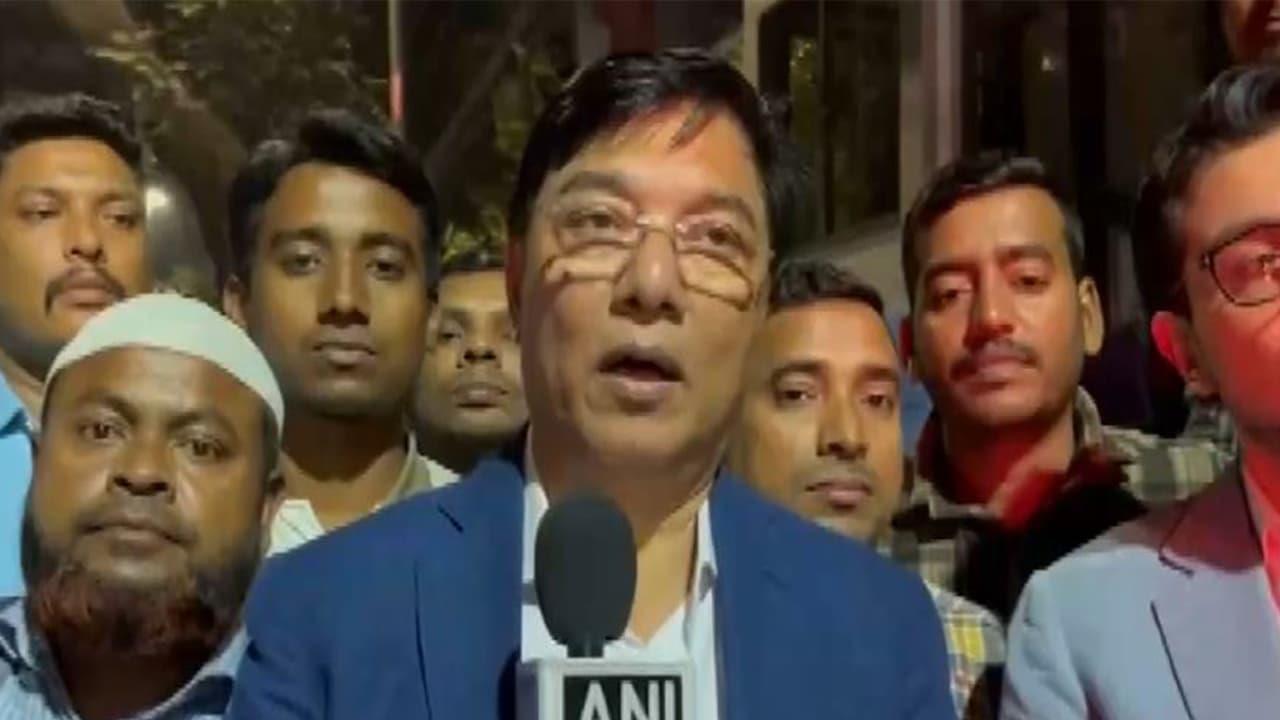
Tarique Rahman Sworn In as Bangladesh Prime Minister
Tarique Rahman has been sworn in as the new Prime Minister of Bangladesh following his party, the Bangladesh Nationalist Party (BNP), securing a landslide victory in the general elections held on February 12, 2026. This marks a significant political shift after the 2024 ouster of Sheikh Hasina's government.
Key Highlights
- Tarique Rahman takes oath as Bangladesh's Prime Minister on February 17, 2026.
- BNP achieved a two-thirds majority in the February 12, 2026 general elections.
- Former PM Sheikh Hasina's government was ousted in August 2024 amidst widespread protests.
- Rahman returned from 17 years of exile in London in December 2025.
- His previous convictions were overturned, paving the way for his political return.
- India's Lok Sabha Speaker, Om Birla, represented India at the swearing-in ceremony.
Tarique Rahman, the leader of the Bangladesh Nationalist Party (BNP), was sworn in as the new Prime Minister of Bangladesh on Tuesday, February 17, 2026, culminating a dramatic political transition for the South Asian nation. This momentous event follows the BNP's decisive landslide victory in the general elections held on February 12, 2026, where the party secured a commanding two-thirds majority in the 300-seat Jatiya Sangsad.
The election marks the country's return to an elected government after a turbulent period that saw the ouster of former Prime Minister Sheikh Hasina's Awami League government in August 2024. Hasina's 15-year rule ended amidst widespread student-led protests, often referred to as the 'July Revolution', which led to her resignation and flight to India. An interim government, led by Nobel laureate Muhammad Yunus, subsequently took charge, overseeing the country for 18 months and facilitating the recent elections.
Tarique Rahman's ascent to the premiership is particularly significant as he returns to formal leadership after 17 years of self-imposed exile in London. Rahman, the son of former President Ziaur Rahman and former Prime Minister Khaleda Zia, had been living abroad since 2008 following his release on medical grounds during an anti-corruption crackdown. During Sheikh Hasina's tenure, numerous cases, which he and his party maintained were politically motivated, were filed against him, leading to convictions in absentia for charges including corruption and the 2004 Dhaka grenade attack. However, an appellate court overturned these verdicts in 2024 and 2025, acquitting him of all charges and quashing his sentence, citing procedural irregularities. This paved the way for his highly anticipated return to Bangladesh on December 25, 2025, where he was greeted by hundreds of thousands of supporters. Just five days after his return, his mother, Khaleda Zia, passed away after a prolonged illness in December 2025.
The February 12, 2026, general elections saw the BNP and its allies securing 212 seats out of 300, far exceeding the 151 required for a simple majority. Bangladesh Jamaat-e-Islami, contesting independently, emerged as the second-largest party with 77 seats. The Awami League, the party of Sheikh Hasina, was barred from participating in these elections. Alongside the general election, a referendum on constitutional reforms, including prime ministerial term limits and a bicameral parliament, was overwhelmingly approved by voters.
The oath-taking ceremony for the newly elected Members of Parliament (MPs) commenced in the morning, followed by President Mohammed Shahabuddin administering the oath of office to Tarique Rahman and his new cabinet at 4:00 PM at the South Plaza of the Jatiya Sangsad in Dhaka. Breaking from tradition, the swearing-in was held at the Parliament Complex instead of Bangabhaban (the presidential palace). The event drew approximately 1,200 local and foreign dignitaries. India was represented by Lok Sabha Speaker Om Birla, underscoring New Delhi's continued engagement with Dhaka. Prime Minister Narendra Modi had earlier congratulated Rahman via a phone call and expressed optimism about future relations. Other notable attendees included the Prime Minister of Bhutan, Tshering Tobgay, and ministers from Sri Lanka, Nepal, and Turkey.
Rahman, at 60, has pledged to tackle Bangladesh's economic woes, restore the rule of law, and unify a country deeply polarized by years of political rivalry. He emphasized that the interests of Bangladesh and its people would determine his foreign policy, particularly concerning ties with India. The new administration faces significant challenges, including a fragile economy, weakened institutions, and a deteriorating law and order situation inherited from the previous regime. This political shift holds considerable importance for India, given its close geopolitical ties, shared borders, and significant trade and cultural exchanges with Bangladesh. The stability and direction of Bangladesh's new government are crucial for regional peace and cooperation.
Frequently Asked Questions
Who is Tarique Rahman and what is his political background?
Tarique Rahman is the son of former Bangladeshi President Ziaur Rahman and former Prime Minister Khaleda Zia. He is the chairman of the Bangladesh Nationalist Party (BNP). He returned to Bangladesh in December 2025 after 17 years in self-imposed exile, having faced numerous charges which he claimed were politically motivated.
What led to Tarique Rahman becoming Prime Minister of Bangladesh?
Tarique Rahman's ascent to Prime Minister follows a landslide victory for his party, the Bangladesh Nationalist Party (BNP), in the general elections held on February 12, 2026. This election occurred after the ouster of Sheikh Hasina's government in August 2024 due to widespread protests and an 18-month interim government led by Muhammad Yunus.
What happened to former Prime Minister Sheikh Hasina?
Sheikh Hasina was forced to resign and fled Bangladesh to India in August 2024, following massive student-led protests that effectively ended her 15-year rule. Her Awami League party was subsequently barred from participating in the February 2026 general elections.
How do these political changes in Bangladesh impact India?
The political transition in Bangladesh is significant for India due to close geopolitical ties, shared borders, and extensive trade. While India had a strong relationship with the previous Awami League government, the new BNP government, led by Tarique Rahman, has expressed a desire for a relationship based on mutual respect, with Bangladesh's interests guiding its foreign policy. India's Lok Sabha Speaker attended the swearing-in, indicating continued engagement.
When were the last general elections held in Bangladesh and what were the results?
The last general elections in Bangladesh were held on February 12, 2026. The Bangladesh Nationalist Party (BNP), led by Tarique Rahman, secured a commanding two-thirds majority with 212 seats. Bangladesh Jamaat-e-Islami was the second-largest party with 77 seats, while the Awami League was barred from contesting.