Belfast stabbing sparks anti-immigrant riots; Sudanese asylum seeker charged
A brutal stabbing attack in Belfast, allegedly carried out by a Sudanese asylum seeker, has ignited violent anti-immigration protests across Northern Ireland. The suspect has been charged with attempted murder, leading to widespread outrage, arson, and clashes with police.
Key Highlights
- Sudanese asylum seeker charged with attempted murder in Belfast stabbing.
- Attack led to widespread anti-immigrant protests and violence.
- Homes, vehicles, and a bus were torched during the unrest.
- Victim sustained severe injuries, including blindness in one eye.
- Suspect had been granted leave to remain in the UK.
- Leaders condemned violence and urged calm amid escalating tensions.
A violent stabbing incident in Belfast, allegedly perpetrated by a Sudanese asylum seeker, has triggered significant anti-immigration unrest and protests across Northern Ireland. The suspect, identified as 30-year-old Hadi Alodid, has been charged with attempted murder, possession of a bladed article, and making threats to kill. The attack, which left the victim, Stephen Ogilvie, with severe injuries including blindness in his left eye and deep wounds to his face and back, was captured on video and spread rapidly on social media, fueling public anger.
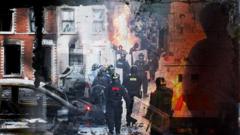
In response to the arrest of the asylum seeker, hundreds of protesters, some masked and hooded, took to the streets of Belfast and other areas. These demonstrations quickly devolved into violence, with rioters torching homes, vehicles, including a public bus, and trash bins. Witnesses reported masked men shouting anti-foreigner slogans, and some families were forced to flee their homes under police protection. The unrest caused considerable damage, leaving over two dozen people homeless and injuring 12 police officers.
Authorities, including the Police Service of Northern Ireland (PSNI) and political leaders, have condemned the violence, labeling it as "thuggery" and "vile." Efforts to quell the unrest included deploying backup officers from other parts of the UK and using water cannons. While the PSNI stated the attack was not believed to be terrorism-related, the incident has reignited fraught debates surrounding immigration, asylum policies, and the role of online rhetoric in inciting such violence.
Reports indicate that the suspect, Hadi Alodid, arrived in the UK from Sudan via France and the Republic of Ireland in 2023 and was granted a five-year visa, with leave to remain in the UK obtained in September 2023. He was not known to the Police Service of Northern Ireland and had no prior record on national security databases. The common travel area between the Republic of Ireland and the UK has also come under scrutiny amidst the events.
The violence in Belfast is part of a broader pattern of anti-immigration sentiment and related unrest seen in the UK. Similar incidents have occurred previously, often fueled by online misinformation and far-right agitation. In response to the rioting, thousands of demonstrators gathered in Belfast for an anti-racism rally, denouncing the violence and emphasizing that it did not represent the general sentiment of the city's population.
The incident highlights the delicate balance between public safety, immigration policies, and community relations, particularly in the context of heightened global migration and political discourse. The media coverage, including the graphic nature of the initial attack and the subsequent protests, has played a significant role in shaping public perception and fueling further debate. The India Today article, along with reports from other international news outlets, covers the event extensively, indicating its significant impact and the global attention it has garnered. The article's framing and details are consistent with reports from other credible sources, suggesting a generally accurate, albeit sensationalized, portrayal of the events.
Frequently Asked Questions
Who was involved in the Belfast stabbing incident?
The stabbing incident in Belfast involved a 30-year-old Sudanese asylum seeker named Hadi Alodid, who allegedly attacked a 44-year-old man named Stephen Ogilvie. Alodid has been charged with attempted murder.
What triggered the anti-immigration protests in Belfast?
The anti-immigration protests were triggered by the arrest of Hadi Alodid, a Sudanese asylum seeker, in connection with a brutal stabbing attack. The rapid spread of graphic images and information about the suspect's immigration status on social media fueled public anger and led to widespread unrest.
What was the extent of the violence during the protests?
The protests devolved into significant violence, with masked individuals torching homes, vehicles (including a bus), and trash bins across Belfast and other parts of Northern Ireland. Several families were forced to flee their homes, and 12 police officers were injured.
What are the suspect's immigration details?
Hadi Alodid reportedly arrived in the UK from Sudan via France and the Republic of Ireland in 2023. He applied for asylum and was granted a five-year visa to remain in the UK, with leave to remain obtained in September 2023. He was not previously known to the Northern Ireland police.