BCI Seeks Mamata Banerjee's Advocate Status After High Court Appearance
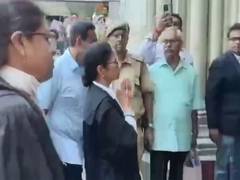
The Bar Council of India has sought detailed information from the West Bengal Bar Council regarding Mamata Banerjee's enrollment and practice status as an advocate. This inquiry follows her recent appearance before the Calcutta High Court in lawyer's robes to argue a case related to post-poll violence.
Key Highlights
- BCI requests Mamata Banerjee's advocate enrollment details.
- Inquiry follows her appearance in lawyer's robes at Calcutta High Court.
- She argued a PIL concerning West Bengal post-poll violence.
- BCI seeks clarification on her practice status during public office.
- West Bengal Bar Council given 48 hours to furnish records.
- The move aims to verify adherence to professional conduct rules.
The Bar Council of India (BCI) has initiated a significant inquiry into the professional enrollment and practice status of former West Bengal Chief Minister Mamata Banerjee. This action was prompted by her recent appearance before the Calcutta High Court, where she donned advocate's robes and white bands to argue a Public Interest Litigation (PIL) case concerning alleged post-election violence in West Bengal.
In a letter dated May 14, 2026, the BCI formally directed the Bar Council of West Bengal to furnish a comprehensive report detailing Mamata Banerjee's advocate status within 48 hours, specifically by May 16, 2026. The request seeks crucial information, including her enrollment number, the exact date of her enrollment with the State Bar Council of West Bengal, and confirmation of whether her name currently remains on the State Roll of Advocates.
A key aspect of the BCI's inquiry revolves around her long tenure as Chief Minister of West Bengal from 2011 to 2026. The BCI has specifically asked whether she had, at any point during this period, formally intimated a voluntary suspension or cessation of her practice as an advocate. Furthermore, it seeks to ascertain if she subsequently applied for and received approval for the resumption of her legal practice, and whether any certificate of practice issued in her favor remains valid, active, or suspended.
The Bar Council of India clarified that its current stance is neutral, stating that it is not expressing any opinion at this stage regarding the permissibility or otherwise of her appearance in court. Instead, the primary objective is to obtain a factual verification of her enrollment and practice status, particularly given the constitutional public office she held for a significant period. This aligns with the general understanding within the legal fraternity that individuals holding constitutional positions or gainfully employed are typically required to suspend their bar license, which then needs to be revived should they wish to resume practicing law.
Mamata Banerjee, who obtained her law degree from Jogesh Chandra College of Law in Kolkata in 1982, informed the Calcutta High Court during her appearance that it was her first time arguing a case before the High Court and that she was doing so in her capacity as a lawyer. She appeared to argue against claims of widespread violence against Trinamool Congress (TMC) workers following the state assembly elections, urging the court to protect the people of Bengal and alleging police inaction. Her appearance generated considerable public and political attention, with various media outlets capturing her entry into the court premises in legal attire.
Credible news outlets such as The Hindu, Live Law, LawBeat, Mint, Republic World, LawChakra, Devdiscourse, ANI News, The New Indian Express, Telegraph India, Deccan Herald, Business Today, and The Economic Times have widely reported on this development, corroborating the central claims of the original article. There is no indication of misinformation or exaggeration across these reports, which consistently highlight the BCI's request for factual verification of her legal standing. The Bar Council's rules prescribe specific standards of professional conduct and dress code for advocates, and the inquiry aims to ensure adherence to these regulations given her prior constitutional role. The Bar Council of West Bengal has also been instructed to preserve the original records pertaining to Banerjee's enrollment and practice status in their present form, without any alterations, until the BCI's review is complete.
Frequently Asked Questions
Why did the Bar Council of India (BCI) seek details about Mamata Banerjee's enrollment status?
The BCI initiated the inquiry after Mamata Banerjee appeared before the Calcutta High Court in advocate's robes to argue a case, prompting questions about her active legal practice status given her long tenure as a constitutional office holder (Chief Minister of West Bengal).
What specific information has the BCI requested from the West Bengal Bar Council?
The BCI has requested her enrollment number, date of enrollment, whether her name remains on the State Roll of Advocates, if she suspended her practice during her time as Chief Minister, and if she subsequently applied for and received approval to resume practice.
When did Mamata Banerjee appear in court, and for what case?
Mamata Banerjee appeared before the Calcutta High Court on May 14, 2026, in connection with a Public Interest Litigation (PIL) alleging widespread post-election violence in West Bengal.
Is it permissible for a former Chief Minister to practice as a lawyer?
While individuals can practice law if duly enrolled, the rules typically require those holding constitutional offices or who are gainfully employed to suspend their bar licenses. The BCI's inquiry aims to factually verify if these procedures were followed by Mamata Banerjee.
What is the deadline for the West Bengal Bar Council to respond to the BCI's request?
The Bar Council of India has directed the West Bengal Bar Council to furnish the requested information within 48 hours, specifically by May 16, 2026.