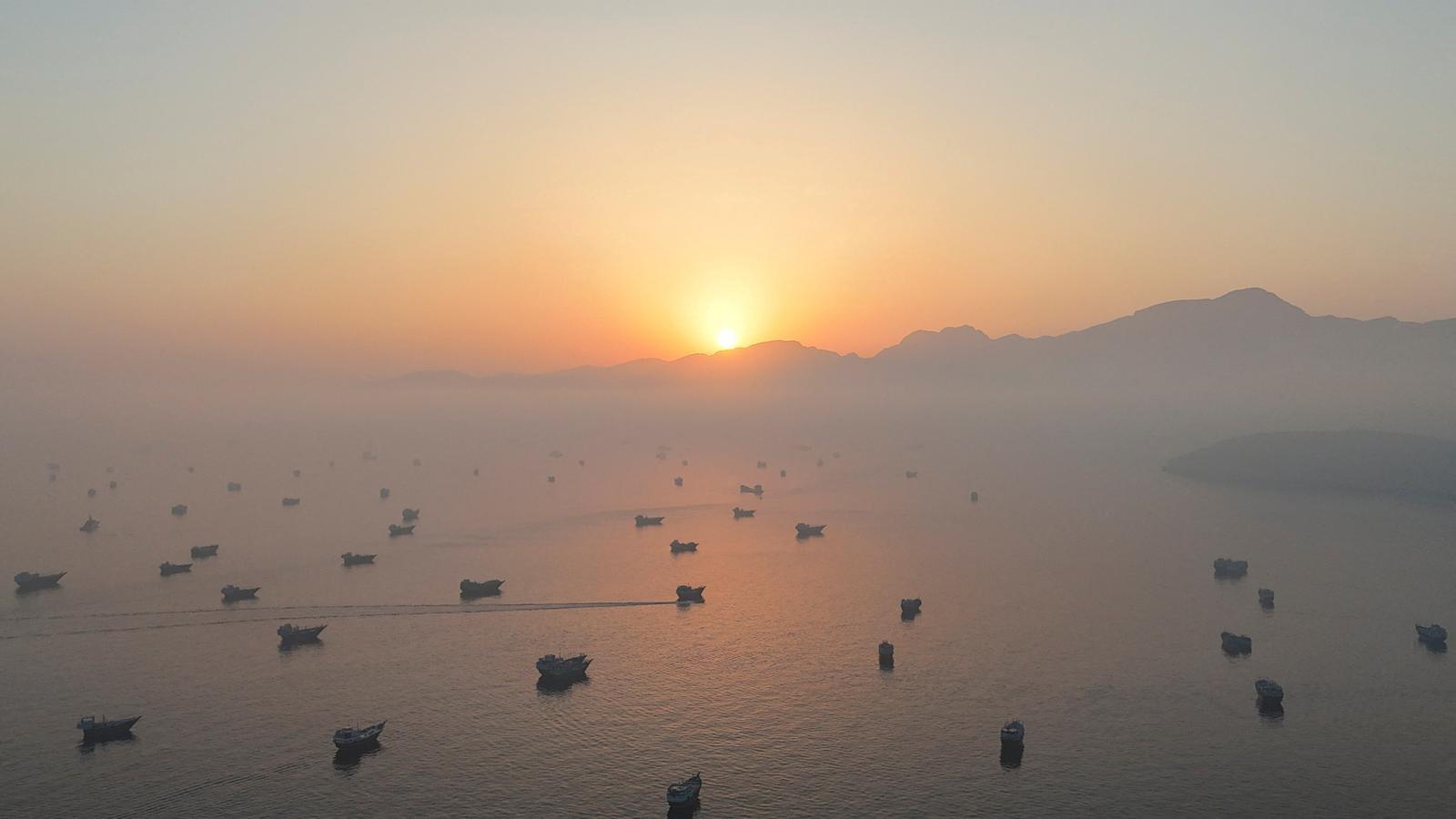
Hormuz Shipping Shifts to Omani Route Amid Iran Tensions, US Escorts
Recent data reveals a significant shift in Strait of Hormuz shipping, with over 80% of vessels now using an Omani coastal route. This comes amidst Iran's claims of control and ongoing US naval operations to escort tankers, drastically altering maritime traffic patterns.
Key Highlights
- Iran claims control over the Strait of Hormuz, challenging international norms.
- Over 80% of vessels now use the UN-authorized Omani coastal route.
- US Navy conducts 'stealth operation' escorting tankers via the southern corridor.
- Iran's ability to impose tolls and fully control shipping is diminished.
- Disrupted traffic significantly reduces overall oil flow compared to pre-war levels.
- Oman and Iran are negotiating potential new, formalized dual shipping routes.
The article from The Times of India, published on August 19, 2026, details significant and evolving dynamics in the strategically vital Strait of Hormuz, asserting that Iran claims control while ships increasingly opt for an Omani route. Verification through real-time information from Google Search largely corroborates the major claims, albeit with important nuances regarding the nature of Iran's 'control' and the reasons for the shift in shipping patterns.
Iran has consistently asserted its sovereignty and right to regulate passage through the Strait of Hormuz, a claim that resurfaced amid heightened tensions. Iranian officials maintain that the waterway is under Tehran's control and have linked its full reopening to the US fulfilling certain commitments, including lifting sanctions and releasing frozen assets. However, international law dictates that no single state holds absolute control over the entire strait, which is an international waterway crucial for global navigation. The United Nations Convention on the Law of the Sea (UNCLOS) outlines navigation rights through such straits, although Iran, a signatory but not a ratifier, disputes the applicability of transit passage as customary international law, asserting that innocent passage is subject to prior authorization based on its national security.
A pivotal finding is the dramatic shift in maritime traffic. Shipping data from Kpler, cited by multiple credible sources, indicates that over the past two weeks, more than 80% of vessels transiting the Strait of Hormuz have utilized a southern route along the Omani coast. This represents a profound change, as this Omani route, a UN-authorized shipping channel, saw virtually no commercial traffic just a few weeks prior. This shift is primarily driven by security concerns stemming from Iranian attacks on commercial shipping, prompting vessels to avoid Iran's preferred route.
In response to the disruptions and Iranian threats, the United States Navy has been actively engaged in a 'stealth operation' to ensure the continued flow of oil. This involves quietly escorting tankers through the southern corridor, closer to Oman and farther from Iran's coastline. U.S. Central Command reports that since May 2026, the U.S. military has assisted over 1,000 ships in transiting the waterway. Tanker operators coordinate planned voyages with the U.S. military, which then provides protection against Iranian drones and missiles using American ships, aircraft, and helicopters. This covertly coordinated effort has allowed approximately 5 million barrels of oil per day to move through the strait, though this volume is significantly lower than the pre-conflict average of 15 million barrels per day.
Consequently, Iran's ability to exert effective control over shipping and collect tolls, as it had done earlier in the conflict, has been diminished. Despite Iran's declarations of control, the increasing reliance on the US-protected Omani route suggests a weakening of Iran's practical influence over parts of the waterway. The situation has also prompted diplomatic efforts. Iran and Oman are engaged in ongoing discussions to establish temporary and potentially permanent maritime routes. Oman has reportedly proposed a dual-route management system, where the southern corridor within Omani territorial waters would allow free navigation, while the northern corridor in Iranian territorial waters would require permission from Tehran for passage, though without imposing tolls.
These developments have significant global implications. The Strait of Hormuz is a critical choke point, through which roughly one-fifth of the world's oil and a substantial portion of liquefied natural gas (LNG) supplies normally pass. Disruptions directly impact global energy markets, leading to price volatility and prompting countries, especially major energy importers like India, China, the Philippines, Thailand, Vietnam, and Singapore, to seek alternatives or rely on increased imports from the U.S.. The ongoing tensions and the shift in shipping patterns underscore the evolving geopolitical landscape in the Middle East and its far-reaching consequences for international trade and energy security.
In conclusion, while Iran continues to claim control, the practical reality on the ground, influenced by Iranian attacks and robust US naval protection of alternative routes, shows a significant redirection of shipping traffic. The headline of the original article is accurate in highlighting Iran's claims and the shift to the Omani route, but it's important to understand this shift is largely compelled by security threats and facilitated by external naval escorts rather than a purely voluntary commercial choice, thereby painting a more complex picture of control and influence in the Strait of Hormuz.
Frequently Asked Questions
Why is the Strait of Hormuz so critical to global trade and energy supply?
The Strait of Hormuz is a narrow maritime passage connecting the Persian Gulf to the Gulf of Oman, through which roughly one-fifth of the world's oil supply and a significant portion of liquefied natural gas (LNG) passes daily. Its strategic location makes it an indispensable chokepoint for global energy markets and international trade, impacting oil prices and supply chains worldwide.
What is the legal status of the Strait of Hormuz, and who claims control?
Under international law, the Strait of Hormuz is an international waterway, meaning no single state has absolute control. Both Iran and Oman hold sovereignty over their respective territorial waters within the strait. Iran, however, asserts a right to regulate shipping and requires prior authorization for passage, a claim disputed by the United States and other nations who uphold transit passage rights under international law.
How has shipping traffic changed in the Strait of Hormuz recently?
Recent data indicates a significant shift, with over 80% of vessels now utilizing a southern shipping corridor along the Omani coast. This 'Omani route' is a UN-authorized channel that Iran opposes. This change is a direct response to increased security risks, including Iranian attacks on commercial shipping, prompting vessels to seek safer passage away from Iran's preferred route.
What role is the US Navy playing in the Strait of Hormuz?
The US Navy is conducting a 'stealth operation' to escort commercial tankers through the southern corridor of the Strait of Hormuz. This involves coordinating tanker movements and providing protection against Iranian drone and missile attacks. This effort aims to maintain the flow of oil from the Persian Gulf and ensure maritime security amidst ongoing tensions.
What are the implications of these changes for global energy markets, particularly for India?
The shifts in shipping patterns and heightened tensions in the Strait of Hormuz directly impact global energy markets, leading to price volatility and concerns about supply stability. For major energy importers like India, these developments necessitate exploring alternative supply routes and suppliers, as disruptions in this critical waterway can significantly affect their energy security and economic stability.