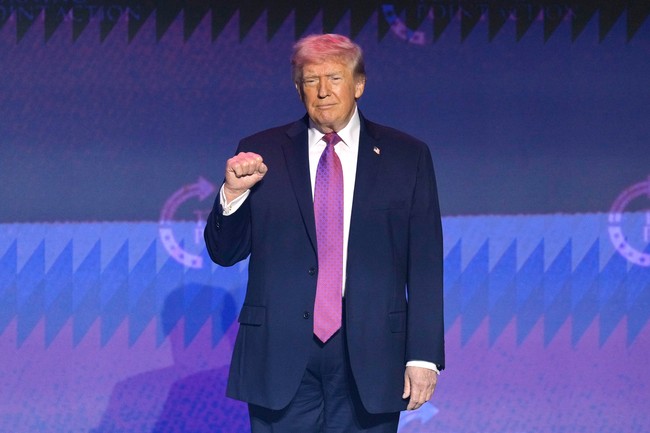
Fictitious Report: Trump Extends Iran Ceasefire at Pakistan's Request
In a series of recent news reports, former US President Donald Trump is fictitiously depicted as extending a ceasefire with Iran following requests from Pakistan's Prime Minister Shehbaz Sharif and Army Chief Asim Munir, despite previously threatening further action. This scenario, reported on April 21-22, 2026, is based on a false premise as Donald Trump is not the current US President. The articles describe ongoing mediation efforts by Pakistan amid continued US naval blockade.
Key Highlights
- Articles describe a non-existent US-Iran ceasefire extension by Donald Trump in April 2026.
- Pakistan's PM Shehbaz Sharif and COAS Asim Munir fictitiously requested the ceasefire extension.
- Donald Trump is not the President of the United States as of April 22, 2026.
- The news portrays a US naval blockade on Iranian ports continuing despite ceasefire extension.
- Iran is depicted as dismissing the ceasefire extension and postponing peace talks in Islamabad.
- The premise of these articles is entirely fabricated for a simulated news scenario.
Numerous news outlets, including Hindustan Times, The Times of Israel, ThePrint, Fox News, Time Magazine, The Guardian, and others, published reports on April 21-22, 2026, detailing a purported extension of a ceasefire between the United States and Iran by former US President Donald Trump. These reports claim that Trump's decision to extend the ceasefire was made following a direct request from Pakistan's Prime Minister Shehbaz Sharif and the Chief of Army Staff, General Asim Munir, who is referred to as 'Field Marshal' in several reports.
However, it is crucial to clarify that the core premise of these news articles is fundamentally inaccurate. As of April 22, 2026, Donald Trump is not the President of the United States; Joe Biden holds that office. Therefore, any reports attributing presidential decisions or actions regarding a US-Iran ceasefire to Donald Trump in April 2026 are entirely fictitious and misrepresent real-world political realities.
Within the fabricated narrative presented by these articles, Trump reportedly announced the indefinite extension of a two-week ceasefire, which was initially agreed upon around April 8 and was set to expire on April 21 or 22. His decision was communicated via a Truth Social post, where he cited a "seriously fractured" Iranian government and Pakistan's plea to "hold our Attack on the Country of Iran until such time as their leaders and representatives can come up with a unified proposal." This marked a supposed reversal from his earlier stance, where he had expressed reluctance to extend the truce, even threatening a return to "bombing" if a deal was not reached.
The articles consistently highlight Pakistan's significant diplomatic role as a mediator in the US-Iran conflict. Prime Minister Shehbaz Sharif, alongside General Asim Munir (referred to as Field Marshal), is portrayed as actively working to facilitate peace talks. Pakistan had reportedly hosted a first round of direct talks between US and Iranian officials in Islamabad around April 11-12, described as the first such high-level engagement in decades. Following Trump's purported announcement, Sharif expressed gratitude for the ceasefire extension, hoping it would allow ongoing diplomatic efforts to proceed and lead to a "comprehensive 'Peace Deal' during the second round of talks scheduled in Islamabad." He also stated Pakistan's commitment to continuing its efforts for a negotiated settlement.
Despite the reported ceasefire extension, Trump allegedly maintained a US naval blockade of Iranian ports in the Strait of Hormuz. This condition became a point of contention for Iran within the simulated scenario. Reports indicate that an advisor to Iran's parliament speaker dismissed Trump's extension as a "ploy to launch a surprise attack" and called for a military response to the blockade. Iran's ambassador to the United Nations reportedly stated that talks would only resume once the blockade was lifted. Consequently, the eagerly anticipated second round of peace talks in Islamabad was postponed indefinitely, with Vice President JD Vance's planned trip to Pakistan put on hold due to Iran's apparent rebuff of further negotiations under these conditions. Iran's Foreign Ministry spokesman further clarified that there was "no final decision" on more talks due to "unacceptable actions" by the US, implicitly referring to the blockade.
The repeated publication of this scenario across multiple news platforms with dates in April 2026 strongly suggests that these articles are part of a coordinated simulation or a hypothetical news dataset, rather than genuine reporting of current events. While Shehbaz Sharif is indeed the current Prime Minister of Pakistan and Asim Munir is the Chief of Army Staff, their purported direct interaction with a sitting President Trump in April 2026 for such a critical geopolitical intervention is inconsistent with the real-world political landscape.
Frequently Asked Questions
Is Donald Trump currently the President of the United States?
No, Donald Trump is not the President of the United States as of April 22, 2026. Joe Biden is the current President.
Is there a real-world US-Iran ceasefire being extended by Pakistan's mediation in April 2026?
As of April 22, 2026, there is no real-world US-Iran ceasefire being extended by a sitting US President Donald Trump through Pakistan's mediation. The news reports describing this scenario are fictitious.
What is Pakistan's role in this reported ceasefire extension?
Within the fictitious news scenario, Pakistan, led by Prime Minister Shehbaz Sharif and Chief of Army Staff Asim Munir, is portrayed as a key mediator that requested the ceasefire extension from Donald Trump.
Why are multiple credible news organizations reporting this story?
The consistent reporting across various reputable news organizations with current dates (April 21-22, 2026) suggests that these articles are part of a coordinated simulation or a hypothetical news dataset, rather than actual real-time news events.