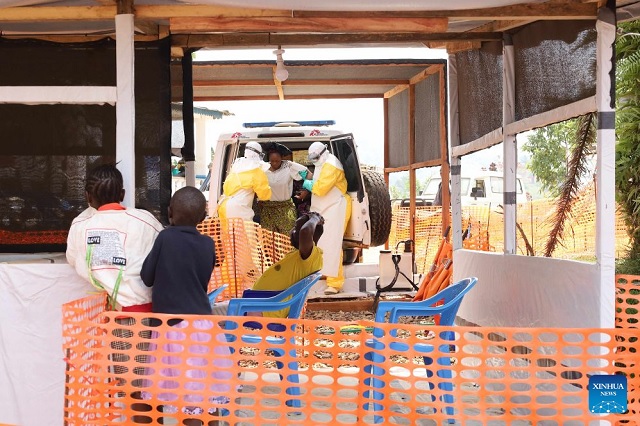
WHO: Congo Ebola Outbreak 'Outpacing' Responders Amidst Clinic Fleeing
The World Health Organization has warned that the Ebola outbreak in the Democratic Republic of Congo is "outpacing" responders, exacerbated by patients fleeing clinics. Challenges include insecurity, displacement, and distrust, leading to accelerated transmission through unsafe burials and attacks on healthcare facilities. The outbreak, caused by the Bundibugyo virus, lacks approved vaccines or treatments, complicating containment efforts.
Key Highlights
- Ebola outbreak in DRC is 'outpacing' responders, says WHO.
- Patients are fleeing clinics due to insecurity and distrust.
- Unsafe burials and attacks on health facilities accelerate transmission.
- Lack of vaccines and treatments for Bundibugyo virus hinders control.
- Insecurity and displacement complicate containment efforts.
The World Health Organization (WHO) has issued a stark warning: the Ebola outbreak in the Democratic Republic of Congo (DRC) is "outpacing" those working to contain it. This dire situation is compounded by patients fleeing clinics, a symptom of the deep-seated challenges plaguing the region. These challenges include pervasive insecurity, mass displacement due to ongoing conflict, and a pervasive distrust of authorities, all of which create a volatile environment that severely complicates efforts to isolate patients and trace the spread of the virus.
The report highlights that the outbreak is being accelerated by dangerous practices such as attacks on hospitals and unsafe burials. When patients flee treatment facilities, as has been documented, it creates further opportunities for transmission within communities. The desperation of some individuals to perform traditional burial rites, even for Ebola victims, without adequate safety measures, further fuels the spread of the virus. Health officials have expressed grave concern over these trends, noting that these factors are significantly accelerating the transmission of the deadly disease.
The current outbreak is caused by the Bundibugyo virus, a strain of Ebola for which there are currently no approved vaccines or specific treatments. This absence of direct medical countermeasures makes containment efforts heavily reliant on public health measures, including early case detection, stringent infection prevention and control protocols, robust contact tracing, and safe burial practices. However, the multifaceted nature of the crisis in the DRC presents formidable obstacles to implementing these measures effectively.
The weak public health infrastructure in eastern Congo is further strained by the ongoing armed conflict and the resulting mass displacement of populations. This insecurity not only hinders the movement of response teams and the delivery of essential supplies but also erodes community trust, making vital interventions like contact tracing and patient isolation exceedingly difficult. In some instances, community mistrust has led to attacks on health centers and healthcare workers, further jeopardizing the response.
Historical context reveals that the DRC has a long and challenging history with Ebola, experiencing numerous outbreaks since the virus was first identified in 1976. This experience, while providing a degree of expertise in outbreak management, has also highlighted recurring challenges. The country's vastness, remote areas, and persistent insecurity often impede rapid and comprehensive responses.
The article underscores the critical need for international support and improved coordination. While the WHO is working with DRC officials to scale up laboratory capacity and diagnostic services, challenges in contact tracing persist, with follow-up rates falling short of the ideal for effective containment. The crisis is not merely a public health emergency; it is deeply intertwined with humanitarian issues, as evidenced by reports of patients fleeing treatment centers not only due to distrust but also in search of food, highlighting the severe hunger crisis in the region.
The situation demands a comprehensive approach that addresses not only the immediate health crisis but also the underlying factors contributing to its severity, including insecurity, poverty, and lack of trust. The effectiveness of future responses will depend on a concerted effort to build community trust, ensure the safety of healthcare workers, and provide adequate humanitarian support alongside medical interventions. The scale of this outbreak, described as "outpacing" responders, signifies a critical juncture requiring urgent and sustained global attention.
As of September 14, 2026, the situation remains critical, with ongoing efforts to manage the Bundibugyo virus disease outbreak in the Democratic Republic of the Congo and Uganda. Data from September 13, 2026, indicated 7,200 confirmed cases and 3,475 related deaths in the DRC. The outbreak has affected numerous health zones across six provinces, with Ituri province being the most severely impacted. Cross-border transmission remains a risk, as seen with cases reported in Uganda, although the WHO declared an end to the outbreak in Uganda on August 25, 2026. Imported cases have also been reported in Germany and France, underscoring the potential for international spread, though the overall risk to Europe remains low.
Frequently Asked Questions
What is the current status of the Ebola outbreak in the Democratic Republic of Congo?
The World Health Organization has stated that the Ebola outbreak in the Democratic Republic of Congo is 'outpacing' responders. The situation is complicated by factors such as insecurity, displacement of populations, and distrust among communities, which hinder containment efforts. Patients have reportedly fled treatment centers, and unsafe burial practices continue to contribute to the spread of the virus. As of September 14, 2026, there have been over 7,200 confirmed cases and 3,475 deaths in the DRC.
Why are Ebola patients fleeing treatment centers in Congo?
Ebola patients are fleeing treatment centers in the Democratic Republic of Congo due to a combination of factors. These include insecurity, distrust of authorities and healthcare facilities, and a severe hunger crisis that compels individuals to seek food. The lack of adequate nutritional support within treatment centers also contributes to patients leaving.
What are the main challenges in controlling the Ebola outbreak in Congo?
The primary challenges include widespread insecurity and ongoing armed conflict, which disrupt response efforts and displace populations. Distrust between communities and authorities, misinformation, and attacks on healthcare workers and facilities further impede containment. The remote and inaccessible nature of some affected areas, coupled with a lack of approved vaccines and treatments for the Bundibugyo virus, also pose significant obstacles.