PM Modi Inaugurates Delhi Metro Pink, Magenta Line Extensions
Prime Minister Narendra Modi will inaugurate two new Delhi Metro corridors on March 8, 2026, expanding the Pink and Magenta Lines. These extensions will complete India's first fully operational 'Ring Metro' and enhance connectivity across the national capital.
Key Highlights
- PM Modi to inaugurate Pink and Magenta line extensions on March 8, 2026.
- Pink Line extension completes India's first operational 'Ring Metro'.
- Magenta Line extension adds 9.92 km with seven new elevated stations.
- Projects value over ₹18,300 crore for metro infrastructure.
- PM to also lay foundation for three new Phase 5(A) metro corridors.
- New corridors significantly improve connectivity across Delhi and NCR.
Prime Minister Narendra Modi is set to inaugurate two pivotal extensions of the Delhi Metro network on Sunday, March 8, 2026, marking a significant milestone in the capital's public transportation infrastructure. The inauguration ceremony will see the operationalization of the Majlis Park-Maujpur-Babarpur section of the Pink Line and the Deepali Chowk-Majlis Park stretch of the Magenta Line. These projects, alongside the laying of foundation stones for three new corridors under Delhi Metro's Phase 5(A) expansion, are valued at over ₹18,300 crore, aimed at bolstering connectivity and easing commutes across Delhi and the National Capital Region (NCR).
The **Pink Line extension**, stretching 12.3 kilometres from Majlis Park to Maujpur-Babarpur, is particularly noteworthy as its completion will render the Pink Line Delhi's, and indeed India's, first fully operational 'Ring Metro' corridor. This crucial segment features eight new elevated stations, including Burari, Jharoda Majra, Jagatpur-Wazirabad, Soorghat, Nanaksar-Sonia Vihar, Khajuri Khas, Bhajanpura, Yamuna Vihar, and Maujpur-Babarpur. Upon its inauguration, the Pink Line will span an impressive 71.56 kilometres, creating a seamless loop around large parts of the city. An engineering marvel within this stretch includes a new bridge over the Yamuna River and a double-decker viaduct, which will simultaneously carry a metro track on its upper deck and a road flyover below, showcasing advanced urban transport solutions.
Complementing this expansion is the **Magenta Line extension**, a 9.92-kilometre corridor connecting Deepali Chowk to Majlis Park. This segment extends the existing Botanical Garden-Krishna Park Extension Magenta Line and incorporates seven new elevated stations: Deepali Chowk, Madhuban Chowk, Uttar Pitampura-Prashant Vihar, Haiderpur Village, Haiderpur Badli Mor, Bhalswa, and Majlis Park. This extension is set to significantly improve connectivity for areas in the rural outskirts of West Delhi, linking localities such as Bhalswa, Haiderpur, and Mongolpuri to Northwest Delhi, South Delhi, and Noida. Notably, a section of this corridor ascends to approximately 28.36 metres, positioning it as one of the highest elevated stretches within the entire Delhi Metro network. With this addition, the total length of the Magenta Line will expand to nearly 49 kilometres.
Beyond the inauguration of these two operational corridors, Prime Minister Modi will also lay the foundation stone for three additional metro corridors under **Delhi Metro's Phase 5(A)**. These future projects are designed to further densify and expand the metro's reach. The planned corridors include a 9.913-kilometre underground Central Vista corridor linking Ramakrishna Ashram Marg and Indraprastha, a 2.263-kilometre underground extension of the Golden Line from Aerocity to Indira Gandhi Airport Terminal-1, and a 3.9-kilometre elevated extension of the Golden Line from Tughlakabad to Kalindi Kunj. These extensions are anticipated to strengthen vital links between Delhi and crucial NCR cities like Noida, Faridabad, and Ballabhgarh, enhancing regional connectivity and facilitating easier access to the Indira Gandhi International Airport.
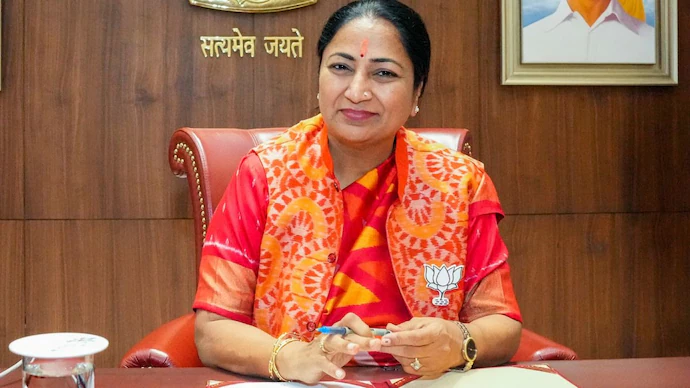
Delhi Chief Minister Rekha Gupta has underscored the transformative impact of these metro projects, highlighting their role in improving public transport, reducing road congestion, and contributing to pollution control in the capital. The expansion aligns with the Delhi government's priority for public transport, as reflected in its 2025-26 budget. The comprehensive nature of these infrastructure developments, from completing a full ring corridor to laying groundwork for future expansions, underscores a strategic vision for a more connected, efficient, and sustainable urban mobility network in Delhi. The new corridors are expected to significantly ease daily travel for millions of commuters, solidifying the Delhi Metro's position as the backbone of the city's public transport system.
Frequently Asked Questions
Which Delhi Metro lines are being extended and inaugurated by PM Modi?
Prime Minister Narendra Modi will inaugurate extensions of the Delhi Metro's Pink Line (Majlis Park-Maujpur-Babarpur) and Magenta Line (Deepali Chowk-Majlis Park) on March 8, 2026.
What is the significance of the Pink Line extension?
The Pink Line's 12.3 km extension from Majlis Park to Maujpur-Babarpur will complete its circular alignment, making it India's first fully operational 'Ring Metro' corridor, significantly enhancing connectivity across Delhi.
What are the key features of the new Magenta Line extension?
The 9.92 km Deepali Chowk-Majlis Park extension of the Magenta Line adds seven new elevated stations and connects previously underserved areas of West Delhi to the wider metro network. A section of this corridor is notably one of the highest elevated stretches in the Delhi Metro.
Are there any new metro projects being planned?
Yes, PM Modi will also lay the foundation stone for three new metro corridors under Delhi Metro's Phase 5(A), which include extensions for the Central Vista corridor and the Golden Line, further expanding the network.
How will these extensions benefit commuters in Delhi and NCR?
These extensions are expected to significantly improve public transport, reduce travel time, ease congestion, and enhance connectivity between various parts of Delhi and the National Capital Region (NCR) cities like Noida and Faridabad.