Nitin Nabin: Bengal allows Namaz freely, Puja requires court nod
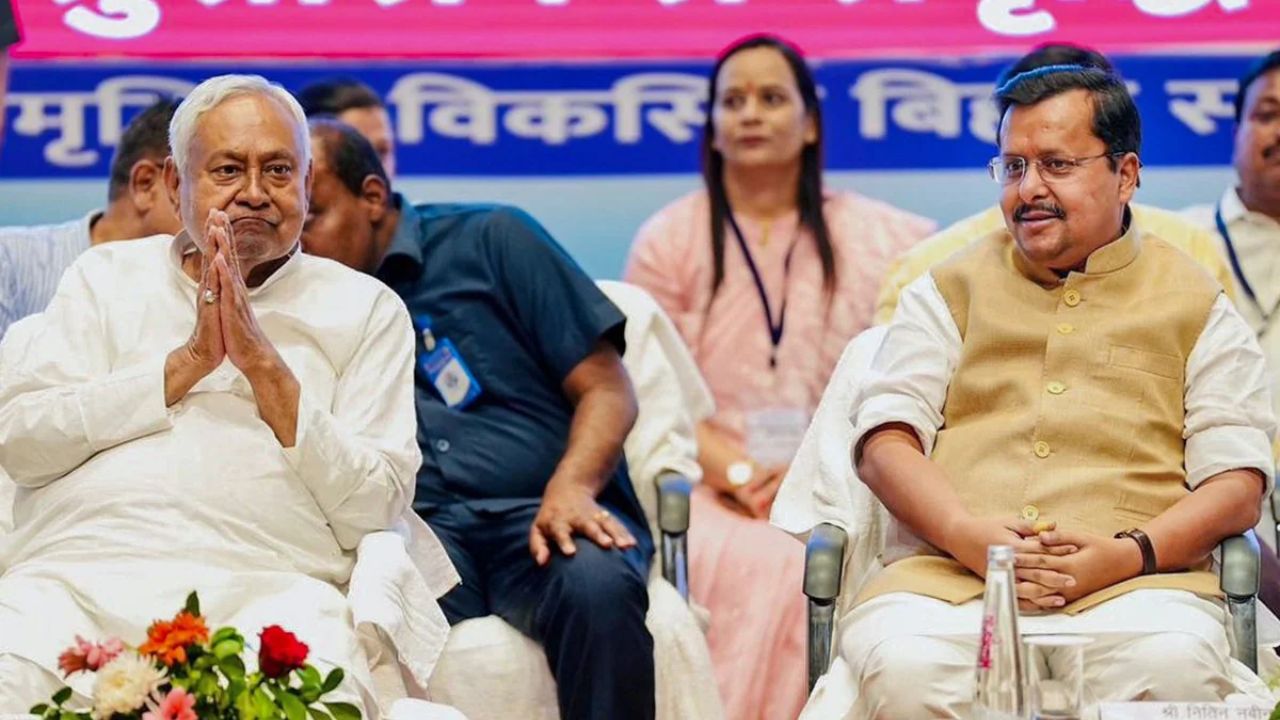
BJP leader Nitin Nabin claims West Bengal permits Namaz freely but necessitates court approval for organizing Durga Pujas, sparking a political debate over religious freedom and administrative fairness in the state.
Key Highlights
- BJP alleges unequal religious freedom in West Bengal.
- Namaz offered freely, but Puja permission needs court nod.
- Row over puja pandal permissions escalates political tensions.
- Nabin criticizes TMC's alleged discriminatory policies.
- Controversy highlights pre-election political discourse in Bengal.
Nitin Nabin, a prominent leader of the Bharatiya Janata Party (BJP) in West Bengal, has leveled serious allegations against the ruling Trinamool Congress (TMC) government, claiming a disparity in the ease with which religious practices can be observed in the state. According to Nabin, while Namaz (Muslim prayers) can be offered freely in Bengal without requiring specific permissions, the organization of Durga Pujas, a major Hindu festival, necessitates obtaining approval from the courts. This assertion, reported by The Hindu, has ignited a political firestorm, particularly in the context of the upcoming state assembly elections.
The BJP has consistently accused the TMC government of appeasement politics and discriminatory practices, and Nabin's statement is seen as another salvo in this ongoing battle. The timing of these allegations, with the election campaign in full swing and other related news about the BJP's manifesto and Amit Shah's planned chargesheet against the TMC, underscores the politically charged environment in West Bengal. The issue of puja pandal permissions has been a recurring point of contention in previous years as well, often becoming a focal point for political discourse and accusations of bias.
Nabin's statement implies that the administrative machinery, or the legal recourse that has become a de facto administrative channel for certain permissions, favors one religious community over another. This, he argues, undermines the principles of secularism and equal treatment for all citizens. The BJP, through such statements, aims to consolidate its Hindu vote base and present itself as a champion of Hindu rights, contrasting its stance with the TMC's perceived appeasement of minority communities.
The related articles provide further context to the political landscape in Bengal. India Today reports on the BJP's manifesto, which often includes promises aimed at various sections of society, including women and youth, suggesting a broad electoral strategy. NDTV highlights the BJP's narrative of challenging the 'fear of Trinamool' with 'trust in BJP,' indicating their campaign theme. The Times of India's coverage of the 'puja pandal permission row' directly corroborates the controversy around organizing religious festivals, framing it as a conflict between Mamata Banerjee and the BJP. The Economic Times mentions Amit Shah's plan to release a 'chargesheet against TMC,' signaling a strategic move by the BJP to highlight alleged misgovernance and corruption by the incumbent government.
This entire episode points to the complex interplay of religion, politics, and administration in West Bengal. While the TMC government might argue that the procedures for organizing large-scale events like Durga Pujas involve necessary permissions for public safety and crowd management, and that Namaz, in its common form of individual or small group prayer, does not pose the same logistical challenges, the BJP seeks to frame it as an issue of religious discrimination. The need for court approval for pujas, if indeed a prevalent practice, could be interpreted by some as an administrative hurdle that is disproportionately applied. This narrative is likely to resonate with a segment of the electorate and will be a key talking point for the BJP in the run-up to the elections.
The verification of this claim hinges on understanding the specific regulations and practices governing religious gatherings and festivals in West Bengal. General observations about the ease of offering prayers versus the process for obtaining permissions for large public events need to be scrutinized against official guidelines and judicial pronouncements. Without specific evidence to the contrary, the claim by Nitin Nabin, as reported, reflects a political statement intended to create a narrative of discrimination. The broader context suggests that such claims are part of a larger political strategy to gain an electoral advantage by mobilizing specific community sentiments and highlighting perceived governance failures of the opposition.
Frequently Asked Questions
What is the main allegation made by Nitin Nabin regarding religious practices in West Bengal?
Nitin Nabin alleges that while Namaz can be offered freely in West Bengal, organizing Durga Pujas requires court approval, suggesting a disparity in religious freedom and administrative procedures.
Which political parties are involved in this controversy?
The controversy primarily involves the Bharatiya Janata Party (BJP), with Nitin Nabin being a key spokesperson, and the ruling Trinamool Congress (TMC) government in West Bengal.
Why is this issue significant in the context of West Bengal?
This issue is significant as it touches upon religious sentiments, administrative fairness, and is being used as a political tool during the crucial election campaign period in West Bengal.
Has the issue of puja permissions been a point of contention before?
Yes, the issue of permissions for organizing Durga Puja pandals has been a recurring point of political debate and controversy in West Bengal in previous years as well.