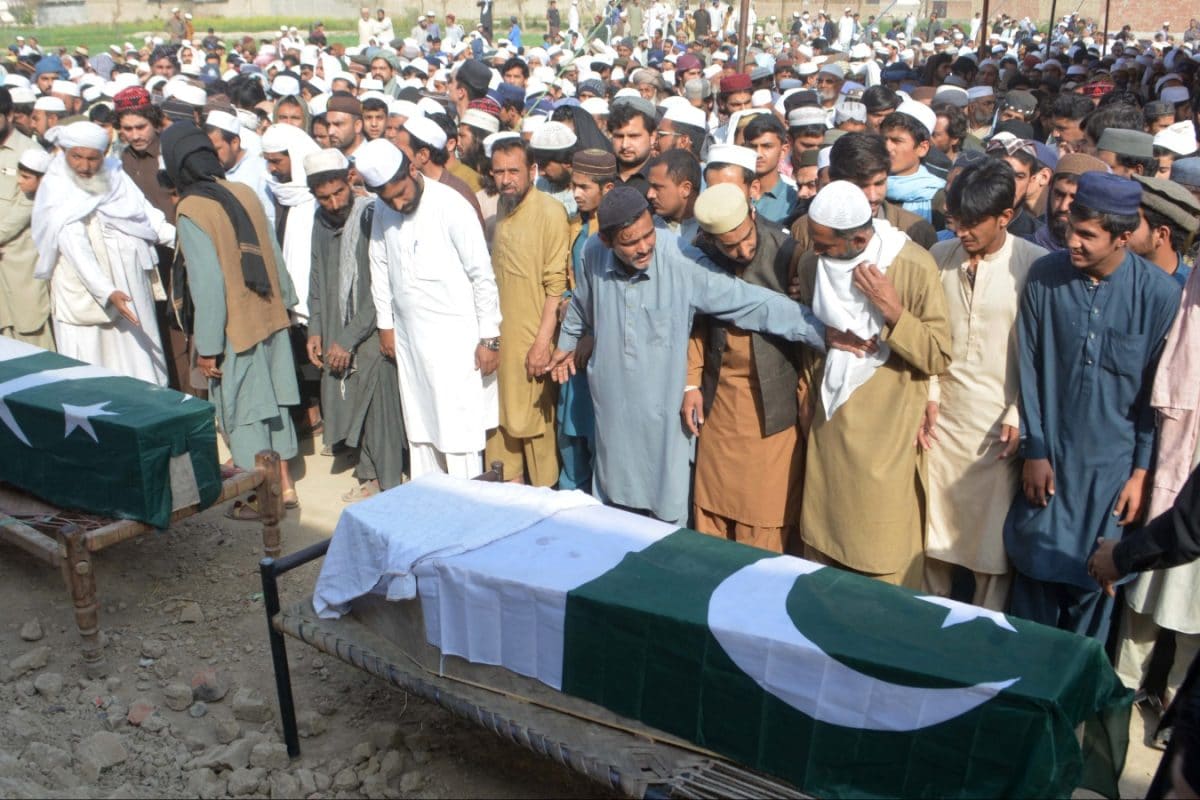
Afghanistan Seeks Dialogue Amidst Escalating 'Open War' with Pakistan
The Afghanistan-Pakistan conflict has escalated to an 'open war' following Pakistani airstrikes on Afghan cities and retaliatory actions. Amidst the intense fighting, the Afghan government has expressed a desire for dialogue to resolve the ongoing hostilities. International calls for de-escalation are mounting.
Key Highlights
- Pakistan launched 'Operation Ghazab lil-Haq' with airstrikes on Afghan cities.
- Pakistan's Defence Minister declared 'open war' against Afghanistan.
- Afghan Taliban government seeks 'dialogue' to resolve the conflict.
- Conflict fueled by Pakistan's accusations of TTP safe havens in Afghanistan.
- Previous mediation efforts in October 2025 failed to achieve lasting peace.
- International community urges de-escalation and diplomatic resolution.
The long-standing tensions between Afghanistan and Pakistan have dramatically escalated into an 'open war' following a series of intense cross-border military actions. On the night of Thursday, February 26, 2026, Pakistan launched a major military offensive named 'Operation Ghazab lil-Haq' (Righteous Fury), conducting extensive airstrikes against targets in several Afghan cities, including the capital Kabul, Kandahar, and Paktia. These strikes were reportedly in response to what Pakistan described as 'unprovoked firing' by Afghan forces across the shared border.
Following these escalated attacks, Pakistan's Defence Minister, Khawaja Mohammad Asif, publicly declared that Pakistan was now in an 'open war' with the Taliban government in Afghanistan, stating that the country's patience had run out. Pakistan's information minister, Attaullah Tarar, claimed that these operations resulted in the killing of at least 133 Afghan Taliban operatives and injured over 200, while also destroying significant military installations, including brigade and corps headquarters.
In response, the Afghan Taliban government vehemently condemned the Pakistani airstrikes, calling them a violation of its sovereignty and claiming civilian casualties. Afghan officials also reported that their forces launched retaliatory operations along the Durand Line, alleging they killed 55 Pakistani soldiers and captured several military outposts. Despite the intense fighting and retaliatory measures, Zabihullah Mujahid, the spokesperson for the Taliban government in Afghanistan, on Friday, February 27, 2026, conveyed Afghanistan's desire for 'dialogue' to resolve the ongoing conflict with Pakistan. He emphasized a commitment to a peaceful solution while simultaneously vowing to respond to any 'evil act' by Pakistan.
The roots of this escalating conflict lie primarily in Pakistan's persistent accusations that the Afghan Taliban government is harboring militants from the Tehrik-e-Taliban Pakistan (TTP), who are allegedly using Afghan soil to launch terror attacks within Pakistan. Pakistan has experienced a surge in militant violence, particularly in its western borderlands, which it attributes to the TTP operating with impunity from Afghanistan. Conversely, the Afghan Taliban deny these allegations, asserting that the TTP insurgency is an internal Pakistani issue and that Afghanistan is not providing safe havens to militants targeting Pakistan.
Efforts to mediate and de-escalate the conflict are not new. A fragile ceasefire was brokered by Qatar and Turkey in October 2025 following a series of deadly cross-border clashes. However, subsequent peace talks held in Istanbul and other locations, aimed at achieving a lasting agreement, failed to yield significant results, with Pakistan accusing the Afghan side of evading commitments to curb militant activities. The current escalation marks a significant breakdown in these stalled diplomatic efforts.
The international community has reacted with concern, urging both nations to exercise restraint and pursue de-escalation through diplomatic channels. The United Kingdom's Foreign Secretary, Yvette Cooper, called for immediate steps towards de-escalation and re-engagement in mediated dialogue. Russia also urged an immediate halt to cross-border attacks and offered mediation if requested by both parties. For India, a key regional player, the escalation is a significant development. India has condemned Pakistan's airstrikes, with the Ministry of External Affairs spokesperson stating that it is another attempt by Pakistan to 'externalise its internal failures.' India's statement also hinted at strengthening ties with the Afghan Taliban, while Islamabad has previously accused New Delhi of funding groups in Afghanistan to undermine Pakistan's security, an allegation India denies. This ongoing conflict directly impacts regional stability and has implications for India's strategic interests in South Asia, particularly given the historical complexities and security concerns along its own border with Pakistan.
Frequently Asked Questions
What triggered the latest escalation in the Afghanistan-Pakistan conflict?
The recent escalation was triggered by Pakistan's launch of 'Operation Ghazab lil-Haq', involving airstrikes on Afghan cities on February 26-27, 2026. This was in retaliation for alleged 'unprovoked firing' from Afghanistan and Pakistan's claims that Afghanistan harbors Tehrik-e-Taliban Pakistan (TTP) militants responsible for attacks within Pakistan.
Has Afghanistan responded to Pakistan's 'open war' declaration?
Yes, the Afghan Taliban government has condemned the Pakistani airstrikes, launched its own retaliatory operations, and while vowing to respond to aggression, also expressed a desire for 'dialogue' to resolve the conflict peacefully.
What is 'Operation Ghazab lil-Haq'?
'Operation Ghazab lil-Haq', which translates to 'Righteous Fury', is a large-scale military offensive launched by Pakistan on February 26, 2026. It involved extensive airstrikes targeting alleged militant camps and military installations in major Afghan cities like Kabul, Kandahar, and Paktia.
What role does the TTP play in the Afghanistan-Pakistan conflict?
The Tehrik-e-Taliban Pakistan (TTP) is a central cause of the conflict. Pakistan accuses the Afghan Taliban of providing safe havens to TTP militants who launch cross-border attacks into Pakistan. The Afghan Taliban, however, deny these claims, stating that the TTP issue is an internal matter for Pakistan.
What is the international community's reaction to this escalation?
The international community, including the UK and Russia, has expressed deep concern and urged both Afghanistan and Pakistan to de-escalate tensions and re-engage in diplomatic dialogue. India has also condemned Pakistan's airstrikes, accusing it of externalizing its internal failures.