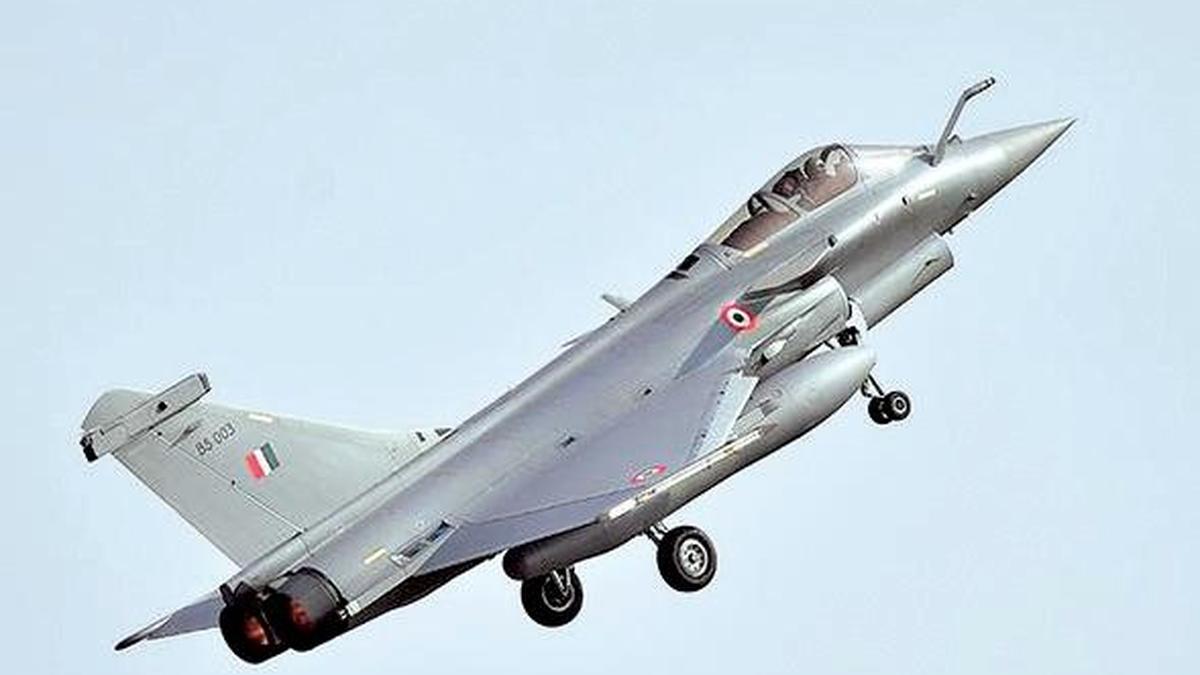
India's DAC Clears Rs 3.6 Lakh Cr Defence Acquisitions, Including 114 Rafales
India's Defence Acquisition Council (DAC) has accorded Acceptance of Necessity (AoN) for proposals worth approximately Rs 3.60 lakh crore. This mega defence deal includes the procurement of 114 Multi-Role Fighter Aircraft (Rafale), combat missiles, and other critical equipment for the Indian Armed Forces, significantly boosting India's military capabilities and promoting indigenous manufacturing.
Key Highlights
- DAC approves proposals totalling Rs 3.60 lakh crore.
- 114 additional Rafale fighter jets included in AoN.
- Combat missiles and advanced surveillance systems also approved.
- Majority of Rafales to be manufactured in India.
- Aims to bolster IAF squadron strength and combat readiness.
- AoN is a crucial step before final contract negotiations.
In a significant move to bolster its military capabilities and enhance national security, India's Defence Acquisition Council (DAC), chaired by Defence Minister Rajnath Singh, has accorded its Acceptance of Necessity (AoN) for capital acquisition proposals estimated at approximately Rs 3.60 lakh crore (around $43 billion). This landmark decision, made on February 12, 2026, marks a crucial step towards modernising the Indian Armed Forces across all three services.
At the core of these approvals is the procurement of 114 additional Multi-Role Fighter Aircraft (MRFA), specifically Rafale jets, for the Indian Air Force (IAF). This particular component of the deal is estimated to be worth around Rs 3.25 lakh crore. The acquisition of these fighter jets is critical as the IAF faces a shortfall in its squadron strength, operating approximately 30 squadrons against a sanctioned strength of 42. The introduction of these advanced 4.5-generation Rafale jets, known for their omnirole capabilities including air superiority, precision ground strikes, reconnaissance, and anti-ship missions, will significantly augment India's air dominance and long-range offensive strike capabilities.
Beyond the Rafale jets, the comprehensive package cleared by the DAC includes a range of other vital procurements. For the Indian Air Force, the AoN covers combat missiles, such as the SCALP cruise missiles and Meteor air-to-air missiles, which have proven their effectiveness in recent operations. Also approved for the IAF is the Air-Ship Based High Altitude Pseudo Satellite (AS-HAPS), which will provide persistent Intelligence, Surveillance, and Reconnaissance (ISR) capabilities, including electronic intelligence gathering, secure communications, and remote sensing for military applications.
For the Indian Army, the DAC granted AoN for the procurement of Anti-Tank Mines (Vibhav), designed to serve as an anti-tank obstacle system to delay enemy mechanised forces. Additionally, the overhaul of vehicle platforms for Armoured Recovery Vehicles (ARVs), T-72 Tanks, and Infantry Combat Vehicles (BMP-II) was approved. This overhaul aims to extend the service life of existing equipment, ensuring the operational readiness and effectiveness of the Indian Army.
The Indian Navy also received crucial approvals, including the AoN for a 04 MW Marine Gas Turbine-based Electric Power Generator under the 'Make-I' category of the Defence Acquisition Procedure 2020. This move is aimed at minimising dependency on foreign manufacturers and boosting self-reliance in power generation for naval vessels. Furthermore, the acquisition of P8I Long Range Maritime Reconnaissance Aircraft was cleared, which will significantly enhance the Navy's maritime surveillance and anti-submarine warfare capabilities.
A key aspect of this mega defence deal is the strong emphasis on the 'Make in India' initiative. The majority of the 114 Rafale MRFA are expected to be manufactured domestically within India, with only a portion, approximately 18 aircraft, likely to be acquired in fly-away condition. This approach not only supports indigenous defence manufacturing but also fosters technology transfer and creates jobs within the country's aerospace sector. The integration of indigenous missile systems into future India-made Rafales is also a possibility.
It is important to note that the DAC's 'Acceptance of Necessity' (AoN) is the initial approval that signals the Ministry of Defence's go-ahead for a procurement project. Following this, the proposals will proceed to the Finance Ministry and then to the Cabinet Committee on Security (CCS), chaired by the Prime Minister, for final approval. This will be followed by formal technical and commercial negotiations with the vendors. The timing of this approval is particularly significant, coming ahead of French President Emmanuel Macron's visit to India, which underscores the deepening strategic and defence cooperation between the two nations.
This approval for 114 Rafale jets is in addition to the 36 Rafale jets already operated by the Indian Air Force and a separate Rs 63,000 crore deal signed earlier for 26 Rafale-M (marine version) jets for the Indian Navy. Once all these acquisitions are complete, India's Rafale fleet will be substantially expanded, providing a critical edge in regional security dynamics against potential threats from countries like Pakistan and China.
The overall package of acquisitions underscores India's commitment to modernising its armed forces, enhancing its deterrence posture, and achieving greater self-reliance in defence production, positioning it as a major player in global defence.
Frequently Asked Questions
What is the total value of the defence proposals approved by the Defence Acquisition Council?
The Defence Acquisition Council (DAC) has accorded Acceptance of Necessity (AoN) for various capital acquisition proposals worth an estimated Rs 3.60 lakh crore (approximately $43 billion).
Which major defence assets are included in this mega acquisition plan?
The approved proposals include 114 Multi-Role Fighter Aircraft (Rafale jets) for the Indian Air Force, combat missiles (like SCALP and Meteor), Air-Ship Based High Altitude Pseudo Satellites (AS-HAPS), Anti-Tank Mines (Vibhav) for the Army, and P8I Long Range Maritime Reconnaissance Aircraft for the Navy, among other equipment.
Will these 114 Rafale jets be entirely imported?
No, a significant portion of the 114 Rafale jets is expected to be manufactured in India under the 'Make in India' initiative, with only about 18 aircraft likely to be acquired in fly-away condition. This aims to boost indigenous defence manufacturing and technology transfer.
What does 'Acceptance of Necessity' (AoN) mean in this context?
Acceptance of Necessity (AoN) is the initial approval by the Ministry of Defence, signifying that the armed forces require the proposed equipment. It is a crucial step that allows the procurement process to move forward to detailed technical evaluations, commercial negotiations, and final approvals from higher authorities like the Cabinet Committee on Security.
How will this deal impact India's defence capabilities?
This mega deal will significantly enhance India's air superiority, long-range offensive strike capabilities, maritime reconnaissance, and ground warfare strength. It will help address the Indian Air Force's dwindling squadron strength and modernize the equipment of all three services, providing a critical strategic advantage.