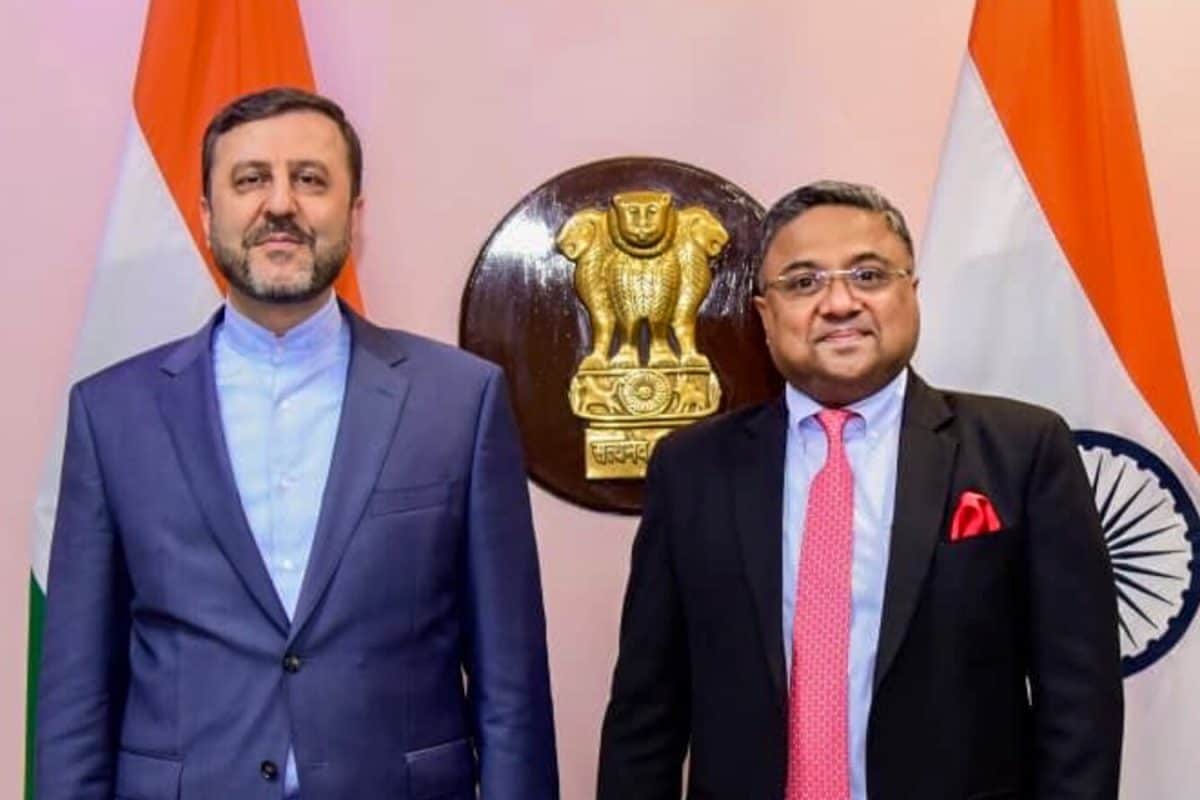
Iran FM Araghchi's 'Minab168' Message at India BRICS Meet
Iranian Foreign Minister Seyed Abbas Araghchi attended the BRICS Foreign Ministers' Meeting in New Delhi, arriving on an aircraft prominently marked 'Minab168'. This symbolic gesture highlighted the alleged killing of 168 schoolchildren in a US strike in Minab during the ongoing West Asia conflict, injecting a powerful message into the high-stakes diplomatic talks.
Key Highlights
- Iran's FM Araghchi attended BRICS Foreign Ministers' Meeting in New Delhi.
- His plane, 'Minab168', highlighted alleged 168 child casualties in a US strike.
- The BRICS meeting, chaired by India, focused on West Asia conflict.
- Iran seeks stronger BRICS stance against US-Israel military campaign.
- India, as chair, navigated divisions among BRICS members over the conflict.
Iranian Foreign Minister Seyed Abbas Araghchi made a significant diplomatic appearance in New Delhi for the BRICS Foreign Ministers' Meeting, held on May 14-15, 2026. His arrival garnered global attention, not only due to the high-stakes nature of the gathering but also because of a deliberate and pointed message conveyed by his aircraft, which prominently displayed the inscription 'Minab168'. This impactful symbolism served as a stark reminder of the human toll of the ongoing conflict in West Asia, which was a central theme dominating discussions at the BRICS forum.
The 'Minab168' inscription refers to a tragic incident on February 28, the opening day of what Iran describes as a joint US-Israeli military campaign against the country. According to Iranian authorities, a US missile strike hit the Shajareh Tayyebeh primary school in Minab, a city in Iran's southern Hormozgan province, resulting in the deaths of 168 schoolchildren. The attack, which reportedly killed children aged between 7 and 12, quickly became a defining symbol of civilian casualties in the escalating conflict. Reports indicate that the school was located near an Islamic Revolutionary Guard Corps (IRGC) facility, leading to questions about whether it was unintentionally struck during an attack aimed at military infrastructure. The Pentagon initiated an investigation into the incident, though no findings or admissions of responsibility have been publicly released.
The act of naming the aircraft 'Minab168' was a deliberate diplomatic maneuver by Tehran to ensure that the memory of these alleged victims remained at the forefront of international discussions. Beyond the plane's visible message, Iranian delegations, including one previously sent to US-Iran peace talks in Islamabad, have carried symbolic items such as blood-stained school bags, shoes, and photographs of the deceased children to emphasize the devastating impact of the war on innocent lives. This gesture is aimed at highlighting Iran's narrative of the conflict's human cost and demanding accountability for perceived aggressions against its civilian population.
Abbas Araghchi, a seasoned Iranian diplomat, has served as Iran's Foreign Minister since August 2024, a role he assumed following the inauguration of President Masoud Pezeshkian. His extensive career includes serving as the spokesperson for the Ministry of Foreign Affairs, and as ambassador to Finland and Japan, along with playing a critical role in the 2015 Joint Comprehensive Plan of Action (JCPOA) nuclear deal. His presence at the BRICS meeting in New Delhi underscores the high importance Iran places on multilateral forums during this period of heightened regional tension.
The BRICS Foreign Ministers' Meeting, hosted and chaired by India's External Affairs Minister S. Jaishankar, served as a crucial platform for emerging economies to discuss global and regional issues. This year, India holds the BRICS chairmanship, guiding the bloc with the theme 'Building for Resilience, Innovation, Cooperation and Sustainability.' The meeting was attended by foreign ministers and senior delegations from BRICS member and partner countries, including new members like Iran, Egypt, Ethiopia, Saudi Arabia, and the UAE, which officially joined in January 2024.
The ongoing conflict in West Asia, involving Iran and the US-Israel axis, cast a significant shadow over the proceedings, testing the unity of the BRICS bloc. External Affairs Minister S. Jaishankar emphasized addressing unilateral coercive measures and sanctions inconsistent with international law, a sentiment echoed by Iran. Tehran actively sought to leverage the BRICS platform, urging members, particularly India as the chair, to adopt a stronger diplomatic position against the US-Israel military campaign. However, the search for a common BRICS stance on the conflict proved challenging, with deep divisions emerging, particularly between Iran and the United Arab Emirates, over issues like accusations tied to attacks on energy infrastructure.
Beyond the conflict, the BRICS ministers exchanged views on global economic recovery, food security, poverty eradication, and the achievement of Sustainable Development Goals. Discussions also focused on reforms of global governance and the multilateral system, aiming for a more balanced world order. Araghchi was also expected to hold bilateral talks with S. Jaishankar, likely focusing on energy security, regional stability, connectivity, and the critical situation in the Strait of Hormuz, a vital oil shipping route. India, a major energy importer, sought assurances regarding safe passage through the Strait, where rising tensions have fueled fears of global energy supply disruptions. The BRICS Foreign Ministers' Meeting in New Delhi served as a preparatory forum for the bloc's annual summit later in the year, with ministers also scheduled to call on Prime Minister Narendra Modi. The event underscored India's pivotal role in global diplomacy as it endeavors to steer the diverse bloc toward collaborative success amidst complex international challenges.
Frequently Asked Questions
Who is Iran's Seyed Abbas Araghchi?
Seyed Abbas Araghchi is a senior Iranian diplomat who has served as the Foreign Minister of Iran since August 2024. He has an extensive diplomatic career, including roles as a spokesperson for the Ministry of Foreign Affairs and ambassador to Finland and Japan, and was a key negotiator in the 2015 nuclear deal.
What is the significance of the 'Minab168' message?
The 'Minab168' message displayed on Foreign Minister Araghchi's plane is a symbolic reference to 168 schoolchildren whom Iran alleges were killed in a US missile strike on the Shajareh Tayyebeh primary school in Minab, Iran, on February 28, during the initial phase of the West Asia conflict. It serves as a powerful reminder of the human cost of the conflict.
What was the main agenda of the BRICS Foreign Ministers' Meeting in India?
The BRICS Foreign Ministers' Meeting in New Delhi, chaired by India's External Affairs Minister S. Jaishankar, focused on global and regional issues of mutual interest. A primary concern was the ongoing West Asia conflict involving Iran, the US, and Israel, with discussions also covering global economic recovery, food security, poverty eradication, and reforms of global governance structures.
What is Iran's objective in highlighting the Minab incident at international forums like BRICS?
Iran's objective in highlighting the Minab incident, particularly through symbolic gestures like the 'Minab168' plane, is to draw international attention to the alleged civilian casualties of the West Asia conflict. It aims to emphasize the human cost of military actions and pressure international bodies, including BRICS, to take a stronger diplomatic stance against the US-Israel military campaign and demand accountability.