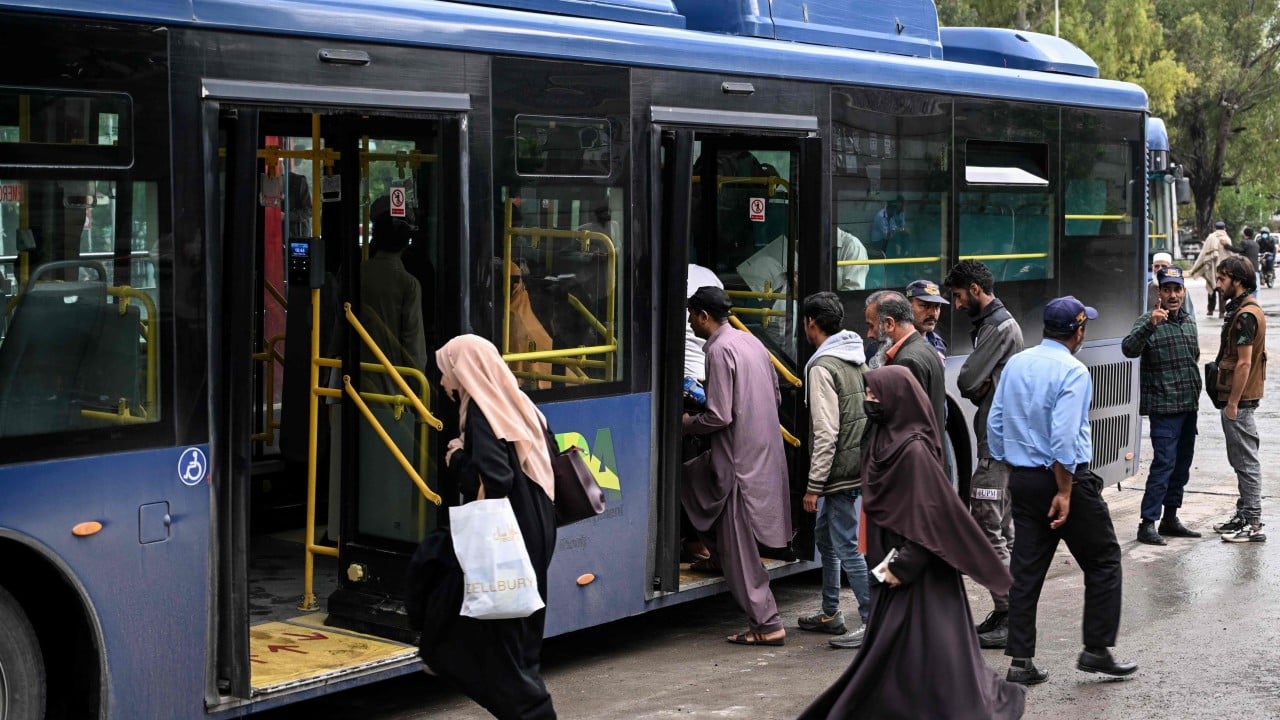
Pakistan offers free transport amid fuel price hike, energy crisis
Following a significant increase in fuel prices, Pakistan has announced free public transport in Islamabad and Punjab for 30 days to alleviate public anger. The price hikes are linked to the ongoing energy crisis exacerbated by the conflict in the Middle East and disruptions in the Strait of Hormuz.
Key Highlights
- Pakistan offers free public transport for 30 days.
- Fuel prices hiked due to Middle East energy crisis.
- Protests erupted across Pakistan over increased fuel costs.
- Prime Minister Sharif partially reversed the petrol price hike.
- Government aims to ease economic burden on citizens.
Pakistan has implemented a 30-day free public transport initiative in its capital, Islamabad, and its most populous province, Punjab, in response to widespread public anger and protests triggered by a drastic increase in fuel prices. This measure aims to mitigate the economic burden on citizens amidst a deepening energy crisis. The surge in fuel costs is directly linked to escalating global energy prices, significantly influenced by the ongoing conflict in the Middle East and the resulting disruptions to shipping through the Strait of Hormuz, a critical chokepoint for oil transportation.
Initially, the Pakistani government announced a substantial hike in fuel prices, with petrol prices rising by 42.7% and diesel by 54.9%. This decision led to immediate street protests and long queues at fuel stations across the country, as citizens expressed their discontent. In response to the public backlash, Prime Minister Shehbaz Sharif announced a partial rollback of the petrol price hike, reducing it by 80 rupees per litre to 378 rupees. However, the price of diesel remained elevated at 520 rupees per litre following its 54.9% increase. The government has stated that the petrol price reduction will be in effect for at least one month.
The free public transport initiative in Islamabad is expected to cost the government approximately 350 million rupees. Similar measures, including free travel on state-run transport and targeted subsidies for trucks and buses, have been introduced in Punjab. The provincial government in Sindh, specifically in Karachi, has also announced subsidies for motorcyclists and small farmers. These steps are part of the government's efforts to provide relief and stabilize the economic situation for its citizens.
The energy crisis affecting Pakistan is largely attributed to the geopolitical instability in the Middle East, stemming from the US-Israel conflict with Iran, which began on February 28th. This conflict has led to retaliatory strikes and has virtually frozen shipping activity through the Strait of Hormuz, a vital route for approximately a fifth of the world's energy supplies, much of which is destined for Asia. Pakistan, heavily reliant on imported fuel, with nearly 85% of its oil passing through the Strait of Hormuz, is particularly vulnerable to these disruptions.
Beyond the immediate relief measures, the Pakistani government has also implemented austerity steps to conserve fuel. These include shifting many government offices to a four-day workweek, extending school holidays, and moving some classes online. The country, facing significant economic pressure with about 25% of its 240 million population living below the poverty line, recently reached a preliminary agreement with the International Monetary Fund (IMF) for a $1.2 billion support package.
Public reaction to the fuel price hikes has been strong, with opposition parties and civil society groups calling for mass protests and demanding the ouster of the current government. Some opposition leaders have criticized the price increase as unfair and have dismissed the government's justification of global tensions, attributing the hike to domestic policy issues and alleged corruption.
It's important to note that while the original article mentions a 'Trump-like message' in its headline, the search results do not directly link the 'thank you' message to Donald Trump in the context of Pakistan's free transport announcement. The sentiment of thanking the public or expressing a promise of relief is attributed to Pakistani officials like Interior Minister Mohsin Naqvi and Chief Minister Maryam Nawaz Sharif. While Donald Trump has previously criticized Pakistan regarding aid and its stance on terrorism, and has taken credit for certain deals involving oil tankers passing through the Strait of Hormuz, there is no direct corroboration in the provided search results for a 'Trump-like message' being used by Pakistan in their announcement of free transport.
Overall, the core claims of the article—Pakistan offering free transport following a fuel price hike due to an energy crisis exacerbated by Middle Eastern conflict—are verified. The mention of a 'Trump-like message' appears to be an embellishment or misinterpretation, as the prominent 'thank you' or promise of relief comes from Pakistani officials themselves.
Frequently Asked Questions
Why has Pakistan announced free public transport?
Pakistan has announced free public transport for 30 days in Islamabad and Punjab to alleviate public anger and economic hardship caused by a sharp increase in fuel prices.
What caused the increase in fuel prices in Pakistan?
The fuel price hike is attributed to the global energy crisis, significantly impacted by the ongoing conflict in the Middle East and disruptions in shipping through the Strait of Hormuz.
What other measures has Pakistan taken to address the energy crisis?
In addition to free transport, Pakistan has reduced petrol prices partially, introduced subsidies for certain groups, and implemented austerity measures like a four-day workweek for government offices to conserve fuel.
What is the significance of the Strait of Hormuz in this crisis?
The Strait of Hormuz is a critical chokepoint for global oil and gas transport. Disruptions there directly impact energy supplies and prices, particularly for countries like Pakistan that rely heavily on imports through this route.