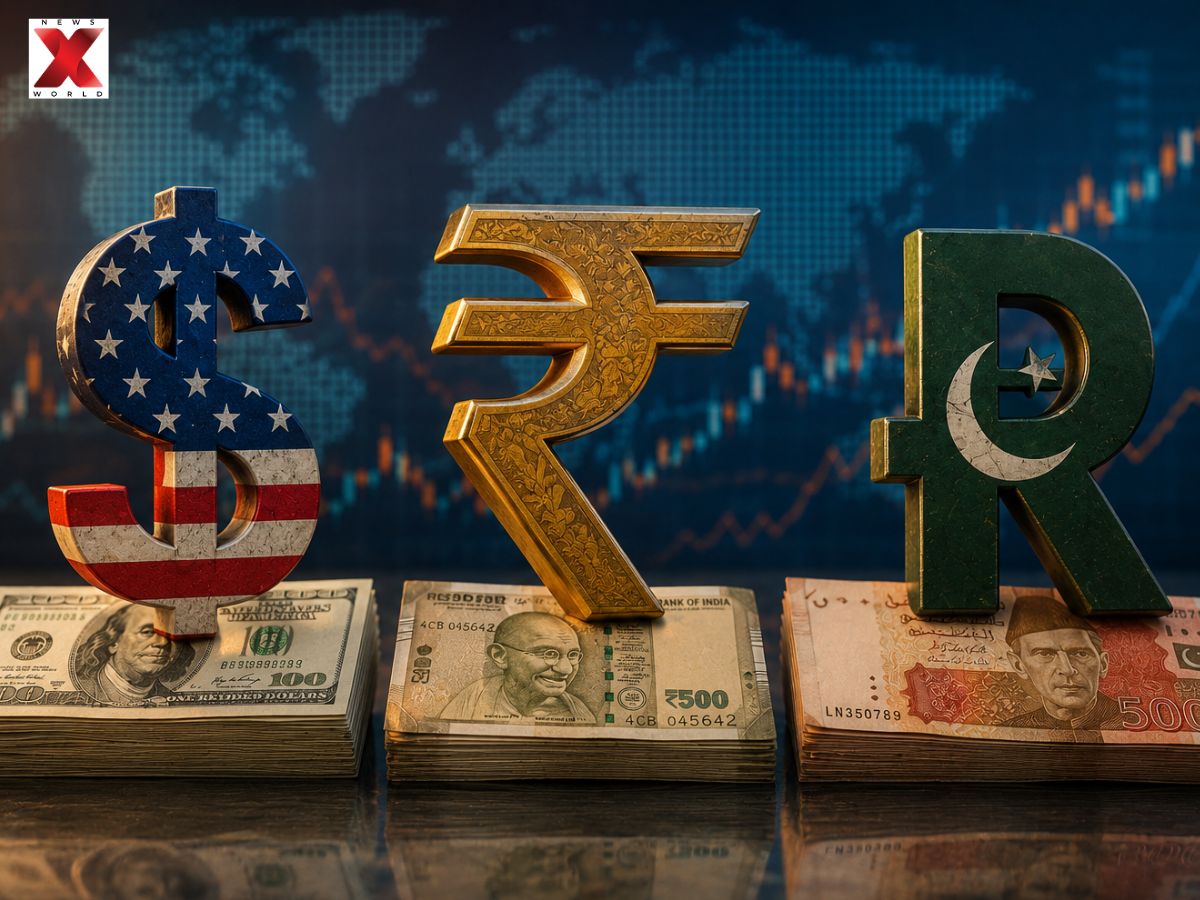
Rupee Hits Record Lows: 1-Year Forward Breaches 100/$, Spot Nears 97
The Indian Rupee recently experienced significant depreciation, with its one-year forward rate crossing the crucial 100/$ mark for the first time. Simultaneously, the spot rate touched an intraday low of 96.96 against the US dollar before closing around 96.8, driven by escalating geopolitical tensions, surging oil prices, and capital outflows.
Key Highlights
- One-year rupee forward rate breached 100 against US dollar.
- Spot rupee hit intraday low of 96.96, closing around 96.8.
- Depreciation largely due to West Asia conflict and high oil prices.
- Narrow India-US interest rate differential impacts debt inflows.
- RBI intervened to prevent further sharp decline, selling dollars.
- Global dollar strength and foreign institutional outflows fueled rupee's fall.
The Indian Rupee has recently faced significant pressure, leading to its one-year forward rate breaching the psychologically important 100 per US dollar mark for the first time. Concurrently, the domestic currency's spot rate reached a new intraday low of 96.96 against the dollar before closing at approximately 96.82, down 29 paise from its previous close of 96.53. This marked a crucial moment for India's currency market, as confirmed by multiple financial news outlets.
This depreciation is largely attributed to a confluence of global and domestic factors, with the ongoing conflict in West Asia and the resultant surge in crude oil prices being primary drivers. India, a major oil importer, is particularly vulnerable to such price shocks, as higher crude costs widen its current account deficit and increase demand for the US dollar. Analysts and treasury heads have highlighted that the rupee is finding little support due to these elevated oil prices and the risk of the current account deficit overshooting.
Another significant factor contributing to the rupee's weakness is the narrowing interest rate differential between India and the United States. A smaller differential makes Indian debt less attractive to overseas investors who can earn higher returns in US dollar bonds, thereby weakening the case for foreign debt inflows into India. This has led to substantial capital outflows, with foreign institutional investors (FIIs) reportedly pulling out billions of dollars from Indian equities and bonds since late February 2026, intensifying the pressure on the rupee.
Global safe-haven demand for the US dollar amidst geopolitical uncertainties, alongside rising US Treasury yields, has further strengthened the dollar index, consequently weakening emerging market currencies like the rupee. The rupee has been noted as one of Asia's worst-performing currencies, depreciating nearly 6-7.7% since the Iran-related conflict escalated in late February 2026.
The Reserve Bank of India (RBI) has reportedly intervened in the currency market by selling dollars through public sector banks to prevent a sharper and more disorderly depreciation of the rupee, particularly around the crucial 97 per dollar level. This intervention aims to manage volatility rather than defend a specific exchange rate, providing some stability to the market without depleting foreign exchange reserves rapidly. However, despite these efforts, market commentators suggest that the rupee may remain under pressure if crude prices stay elevated and foreign capital flows continue to weaken.
The distinction between the spot rate and the one-year forward rate is crucial. The spot rate refers to the exchange rate for immediate currency conversion, typically settled within two business days. In contrast, the one-year forward rate is an agreement to exchange currency at a predetermined rate on a future date, usually one year from now. The premium on the one-year outright forward spot rupee reflects the interest-rate differential and hedging demand built into the USD/INR forward rate, rather than being a direct prediction of the spot rate in a year. Therefore, while the forward rate breaching 100 signifies strong market expectations and hedging activity, it does not mean the spot rate is currently at 100.
Countries like Indonesia and the Philippines are also facing similar pressures due to the US-Iran conflict, with their central banks under scrutiny to take policy action. This highlights the global nature of the economic challenges stemming from current geopolitical instability. The sustained weakness of the rupee has implications for India's economy, including potentially higher imported inflation, increased fuel prices, and a widening trade deficit, which could impact households and businesses across the country.
In conclusion, the rupee's recent performance reflects a challenging global economic environment, marked by geopolitical tensions, rising oil prices, and strong dollar demand. While RBI interventions have cushioned some of the fall, the currency remains vulnerable to external shocks, necessitating careful monitoring by policymakers and market participants.
Frequently Asked Questions
What is the difference between a spot rate and a forward rate for currency?
The spot rate is the exchange rate for immediate currency exchange, typically settled within two business days. The forward rate, conversely, is an agreed-upon exchange rate for a currency transaction that will occur on a specific future date, often reflecting interest rate differentials and hedging demand rather than just a prediction of the future spot rate.
Why is the Indian Rupee depreciating against the US Dollar?
The Indian Rupee's depreciation is primarily driven by escalating geopolitical tensions in West Asia, leading to higher crude oil prices, which significantly impact India's import bill. Other factors include a narrowing interest rate differential between India and the US, discouraging foreign debt inflows, and substantial capital outflows by foreign investors seeking safer assets.
What is the significance of the rupee's one-year forward rate hitting 100/$?
The one-year forward rate hitting 100/$ indicates strong market expectations regarding future exchange rate movements and significant hedging demand from businesses and investors. It reflects the cost of hedging against future currency fluctuations and the interest rate differential, not necessarily that the spot rate will reach 100/$ within a year.
How does RBI intervention affect the rupee's value?
The Reserve Bank of India (RBI) intervenes in the forex market by selling US dollars to increase dollar supply and absorb rupee liquidity, thereby preventing sharp and disorderly depreciation of the Indian Rupee. This helps manage currency volatility and instill market confidence, though it also reduces India's foreign exchange reserves.
What are the potential impacts of a weakening rupee on the Indian economy?
A weakening rupee can lead to higher imported inflation, as goods like crude oil, electronics, and chemicals become more expensive. This can push up fuel prices, increase the cost of living for households, widen India's trade and current account deficits, and make foreign debt repayment more costly for Indian companies.