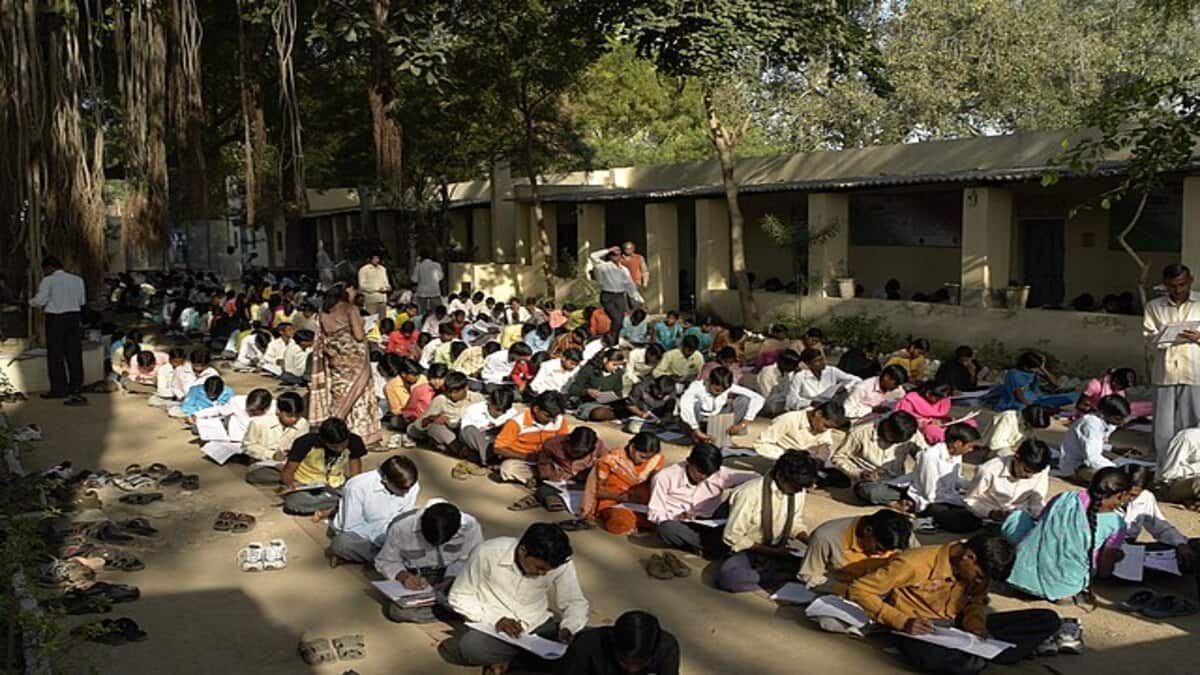
CBSE Class 10 Maths Exam 2026: Analysis, Reviews, and Paper Difficulty
The CBSE Class 10 Mathematics exam for 2026 was successfully conducted on February 17, with students and experts largely terming the paper as moderately difficult. Initial analysis highlights a balanced mix of conceptual and application-based questions, with some competency-based problems proving challenging. Post-exam reviews and answer keys are now widely available for students.
Key Highlights
- CBSE Class 10 Maths exam held on February 17, 2026, across India.
- Overall difficulty rated as moderate to easy by students and experts.
- Paper included both Standard and Basic Mathematics versions.
- Competency-based and case-study questions required conceptual clarity.
- MCQs were noted as lengthy, impacting time management for some.
- Question papers and unofficial answer keys are being released online.
The Central Board of Secondary Education (CBSE) successfully conducted its Class 10 Mathematics examination on February 17, 2026, across various centers in India and abroad. The exam, a significant milestone for lakhs of students, commenced at 10:30 AM and concluded at 1:30 PM, with an initial 15 minutes allotted for reading the question paper. This day marked the beginning of the CBSE 2026 board examinations, which are scheduled to run until March 11, 2026, for Class 10.
Initial reactions from both students and subject matter experts widely characterized the Mathematics paper as being of 'moderate' difficulty, often leaning towards 'moderately easy'. Experts, such as Nilutpal Bora from Modern English School, Guwahati, and Suneeti Sharma from Global Indian International School, Noida, described the Standard Mathematics paper as well-balanced, aligned with student expectations, and focused on comprehension, critical thinking, and application-based questions. Similarly, the Basic Mathematics paper was also found to be moderately difficult, though some noted certain sections required careful thought. Many teachers and students found the paper to be manageable, especially for those who had thoroughly practiced from NCERT textbooks and exemplar problems.
The paper structure for both Standard and Basic Mathematics comprised five sections (A to E), incorporating a mix of Multiple Choice Questions (MCQs), very short answer, short answer, long answer questions, and case study-based problems. While most questions were direct and formula-based, competency-based questions were a notable feature, requiring students to apply concepts rather than solely relying on memorization. Some students and teachers specifically mentioned that the MCQs were lengthy, which could pose a challenge for time management. Additionally, a few tricky questions, particularly from the 'Circles' chapter in the Basic paper, and some application-based questions from Trigonometry in the Standard paper, were highlighted as demanding deeper conceptual understanding.
Section-wise analysis provided by various education portals indicated that the 5-mark sections were generally straightforward, allowing students to demonstrate their knowledge. The short-answer sections were balanced, with 3-mark questions considered moderate and 2-mark questions described as easy and direct. The paper was widely reported to be aligned with the CBSE syllabus and exam pattern, with no questions deemed out of syllabus. The overall pattern and distribution of marks were consistent with the sample papers released by CBSE, reinforcing the importance of practicing these resources.
In preparation for the 2026 board exams, CBSE had introduced several reforms, including a revised exam pattern that emphasizes analytical and application-based learning. Competency-based questions now constitute 50% of the paper, 20% are objective, and 30% are short/long answer types. The board also issued an advisory on the proper distribution of Mathematics question papers (Standard or Basic) to ensure students received the correct paper as indicated on their admit cards, emphasizing strict protocols to avoid mismatches. Furthermore, CBSE announced a two-attempt system for Class 10 students for 2026, with the February examination being the first attempt and an option for a second attempt in May for score improvement, with the higher score being considered.
Following the examination, several platforms, including Jagran Josh, Shiksha.com, Physics Wallah, and Careers360, promptly released exam analysis, detailed paper reviews, and unofficial answer keys, allowing students to gauge their performance and prepare for upcoming subjects. The availability of these resources immediately after the exam is crucial for students to cross-check answers, estimate scores, and identify areas needing further clarity. Many sources also provided preparation tips for future exams, including consistent practice, thorough revision of NCERT material, and solving previous year's question papers.
Overall, the CBSE Class 10 Mathematics exam for 2026 was considered a fair assessment of students' mathematical understanding, balancing foundational concepts with critical thinking and application skills. The mixed reactions indicate that while many found it manageable, the competency-based and lengthy MCQ sections posed a challenge for some, underscoring the shift towards a more analytical approach in board examinations.
Frequently Asked Questions
When was the CBSE Class 10 Mathematics exam for 2026 conducted?
The CBSE Class 10 Mathematics exam for both Standard and Basic levels was conducted on Tuesday, February 17, 2026.
What was the overall difficulty level of the CBSE Class 10 Maths paper 2026?
The overall difficulty level of the CBSE Class 10 Mathematics paper for 2026 was largely rated as moderate to moderately easy by both students and subject experts.
Were there any changes to the CBSE Class 10 exam pattern for 2026?
Yes, for the 2026 board exams, CBSE introduced a revised exam pattern with 50% competency-based questions, 20% objective questions, and 30% short/long answer questions, emphasizing analytical and application-based learning.
What kind of questions were found to be challenging in the Maths paper?
Some students found the Multiple-Choice Questions (MCQs) to be lengthy and certain competency-based or application-based questions, particularly from chapters like 'Circles' and 'Trigonometry', to be tricky.
Can students attempt the CBSE Class 10 board exams twice in 2026?
Yes, CBSE implemented a new policy allowing Class 10 students two attempts for the board examinations in 2026. The February exam is the first attempt, and students can opt for a second attempt in May to improve their scores, with the higher score being considered.