India-US Interim Trade Deal: Tariffs Reduced to 18%, Sparks Debate
India and the US have finalized an interim trade agreement, reducing US tariffs on certain Indian exports from 50% to 18%. While Commerce Minister Piyush Goyal highlights India's competitive edge, farmer unions and think tanks raise concerns about reciprocal concessions and potential impacts on domestic sectors. The deal aims to boost bilateral trade and is expected to be formally signed in March.
Key Highlights
- US cuts tariffs on Indian goods from 50% to 18% under interim deal.
- Piyush Goyal claims 18% tariff gives India advantage over competitors.
- Indian exports like pharma, gems, textiles to benefit from reduced duties.
- India to reduce tariffs on US farm products, industrial goods.
- Farmer unions criticize deal as 'surrender,' citing harm to agriculture.
- GTRI flags 'uneven exchange' and implausibility of India's import commitment.
India and the United States have announced the finalization of a framework for an interim trade agreement, marking a significant development in their bilateral economic relations. Union Commerce and Industry Minister Piyush Goyal held a press conference on February 7, 2026, where he detailed the key aspects of the deal, highlighting a reduction in US tariffs on Indian exports from a high of 50% to 18%. This 50% tariff was described as a reciprocal duty imposed in August 2025, layered upon an existing 25% tariff, which had significantly strained India's export competitiveness.
Goyal emphasized that this new 18% tariff rate provides India with a distinct "competitive advantage" in the US market. He drew comparisons with other major exporting nations, noting that China faces tariffs of approximately 35%, while countries like Vietnam and Bangladesh are subject to 20%, and Indonesia to 19%. This positioning, according to Goyal, makes India more favorable in relative terms for accessing the American market. He also stated that various Indian exports, including spices, tea, coffee, cashew nuts, and a range of fruits and vegetables, will now attract zero duty in the United States.
Under the terms of this interim agreement, several labor-intensive Indian industries are set to benefit from reduced or zero duties. These include sectors such as textiles and apparel, leather and footwear, plastics and rubber goods, organic chemicals, home décor, handicrafts, and certain machinery. Furthermore, high-value Indian exports like generic pharmaceuticals, gems and diamonds, and aircraft parts are expected to gain zero-duty access to the US market. The Indian government aims to boost India-US bilateral trade to an ambitious 45 lakh crore rupees in the near future and views this agreement as a stepping stone towards a more comprehensive Bilateral Trade Agreement (BTA).
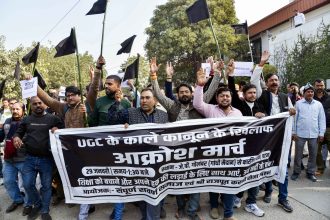
However, the trade deal has also drawn significant criticism and raised concerns from various quarters in India. The Samyukt Kisan Morcha (SKM), a prominent farmers' coalition, vehemently labeled the agreement as a "total surrender" of Indian agriculture to American multinational corporations. They expressed fears that the influx of cheaper US agricultural imports, such as dried distillers' grains with solubles (DDGS) and red sorghum for animal feed, tree nuts, fresh and processed fruits (including apples), soybean oil, wine, and spirits, would severely undermine the livelihoods of domestic farmers. The SKM went as far as to demand the immediate resignation of Commerce Minister Piyush Goyal, accusing him of misleading the public about the safeguards for the agricultural sector and called for nationwide protests on February 12.
Adding to the critique, the Delhi-based think tank Global Trade Research Initiative (GTRI) provided an analysis suggesting an "uneven exchange" within the agreement. GTRI founder Ajay Srivastava argued that the United States essentially traded the rollback of its previously imposed "unsustainable and illegal reciprocal tariffs" for "permanent market access gains" within India. Critics from The Wire also pointed out that framing the 18% tariff as a gain is misleading, considering that the average US tariffs on Indian goods were significantly lower, around 2.93%, in the pre-Trump era.
Beyond tariffs, India has made several commitments in the deal. It intends to eliminate or reduce tariffs on a broad spectrum of US industrial and agricultural products. Notably, India has expressed an intention to purchase US energy products, aircraft and aircraft parts, precious metals, technology products, and coking coal worth an estimated $500 billion over the next five years. GTRI, however, questioned the feasibility of this massive purchase commitment, highlighting that decisions for large purchases like aircraft are typically made by the private sector, not the government, and the target appears "unrealistic." There are also agreements to address non-tariff barriers and adopt clearer digital trade rules, which some experts believe could limit India's digital policy space.
In response to the criticisms, Piyush Goyal reassured that the agreement has built-in safeguards, particularly for farmers. He explicitly stated that sensitive products such as maize, wheat, rice, sugar, soybean, and poultry have been kept outside tariff concessions, ensuring protection for domestic agricultural interests. He also clarified that genetically modified (GM) crops were not part of the agreement, with the exception of DDGS, where the GM characteristics are eliminated after processing. Despite the ongoing debate, the interim trade agreement framework has been finalized, with the formal signing anticipated in March. This agreement represents a delicate balance between fostering economic cooperation and addressing domestic sensitivities, particularly in a country like India where agriculture plays a crucial role in the economy and livelihoods. The effectiveness and true impact of this deal will unfold as its provisions are implemented and trade flows adjust.
Frequently Asked Questions
What is the key takeaway from the India-US interim trade deal?
The core of the interim trade deal is the reduction of US tariffs on certain Indian exports from an earlier 50% to 18%. India will also reciprocally reduce or eliminate tariffs on a range of US industrial and agricultural products.
How does Commerce Minister Piyush Goyal view the 18% tariff reduction?
Piyush Goyal views the 18% tariff as providing India a 'competitive advantage' in the US market, noting that this rate is lower than what other competing nations like China, Vietnam, and Bangladesh face.
What are the concerns raised by farmer organizations regarding the deal?
Farmer organizations, including the Samyukt Kisan Morcha (SKM), have criticized the deal as a 'total surrender' of Indian agriculture, fearing that cheaper US agricultural imports such as soybean oil, fresh fruits, and animal feed products will negatively impact domestic farmers' livelihoods.
What types of Indian goods will benefit from the reduced US tariffs?
Indian exports that will benefit include labor-intensive sectors like textiles, apparel, leather, footwear, organic chemicals, and handicrafts, along with high-value items such as generic pharmaceuticals, gems, diamonds, and certain aircraft parts, which will receive zero-duty access.
What are the major commitments India has made in this interim agreement?
India has committed to reducing or eliminating tariffs on various US industrial and agricultural products and has expressed an intention to purchase $500 billion worth of US energy products, aircraft, precious metals, technology products, and coking coal over the next five years.