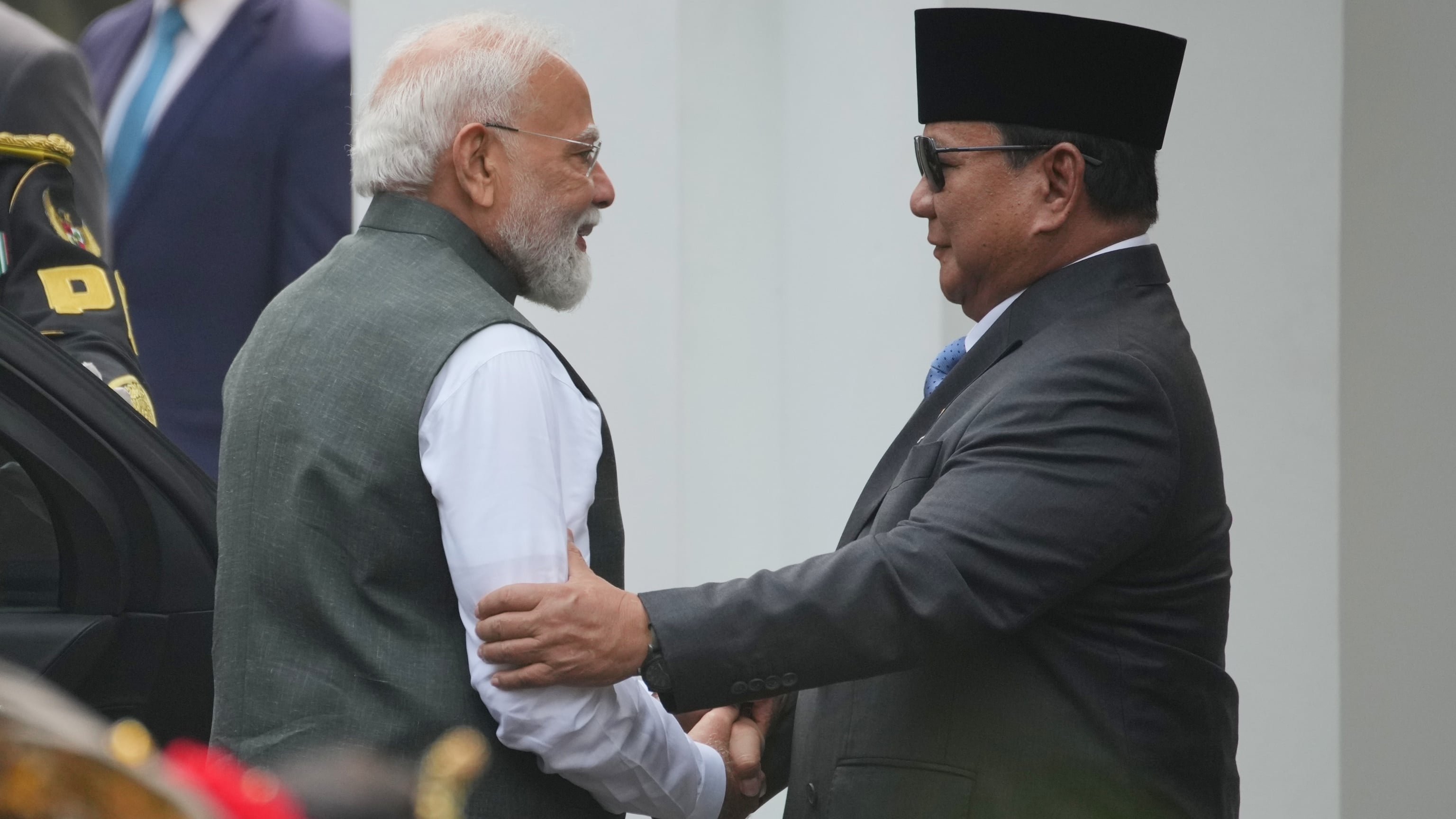
Australia, India Finalize Uranium Export Deal to Boost Clean Energy
Australia and India have finalized administrative arrangements for uranium exports, operationalizing a long-stalled 2014 civil nuclear agreement during Prime Minister Modi's recent visit. This landmark deal will enable commercial uranium supplies from Australia's vast reserves to fuel India's ambitious nuclear energy expansion plans, aiming for 100 gigawatts by 2047, under strict IAEA safeguards for peaceful purposes.
Key Highlights
- Australia and India finalized uranium export administrative arrangements.
- Deal operationalizes 2014 civil nuclear cooperation pact.
- Uranium exports will support India's 100 GW nuclear energy goal by 2047.
- Exports are strictly for peaceful purposes under IAEA safeguards.
- Boosts Australia's resource sector and diversifies its trade.
- Deepens bilateral strategic partnership beyond energy to defence and critical minerals.
Australia and India have successfully finalized administrative arrangements for the export of Australian uranium to India, marking a significant milestone in their bilateral relations and advancing India's clean energy ambitions. This breakthrough occurred during Indian Prime Minister Narendra Modi's visit to Australia in July 2026, where he met with Australian Prime Minister Anthony Albanese.
The deal operationalizes a civil nuclear cooperation agreement that was originally signed in 2014 during Prime Minister Modi's first visit to Australia as Prime Minister. While the 2014 agreement laid the groundwork, actual uranium exports faced delays and remained limited for nearly a decade due to administrative hurdles and Australia's stringent non-proliferation safeguards, particularly given India's status as a non-signatory to the Nuclear Non-Proliferation Treaty (NPT).
Australia possesses approximately one-third of the world's known uranium reserves, making it a pivotal potential supplier for countries seeking to expand their nuclear power capabilities. India, with a rapidly growing economy and a massive population, is striving to meet escalating energy demands while simultaneously reducing its reliance on fossil fuels and curbing carbon emissions. To this end, India has set an ambitious target to significantly increase its nuclear energy capacity from the current approximate 8 gigawatts (GW) to 100 GW by 2047.
Both Prime Ministers emphasized that the uranium supplied would be used exclusively for peaceful purposes, with strict adherence to safeguards established by the International Atomic Energy Agency (IAEA). This assurance is critical to Australia's long-standing policy on uranium exports, which prioritizes non-proliferation and requires customer countries to have robust safeguards in place. Historically, Australia has maintained a cautious approach to uranium sales, especially to nations outside the NPT, with its policy largely shaped by concerns over nuclear weapons development since the 1970s. However, an exception was granted to India by the Nuclear Suppliers Group (NSG) in 2008, paving the way for such bilateral cooperation.
For India, securing a reliable and long-term supply of uranium is vital for achieving its clean energy objectives and ensuring energy security. India's domestic uranium reserves are insufficient to meet its projected nuclear power expansion needs, necessitating imports from various global sources. Currently, India also imports uranium from countries like Russia and Uzbekistan, and has agreements with Canada. The operationalization of the Australian deal provides a crucial diversification of its nuclear fuel supply chain.
From Australia's perspective, the agreement offers an opportunity to further strengthen its resources sector by opening a new, substantial market for its uranium. It also aligns with Australia's broader strategy to diversify its trade relationships, reducing its reliance on major existing partners. Beyond nuclear energy, the leaders also discussed deepening cooperation across various sectors, including defence, critical minerals, renewables (such as green hydrogen), and space tracking terminals. This comprehensive engagement underscores the growing strategic partnership between Australia and India, particularly in the context of stability and security in the Indo-Pacific region. The discussions also included efforts to fast-track a comprehensive free trade agreement, building on the existing limited pact.
Overall, this agreement is seen as a mutually beneficial arrangement that supports India's energy transition, provides a new market for Australian resources, and reinforces the strategic alignment between the two nations on geopolitical and economic fronts.
Frequently Asked Questions
When was the initial Australia-India civil nuclear cooperation agreement signed?
The initial civil nuclear cooperation agreement between Australia and India was signed in September 2014, during Prime Minister Narendra Modi's first visit to Australia.
What is the significance of the recent agreement on uranium exports?
The recent agreement, finalized in July 2026, marks the operationalization of the 2014 civil nuclear pact. It establishes the necessary administrative arrangements to enable the commercial export of Australian uranium to India, which had been stalled for a decade due to various concerns.
For what purpose will India use the Australian uranium?
The agreement stipulates that the Australian uranium will be used exclusively for peaceful purposes, specifically to fuel India's civilian nuclear power plants. This is subject to strict safeguards overseen by the International Atomic Energy Agency (IAEA).
What are India's goals for nuclear energy capacity?
India has ambitious targets to significantly expand its nuclear energy capacity, aiming to reach 100 gigawatts (GW) by 2047. This expansion is crucial for meeting the country's growing energy demands and transitioning towards cleaner energy sources.
Why is Australia's decision to export uranium to India notable given India's NPT status?
Australia's policy generally restricts uranium exports to countries that are not signatories to the Nuclear Non-Proliferation Treaty (NPT). However, India received a waiver from the Nuclear Suppliers Group (NSG) in 2008, which, coupled with India's strong non-proliferation record and commitment to IAEA safeguards for its civilian facilities, paved the way for this bilateral cooperation as an exception to Australia's standard policy.