Dubai Airport: UAE Denies Missile Strike, Confirms Debris Incident Amid Regional Tensions
Dubai officials vehemently denied social media claims of a direct Iranian ballistic missile strike on Dubai International Airport, clarifying that any incidents involved minor debris from intercepted projectiles. This clarification came amidst escalating regional conflict, with Iranian retaliatory strikes impacting the wider UAE and Gulf region.
Key Highlights
- UAE officials denied direct missile strike on Dubai International Airport.
- Incidents attributed to minor debris from intercepted drones/missiles.
- Regional conflict escalated after US-Israel strikes on Iran.
- Zayed Airport saw fatality; Dubai airport had minor damage, staff injuries.
- Misinformation and AI-generated videos were widely circulated.
- Flights disrupted, emergency alerts issued across UAE.
Reports and social media claims emerged around late February and early March 2026 suggesting that Iranian ballistic missiles had directly struck Dubai International Airport (DXB) amidst a rapidly escalating conflict in the Middle East. However, officials in Dubai and the wider United Arab Emirates (UAE) swiftly moved to deny these assertions, providing clarification on the nature of incidents affecting the city and its critical infrastructure.
The broader context for these events was a significant escalation of tensions following joint US-Israel strikes on Iran, which reportedly led to the death of Iran's Supreme Leader, Ayatollah Ali Khamenei. In retaliation, Iran launched a barrage of missiles and drones across the Gulf region, targeting various locations including the UAE, Bahrain, Kuwait, Qatar, and Iraq.
Regarding Dubai International Airport specifically, the Dubai Media Office and other authorities consistently denied any direct missile strikes on the airport. They clarified that any reported incidents were "minor" and a result of "the fall of debris after an interception." While initial social media posts and some news outlets reported a concourse at DXB sustaining "minor damage" and four staff members incurring injuries, officials emphasized that the situation was quickly contained. Contingency plans were in place, leading to the pre-emptive clearing of most terminals, which likely mitigated further impact.
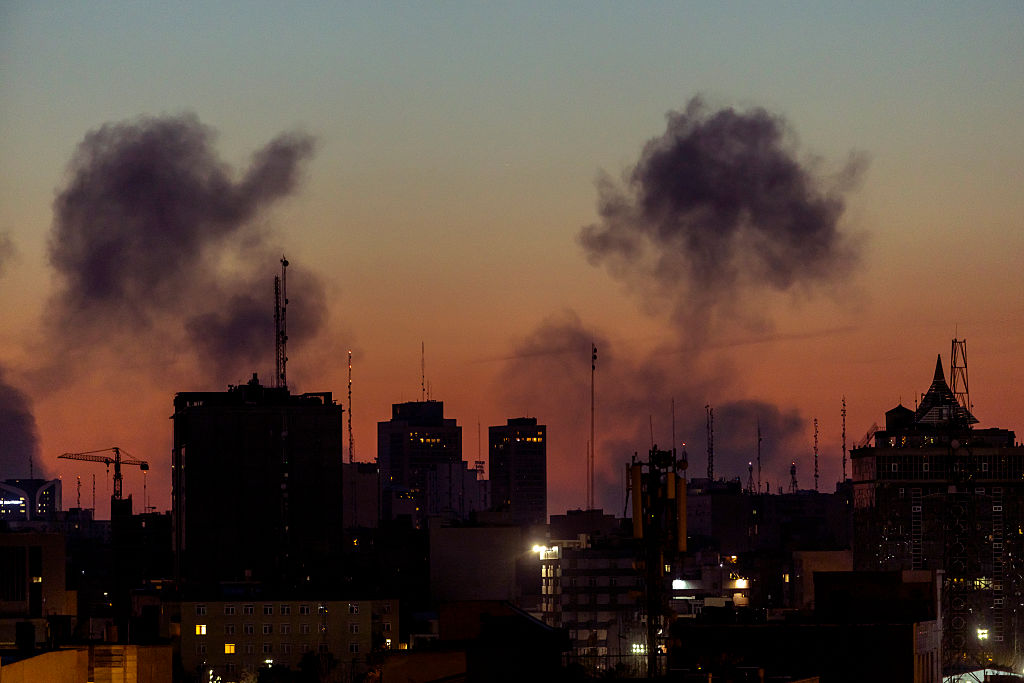
The overall impact on the UAE was more widespread than just Dubai International Airport. Zayed International Airport in Abu Dhabi also reported an incident involving the interception of a drone, where falling debris unfortunately resulted in one fatality of an Asian national and seven injuries. Other locations in Dubai were also affected by debris from intercepted projectiles, including a minor fire on the outer facade of the iconic Burj Al Arab hotel and a fire at one of the berths at Jebel Ali Port. Industrial areas in Sharjah and Dubai were also reportedly hit, leading to smoke plumes and fires.
The UAE's Ministry of Defence provided statistics on the defensive measures, reporting the detection of 205 ballistic missiles since the Iranian strikes began, with 190 successfully destroyed. Additionally, 1,184 drones were detected, and 1,110 of them were intercepted. The overall casualties across the UAE due to these strikes included three deaths of Pakistani, Nepalese, and Bangladeshi nationalities, and 112 minor injuries of various nationalities.
Throughout this period, misinformation played a significant role. Numerous AI-generated videos and old, unrelated footage were widely circulated on social media, falsely claiming to show extensive destruction in Dubai, including scenes near the Burj Khalifa. Fact-checking organizations like PTI, BOOM, and VERA Files debunked these videos, identifying them as artificially generated or miscontextualized content. The UAE's Attorney-General issued warnings to citizens and residents against circulating unverified videos or images of incident sites, highlighting the risk of inciting public panic and creating a false impression of the country's situation, and cautioning against legal repercussions.
The escalating tensions led to significant disruptions in air travel across the Middle East. Flights to and from Dubai and Abu Dhabi were temporarily suspended or delayed, and flight-tracking maps showed large portions of the region's airspace virtually empty at times. Residents in Dubai and Qatar also received emergency alerts on their mobile phones, warning of potential missile threats and advising them to seek immediate shelter. Despite these challenges, UAE officials reiterated that daily life continued normally while necessary measures were taken to manage developments and ensure public safety.
Frequently Asked Questions
Did Iran directly hit Dubai International Airport with a ballistic missile?
No, UAE officials have explicitly denied direct missile strikes on Dubai International Airport (DXB). They confirmed only a 'minor incident resulting from the fall of debris after an interception' of projectiles.
What kind of damage or incidents occurred in Dubai and the UAE?
Dubai International Airport experienced minor damage to a concourse and four staff injuries due to falling debris from intercepted projectiles. Separately, drone debris at Zayed International Airport in Abu Dhabi caused one fatality and seven injuries. Other incidents included a minor fire at Burj Al Arab and Jebel Ali Port due to debris.
Were there any casualties from the Iranian strikes in the UAE?
Yes, the UAE Ministry of Defence reported three deaths (Pakistani, Nepalese, and Bangladeshi nationals) and 112 minor injuries of various nationalities across the UAE as a result of the overall Iranian strikes and interceptions.
Was there misinformation circulating about the Dubai incidents?
Yes, several AI-generated videos and old footage were falsely shared on social media claiming to show widespread destruction in Dubai. Fact-checking organizations debunked these as fabricated or miscontextualized. The UAE Attorney-General warned against spreading such unverified content.
How did this event affect air travel in the region?
Air travel was significantly disrupted, with flights to and from Dubai and Abu Dhabi temporarily suspended or delayed. Airspace over much of the Middle East saw reduced activity, and emergency alerts were issued to residents regarding potential missile threats.