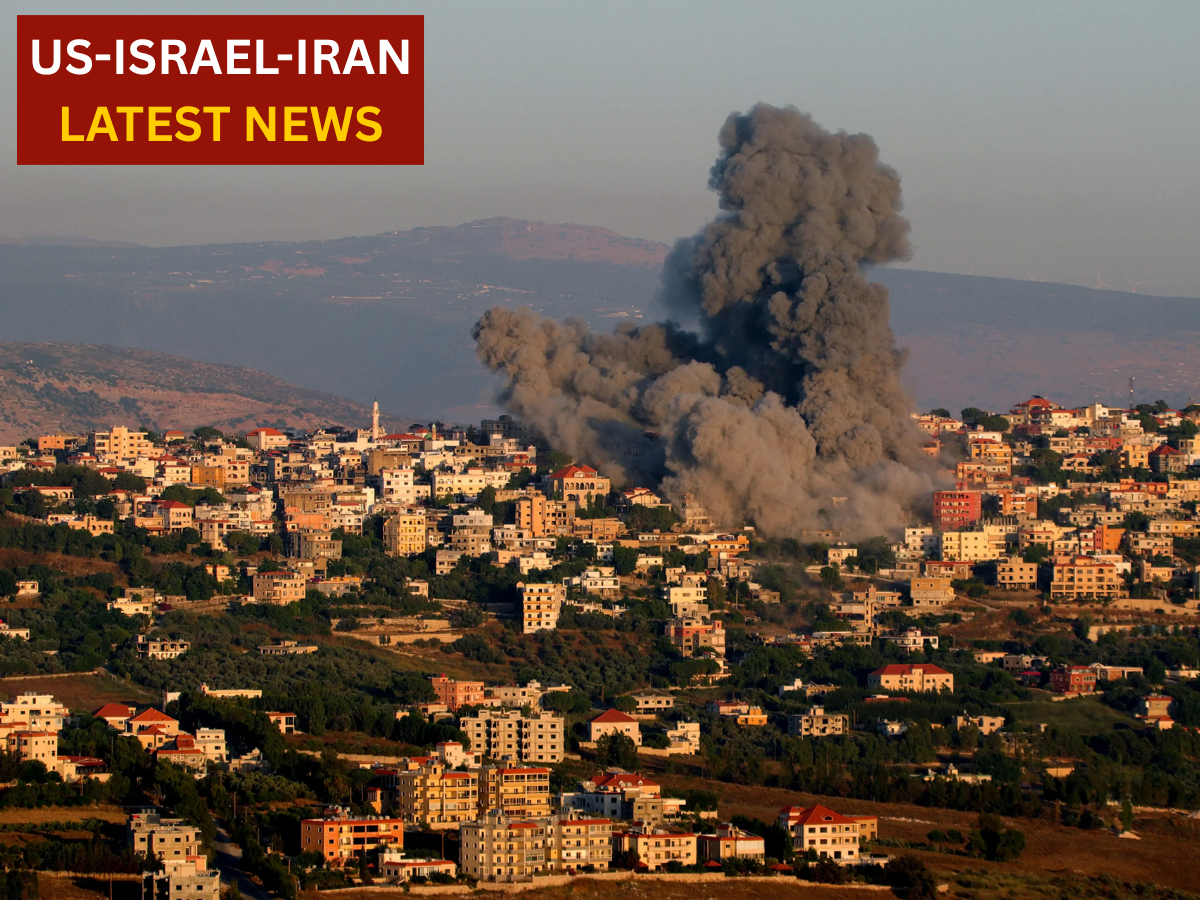
Trump threatens to "blow up" any approach to Iran's enriched uranium
President Donald Trump stated that the US is closely monitoring Iran's enriched uranium stockpile and would "blow up" any entity that approaches it, leveraging Space Force for surveillance. This warning comes amid ongoing, complex diplomatic efforts and a tense geopolitical climate between the US and Iran, with recent news indicating potential, yet unconfirmed, agreements on uranium transfer and a focus on ending regional hostilities.
Key Highlights
- Trump asserts US surveillance of Iran's enriched uranium.
- US threatens "blow up" any entity approaching Iranian nuclear sites.
- Space Force is cited for advanced surveillance capabilities.
- Diplomatic efforts with Iran are ongoing but complex.
- Focus shifts to ending regional hostilities.
- Unconfirmed reports of uranium transfer agreements exist.
President Donald Trump has issued a stern warning regarding Iran's nuclear program, stating that the United States is closely monitoring its stockpile of enriched uranium and is prepared to "blow up" any entity that approaches it. Trump highlighted the role of the newly established Space Force in providing advanced surveillance capabilities to detect any such approach. This statement comes at a time of complex and ongoing diplomatic negotiations between the US and Iran, with recent reports suggesting a potential, though unconfirmed, agreement for Iran to transfer its enriched uranium stockpile to a third country.
The geopolitical landscape between the US and Iran has been marked by years of tension, exacerbated by the US withdrawal from the Joint Comprehensive Plan of Action (JCPOA) in 2018 under the Trump administration. Since then, Iran has accelerated its uranium enrichment activities, limited international inspector access, and is considered by some to be closer to developing a nuclear weapon than before the JCPOA. Recent diplomatic efforts have focused on reaching a new agreement, with various proposals and counter-proposals being exchanged. While some reports indicate "surprising openness" from Iran regarding the transfer of its uranium stockpile, and a potential framework agreement being discussed, these developments remain unconfirmed by Iran.
Alongside nuclear discussions, there appears to be a strategic shift in focus towards ending regional hostilities. Iran's response to a recent US peace proposal reportedly prioritized de-escalation of regional conflicts over immediate nuclear talks. This approach suggests a complex negotiation strategy where Iran seeks to address broader security concerns before fully engaging on its nuclear program.
The threat of military action has been a recurring theme in the rhetoric surrounding US-Iran relations. Trump's statements about "blowing up" Iranian nuclear sites or entities approaching them underscore a willingness to use force if diplomacy fails. This stance has been met with warnings from Iran, including threats of retaliation against US bases and ships.
Despite the escalatory rhetoric, diplomatic channels remain active, albeit with significant challenges. The possibility of a deal is influenced by various factors, including Iran's willingness to curb its nuclear program and the international community's stance. The effectiveness and veracity of these claims and counter-claims are crucial for understanding the current state of affairs. The Hindustan Times article itself is dated May 10, 2026, and reflects the immediate reporting of Trump's statements.
Historical context shows that the JCPOA, signed in 2015, aimed to limit Iran's nuclear program in exchange for sanctions relief. However, the US withdrawal in 2018 significantly altered the diplomatic landscape, leading to Iran's increased enrichment activities. The current situation is a continuation of this protracted standoff, with the "enriched uranium" being a central point of contention.
The news is relevant to India's audience due to the global implications of Iran's nuclear program and the potential for wider conflict in the Middle East, which can impact energy prices and regional stability.
The specific claim about "blowing up anyone who approaches Iran's enriched uranium" is a direct quote attributed to Donald Trump in the Hindustan Times article. The search results confirm Trump's past and present use of similar strong rhetoric regarding Iran's nuclear program and potential military action. The existence of enriched uranium in Iran and the US monitoring of it are consistent with information regarding the ongoing nuclear dispute.
While the headline accurately reflects Trump's statement, the surrounding context of complex negotiations and Iran's response is vital for a complete understanding. The article is not sensationalized but reports a direct quote of a significant political statement.
The news category is primarily Politics and International Relations, with significant geopolitical implications.
This news is of global significance, directly involving the United States and Iran, with potential repercussions for international security and global markets.
The article was published on May 10, 2026.
Frequently Asked Questions
What is "enriched uranium" and why is it significant for Iran?
Enriched uranium is uranium that has had the concentration of the isotope Uranium-235 (U-235) increased through a process called enrichment. This is significant because U-235 is fissile, meaning it can sustain a nuclear chain reaction. Enriched uranium is a key component for both nuclear power reactors and, at higher enrichment levels, for nuclear weapons. Iran's pursuit of uranium enrichment has been a major concern for the international community due to its potential to develop nuclear weapons.
What is the role of the US Space Force in this situation?
President Trump mentioned the US Space Force as being involved in surveillance of Iran's nuclear facilities. Space Force, as a branch of the US Armed Forces, operates military space systems, including satellites, which can be used for intelligence gathering, surveillance, and reconnaissance (ISR) missions that could monitor activities on Earth, including those at nuclear sites.
What is the Joint Comprehensive Plan of Action (JCPOA)?
The JCPOA, commonly known as the Iran nuclear deal, was an agreement reached in 2015 between Iran and several world powers (including the US, UK, France, Russia, China, and Germany) to limit Iran's nuclear program in exchange for sanctions relief. The US unilaterally withdrew from the JCPOA in 2018, after which Iran began increasing its uranium enrichment activities.