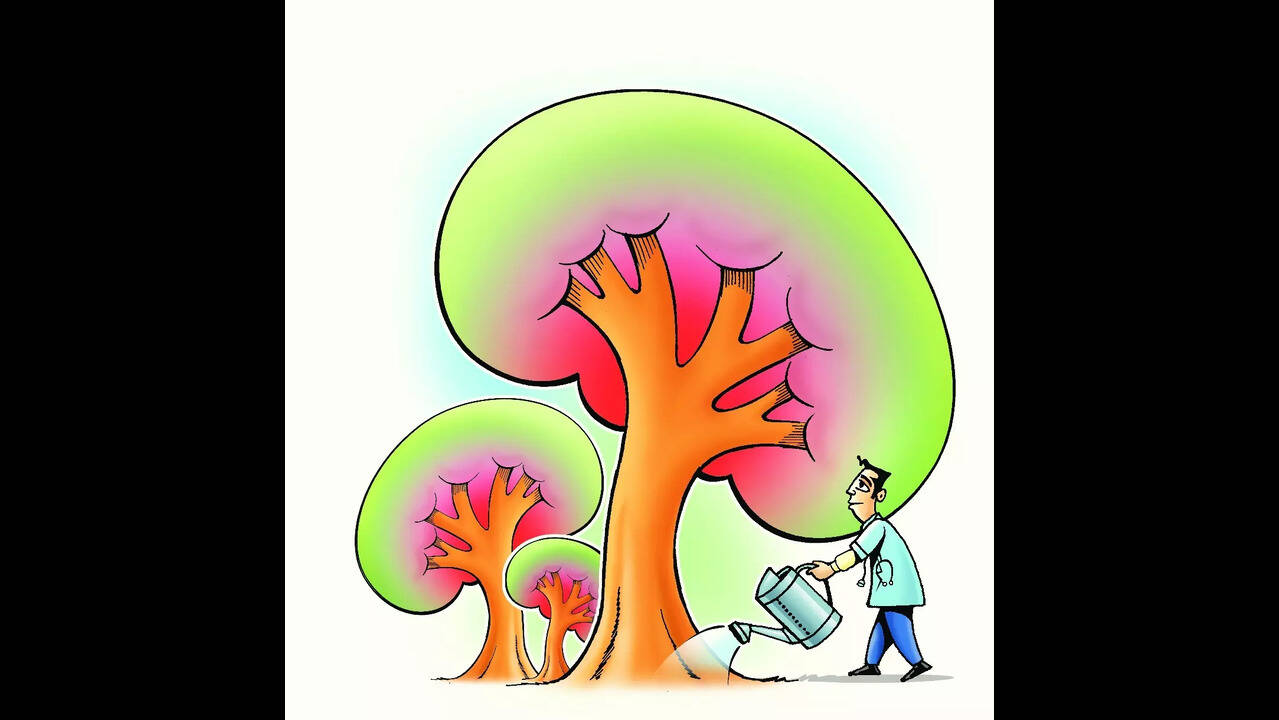
Kidney Care in India: Integrating Prevention, Transplantation, and Sustainable Dialysis
India's kidney care future hinges on robust prevention, expanded transplantation, and environmentally sustainable ('Green') dialysis. With rising chronic kidney disease (CKD) prevalence, early detection and management are crucial. Advances in transplantation offer improved outcomes, while green dialysis addresses the significant environmental impact of treatments, marking a holistic shift in renal health.
Key Highlights
- Prevention is key to combating rising Chronic Kidney Disease (CKD) rates in India.
- Kidney transplantation remains the optimal treatment but faces organ shortage challenges.
- Green dialysis initiatives are vital to reduce the environmental footprint of renal care.
- Technological advancements like AI and home-based dialysis are shaping future treatments.
- Government programs aim to increase access and affordability of kidney care services.
- Public awareness and early screening are critical for better patient outcomes.
The future of kidney care in India is significantly shaped by advancements in prevention strategies, transplantation, and the emerging concept of 'Green Dialysis.' This multi-faceted approach is critical given the alarming rise in Chronic Kidney Disease (CKD) prevalence across the nation. India currently bears a substantial burden of CKD, with approximately 10-17% of the adult population affected and projections indicating a continued increase in cases and associated mortality. This makes prevention a cornerstone of future kidney care.
**Prevention and Early Detection:**
Effective prevention strategies are paramount to mitigate the growing CKD crisis. The primary drivers of CKD in India are uncontrolled diabetes and hypertension, alongside lifestyle factors such as obesity, unhealthy diet, and sedentary living. Early detection is crucial, as CKD often progresses silently without noticeable symptoms until advanced stages. Therefore, regular screening, especially for high-risk individuals (those with diabetes, hypertension, or a family history of kidney disease), is strongly recommended. Lifestyle modifications form the bedrock of prevention, including maintaining a healthy weight, adopting a balanced diet low in sodium and processed foods, regular physical activity, and avoiding smoking and excessive alcohol consumption. The World Health Assembly's landmark resolution in May 2025 to prioritize kidney health prevention underscores the global recognition of this critical need. Community engagement, public awareness campaigns (like World Kidney Day), and strengthening primary healthcare are essential for widespread adoption of preventive measures and early diagnosis across India, particularly in rural and underserved areas.
**Kidney Transplantation: The Gold Standard:**
Kidney transplantation remains the most effective treatment for End-Stage Renal Disease (ESRD), offering significantly improved quality of life and longer survival compared to long-term dialysis. In India, the first successful kidney transplant was performed in 1971, marking a new era in renal care. However, despite its benefits, transplantation in India faces considerable hurdles. A severe shortage of organs, particularly deceased donor organs, is a major challenge. The national organ donation rate is low, necessitating increased awareness and education about organ donation. Logistical complexities, high costs of surgery and lifelong immunosuppressive medications, and the lack of robust infrastructure for organ retrieval and allocation further limit access for many patients.
Recent medical advancements are, however, expanding the possibilities of transplantation. These include ABO-incompatible and HLA-incompatible kidney transplants, which allow recipients to receive kidneys from donors with different blood types, thereby increasing the potential donor pool. Minimally invasive surgical techniques like laparoscopic and robot-assisted donor nephrectomy are also improving outcomes for living donors. Government initiatives, such as the Pradhan Mantri National Dialysis Programme (PMNDP) and Ayushman Bharat – Pradhan Mantri Jan Arogya Yojana (AB PMJAY), aim to make dialysis and transplantation more affordable and accessible, especially for economically weaker sections. Efforts are ongoing to strengthen public hospital infrastructure and sensitize medical personnel to streamline the organ donation process, particularly for deceased donors.
**Green Dialysis: Towards Sustainable Kidney Care:**
Dialysis, while life-saving, is an environmentally intensive therapy with a significant carbon footprint. Conventional hemodialysis consumes vast amounts of water and energy and generates substantial plastic and hazardous biomedical waste. 'Green Dialysis' or 'Green Nephrology' is an emerging global movement advocating for more environmentally sustainable practices in kidney care. This concept is gaining traction in India, where the dialysis community is increasingly recognizing the need for reforms.
Key 'green' initiatives include: optimizing water usage through recycling reject water (which can save billions of liters annually), implementing energy-efficient dialysis machines, exploring alternative energy sources like solar power for dialysis units, and improving waste management through segregation, recycling, and responsible disposal of plastic and hazardous waste. Prioritizing home-based dialysis options, such as peritoneal dialysis, can also reduce the environmental impact associated with travel to in-center facilities and overall resource consumption. The development of AI-based smart hemodialysis machines in India, which integrate intelligence for enhanced automation and efficiency, represents another step towards modern and potentially more sustainable care by optimizing resource use and improving patient safety. The World Kidney Day 2026 campaign's call to transform dialysis towards sustainability highlights this as a global public health priority. Embedding green nephrology principles into clinical practice and policy frameworks is essential to ensure that kidney replacement therapy is resilient and sustainable in a warming world, particularly in countries like India facing resource constraints.
In conclusion, the 'future of kidney care' in India is undoubtedly heading towards a more integrated and sustainable model. This involves aggressive prevention programs to stem the tide of CKD, continuous efforts to expand and improve access to kidney transplantation, and a concerted shift towards environmentally responsible 'Green Dialysis' practices. These three pillars, supported by technological innovations and policy reforms, are crucial for addressing India's complex renal health challenges and ensuring equitable, high-quality care for all. This aligns with global calls for sustainable healthcare practices and recognizes the interconnectedness of human and planetary health.
Frequently Asked Questions
What is 'Green Dialysis' and why is it important for India?
Green Dialysis refers to sustainable practices in kidney care, particularly in dialysis units, aimed at reducing their environmental footprint. This is important for India because conventional dialysis consumes vast amounts of water and energy and generates significant waste. Implementing green initiatives like water recycling, energy-efficient machines, and better waste management can help conserve resources and reduce pollution in a country with a high burden of kidney disease and environmental concerns.
What are the biggest challenges for kidney transplantation in India?
The primary challenges for kidney transplantation in India include a severe shortage of donor organs, especially from deceased donors, high costs of the procedure and post-transplant care, logistical complexities in organ retrieval and allocation, and limited awareness about organ donation among the public. Efforts are underway to address these through policy changes and public awareness campaigns.
How prevalent is Chronic Kidney Disease (CKD) in India, and what are its main causes?
Chronic Kidney Disease (CKD) is a significant public health issue in India, affecting an estimated 10-17% of the adult population, with its prevalence steadily rising. The main causes are largely lifestyle-related, with uncontrolled diabetes and hypertension being the leading contributors. Other factors include obesity, unhealthy diets, and lack of early detection and management.
What role does prevention play in the future of kidney care in India?
Prevention plays a critical role in the future of kidney care in India. With the rising burden of CKD, focusing on preventive measures can significantly reduce the incidence and progression of the disease, thereby alleviating the strain on healthcare systems. This includes promoting healthy lifestyles, managing underlying conditions like diabetes and hypertension, and facilitating early screening and detection.
Are there technological advancements helping kidney care in India?
Yes, technological advancements are playing an increasing role. These include refined kidney transplant protocols, minimally invasive surgical procedures, and the emergence of AI-assisted diagnostics and smart hemodialysis machines for enhanced automation and efficiency. Additionally, telemedicine and remote monitoring are being explored to improve accessibility and patient-friendliness of kidney care, especially in rural areas.