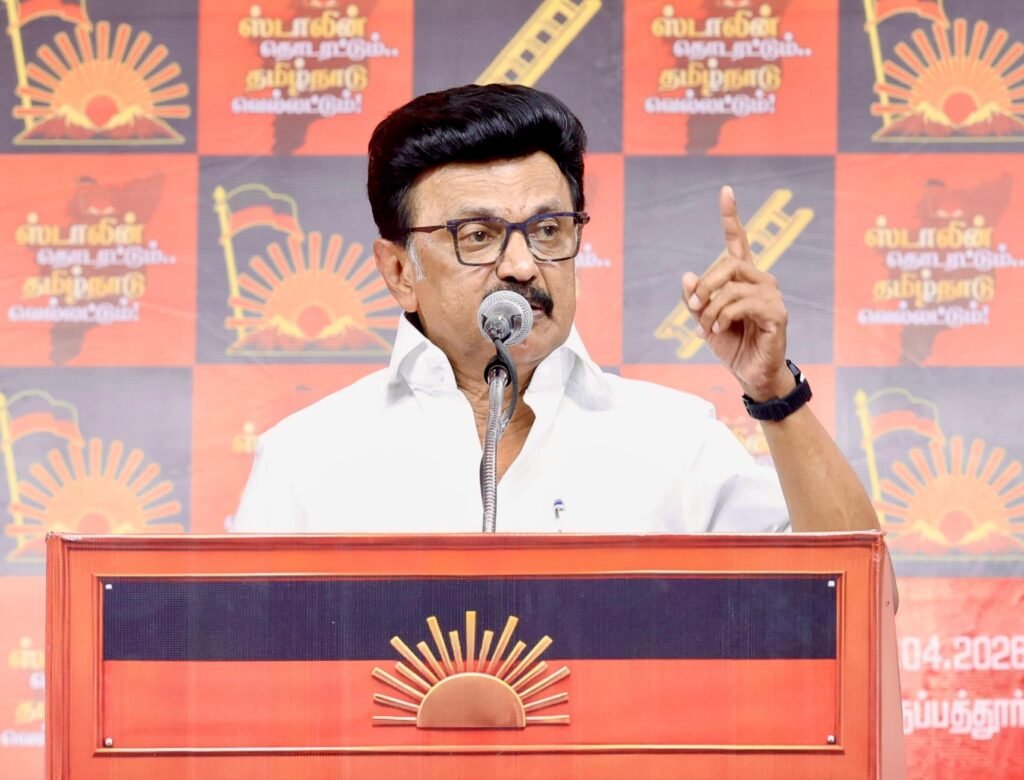
Stalin burns Delimitation Bill copy, calls it 'black law' against South India
Tamil Nadu CM MK Stalin burned a copy of the Delimitation Bill and led a black flag protest in Namakkal, terming it a "black law" and an injustice to South Indian states. The protest is against the proposed delimitation exercise, which critics fear will reduce the representation of Southern states in Parliament by increasing the number of seats based on population figures from the 2011 Census, potentially shifting political power to Northern states. The opposition argues this penalizes states that have controlled population growth.
Key Highlights
- MK Stalin protested the Delimitation Bill by burning its copy and hoisting black flags.
- The protest was held in Namakkal against the proposed delimitation exercise.
- Stalin termed the bill a 'black law' that punishes Southern states.
- Concerns exist that delimitation will reduce Southern states' representation in Parliament.
- Opposition parties are united against the bill, calling it a threat to federalism.
Tamil Nadu Chief Minister M.K. Stalin led a strong protest in Namakkal by burning a copy of the proposed Delimitation Bill and hoisting black flags, denouncing it as a "black law" that unfairly targets Southern states. This act of defiance, which occurred on April 16, 2026, as Parliament convened for a special session, signals a deepening political divide over the Union government's proposed redrawing of electoral constituency boundaries. The core of the controversy lies in the potential redistribution of Lok Sabha seats based on population figures from the 2011 Census, a move that critics, led by Stalin and other opposition parties, fear will disproportionately benefit Northern states with higher population growth and consequently reduce the political representation of Southern states, which have a lower population growth rate due to successful family planning initiatives. Stalin drew parallels to the historical anti-Hindi agitations, asserting that just as Tamil Nadu's past resistance forced concessions from Delhi, the current protest would challenge the perceived arrogance of the ruling BJP government. He articulated that the bill seeks to turn Tamils into "refugees in their own land" and vowed that the "fire of resistance" would spread across the Dravidian region. The protest in Namakkal was part of a larger, state-wide agitation called for by the DMK, with citizens urged to hoist black flags as a symbol of dissent. The proposed delimitation exercise aims to increase the total number of Lok Sabha seats from 543 to 850, a significant expansion intended partly to operationalize the 33% women's reservation bill passed in 2023. However, opposition parties argue that this delimitation, based on the 2011 Census, effectively penalizes states like Tamil Nadu that have performed better in population control. They contend that this could lead to a significant shift in political power towards the Hindi heartland, potentially weakening the voice of Southern states in national decision-making and altering India's federal structure. The Congress party has also voiced strong opposition, with leaders like Manish Tewari and Jairam Ramesh describing the bill as "deleterious, detrimental and destructive for our polity" and a "political earthquake." Rahul Gandhi has raised concerns about 'gerrymandering.' The INDIA bloc has unitedly decided to vote against the delimitation provisions, though they support the women's reservation aspect. Union Minister Jitendra Singh, however, has previously defended the work of the Delimitation Commission, stating that those questioning its parameters either haven't studied them sufficiently or have ulterior motives. The debate highlights a growing North-South divide, with Southern states expressing apprehension about losing political clout despite their economic contributions. The Union government maintains that the delimitation is a necessary exercise to ensure fair representation based on population dynamics, but the method and timing, particularly linking it to the 2011 Census, have become major points of contention. The situation is particularly sensitive as Tamil Nadu is heading towards state elections soon after the protests. The controversy underscores the complex interplay of population, representation, and federal balance in Indian politics.
Frequently Asked Questions
What is the Delimitation Bill and why is it controversial?
The Delimitation Bill proposes to redraw electoral constituency boundaries and reallocate Lok Sabha seats based on population changes. It is controversial because critics, particularly from Southern states, fear it will disproportionately increase representation for Northern states due to higher population growth, thus reducing the political influence of Southern states that have controlled population growth.
Why did Tamil Nadu CM MK Stalin burn a copy of the bill?
MK Stalin burned a copy of the Delimitation Bill and led protests to express his strong opposition. He termed it a 'black law' that represents a 'historic injustice' to Southern states and argued it would 'turn Tamils into refugees in their own land,' drawing parallels to past struggles for state rights.
What are the main concerns of opposition parties regarding the Delimitation Bill?
Opposition parties, including the Congress and DMK, are concerned that the bill, by redistributing seats based on the 2011 Census, penalizes states that have controlled population growth. They fear it will shift political power towards Northern states, weaken the federal structure, and disproportionately increase the representation of certain regions in Parliament.