Google Unveils TranslateGemma: Open AI Models for 55-Language Translation | Quick Digest
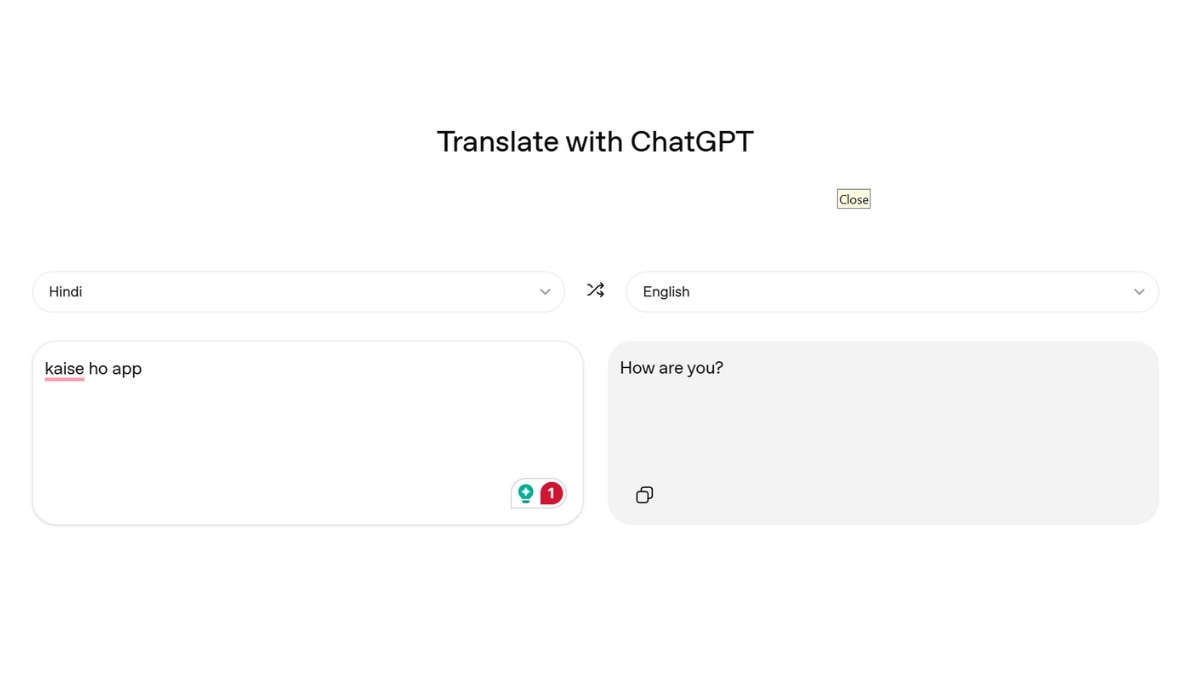
Google has launched TranslateGemma, a new family of open translation models built on its Gemma 3 architecture, supporting 55 languages. These efficient models, available in multiple sizes, offer high-quality, multilingual translation across various devices, including text within images.
Google released TranslateGemma, a suite of open translation models.
Models are built on Gemma 3 and support 55 languages.
Designed for efficient deployment on mobile, laptops, and cloud.
12B model outperforms larger 27B Gemma 3 baseline in quality.
Features multimodal translation, including text in images.
Available as open-source on platforms like Hugging Face.
Google has officially introduced TranslateGemma, a significant advancement in open machine translation models built upon its existing Gemma 3 architecture. This new family of models is designed to facilitate high-quality multilingual translation across an impressive 55 languages. Released in three distinct parameter sizes—4B, 12B, and 27B—TranslateGemma aims to make sophisticated translation capabilities accessible across a wide array of devices, from mobile phones and edge devices to consumer laptops and cloud servers.
A key highlight of TranslateGemma is its remarkable efficiency. The 12B parameter model has demonstrated superior translation quality compared to the larger Gemma 3 27B baseline, as evaluated on benchmarks like WMT24++, despite requiring less than half the parameters. This efficiency translates into higher throughput and lower latency, enabling developers to integrate high-fidelity translation into applications without the need for extensive computational resources. The smaller 4B model is particularly optimized for mobile inference, making on-device translation more feasible.
TranslateGemma models leverage a two-stage training process. This involves supervised fine-tuning on a diverse dataset comprising human-translated texts and high-quality synthetic data generated by Google's Gemini models, followed by a reinforcement learning phase. This innovative approach enhances contextual accuracy and fluency across the supported languages. Furthermore, TranslateGemma retains the multimodal capabilities inherent in Gemma 3, allowing it to accurately translate text embedded within images, a feature that extends its utility beyond traditional text-to-text translation.
The availability of TranslateGemma as open models on platforms such as Kaggle, Hugging Face, and Google Cloud's Vertex AI signifies Google's commitment to fostering innovation within the AI developer and research communities. This release is positioned as a foundational tool for researchers and developers to build custom translation workflows and improve support for low-resource languages globally.
Read the full story on Quick Digest