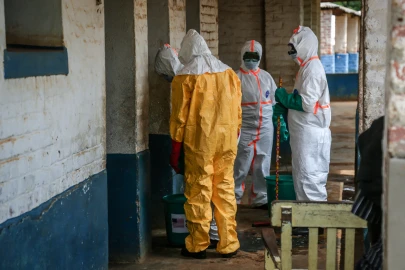
WHO Warns of Hidden Ebola Spread in Congo Due to 'Blind Spots'
The WHO has expressed concern that "blind spots" in the Democratic Republic of Congo's response efforts could be masking the true extent of the Ebola outbreak. These overlooked areas may be contributing to the virus's continued spread, complicating containment strategies.
Key Highlights
- WHO flags potential hidden Ebola transmission in Congo.
- "Blind spots" hinder full understanding of outbreak spread.
- Undetected cases may fuel continued viral transmission.
- Effective containment relies on identifying all infection sources.
- International aid and surveillance are crucial for control.
The World Health Organization (WHO) has raised serious concerns that the ongoing Ebola outbreak in the Democratic Republic of Congo (DRC) may be more widespread than currently understood, due to critical "blind spots" in surveillance and response efforts. These areas, often remote or difficult to access, could be harboring undetected cases and ongoing transmission chains, making it challenging to fully contain the epidemic. The implications of these "blind spots" are significant, as they can lead to the virus re-emerging in previously cleared areas or spreading to new populations. The WHO's warning underscores the persistent challenges in controlling complex outbreaks in regions with limited infrastructure, security concerns, and varying levels of community trust.
The Ebola virus disease, known for its high fatality rate, requires robust public health interventions, including rapid case identification, contact tracing, safe burials, and vaccination campaigns. However, when certain geographic areas or population segments are not adequately covered by these measures, the virus can persist and spread undetected. This was highlighted by the Al Jazeera article, which noted that Ebola had spread into new areas of the DR Congo, indicating challenges in containment. The Investing.com article, citing Reuters, suggests that the WHO's concern is rooted in the difficulty of obtaining a complete epidemiological picture when there are significant gaps in data collection and monitoring.
The complexity of the DRC's geography, with vast, often inaccessible terrain, coupled with historical mistrust between some communities and health authorities, can exacerbate these "blind spots." Years of conflict and instability in some eastern regions have also disrupted health services and humanitarian access, creating fertile ground for outbreaks to fester and spread covertly. The WHO's emphasis on these "blind spots" suggests a need for intensified efforts to reach underserved populations and improve data intelligence. This likely involves deploying more mobile surveillance teams, utilizing innovative technologies for remote monitoring, and working closely with local leaders and communities to build trust and encourage reporting of suspected cases.
Without a comprehensive understanding of the outbreak's true geographical spread and transmission dynamics, containment strategies risk being incomplete or misdirected. This can lead to a prolonged epidemic, increased morbidity and mortality, and a greater risk of international spread. The effectiveness of response hinges on the ability to identify and address all pockets of transmission. Therefore, the WHO's warning serves as a critical call for increased vigilance, resources, and tailored strategies to penetrate these "blind spots" and achieve effective control of the Ebola outbreak in the DRC.
The article from Investing.com, originally reported by Reuters, suggests that the WHO's assessment implies that the reported case numbers might not reflect the full reality on the ground. This necessitates a re-evaluation of current response strategies to ensure they adequately address the risks posed by these unaccounted-for transmission pathways. The urgency of the situation is amplified by Ebola's potential to overwhelm local health systems and have significant economic and social consequences for the affected regions and potentially beyond. India, while geographically distant, remains keenly interested in global health security, as demonstrated by its active participation in international health initiatives and its own experiences with disease outbreaks.
The current outbreak in the DRC has been a protracted and challenging one, marked by frequent resurgences. International efforts, including those spearheaded by the WHO and supported by various partner nations and organizations, have been ongoing. However, the persistent challenge of "blind spots" indicates that a more nuanced and adaptive approach is required. This includes not only the deployment of medical personnel and resources but also addressing the socio-economic and security factors that contribute to the difficulties in containing the virus. The success of future interventions will depend on the ability to systematically identify and eliminate these hidden sources of infection, thereby safeguarding both local populations and global health security.
Frequently Asked Questions
What are 'blind spots' in the context of the Ebola outbreak?
'Blind spots' refer to areas or communities within the Democratic Republic of Congo that are not adequately covered by surveillance, reporting, or intervention efforts during the Ebola outbreak. These gaps can lead to undetected cases and ongoing transmission.
Why is it important to identify these 'blind spots'?
Identifying 'blind spots' is crucial for a comprehensive understanding of the outbreak's true extent. It allows health authorities to target resources effectively, trace all potential contacts, and implement necessary containment measures to prevent further spread and eventual eradication of the virus.
What challenges contribute to these 'blind spots' in the DRC?
Challenges include the vast and often inaccessible geography of the DRC, security concerns in certain regions, limited infrastructure, and historical mistrust between some communities and health organizations, which can hinder access and cooperation.
What is the WHO's role in addressing these 'blind spots'?
The WHO, along with other international health organizations and the DRC government, works to enhance surveillance, deploy mobile response teams, build community trust, and implement vaccination campaigns in hard-to-reach areas to close these 'blind spots' and control the outbreak.